






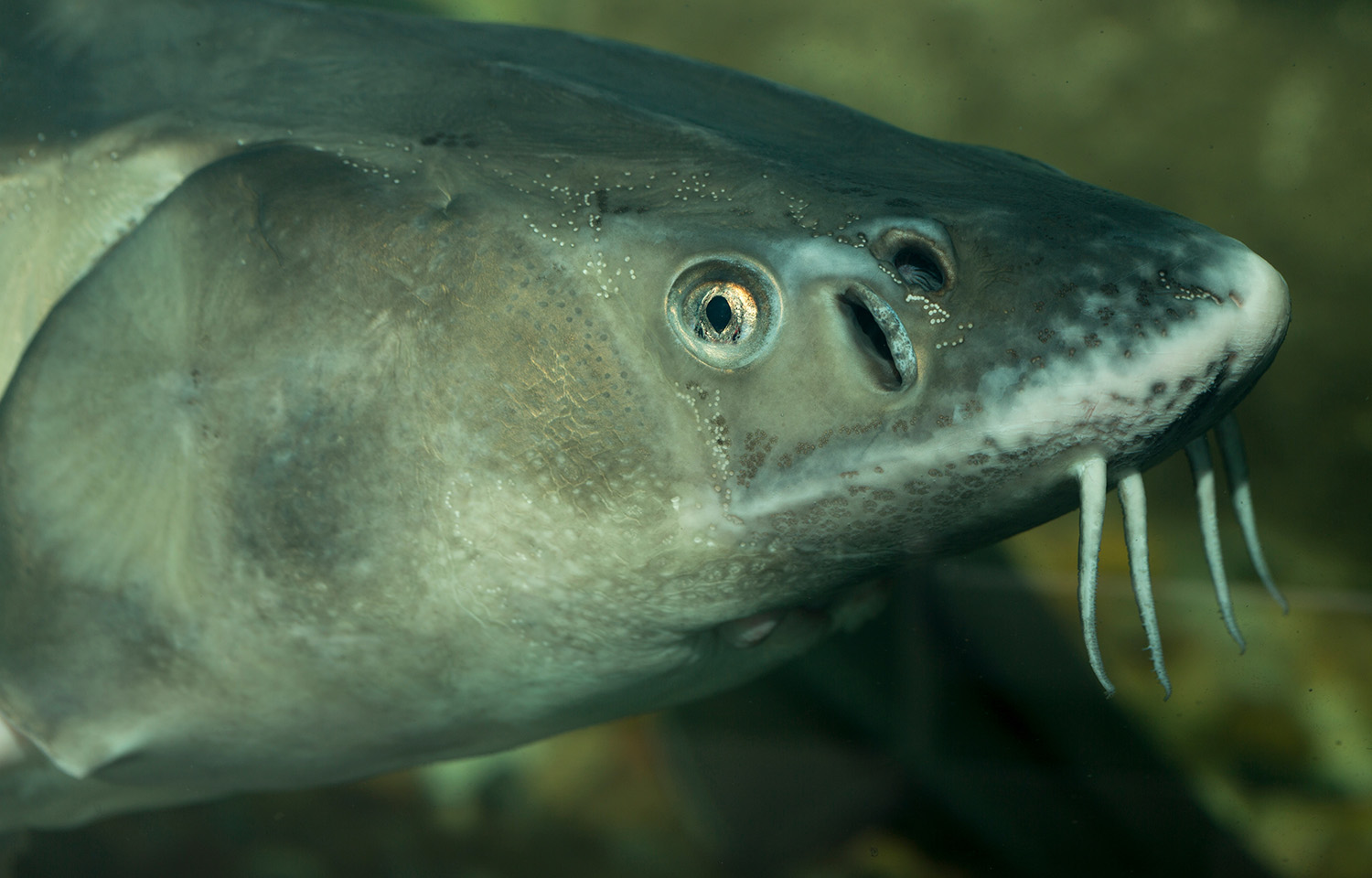
Legislators in the U.S. Congress are considering legislation that would exempt American sturgeon farmers from Endangered Species Act (ESA) restrictions, although opponents say the legislation would open the door to Chinese and Russian imports.
The issue stems from a 2022 U.S. Fish and Wildlife Service (USFWS) proposal to list four species of sturgeon – Russian, ship, Persian, and stellate – under the ESA. The rule was decried by the caviar industry at the time for not differentiating between sustainably farm-raised sturgeon and wild populations. With other species, such as Atlantic salmon, U.S. regulators have found ways to allow aquaculture operations to continue to trade fish legally even though it was listed as endangered in the Gulf of America, opponents said at the time.
“Captive bred sturgeon legally held in the U.S. should not be treated the same as wild populations under the ESA,” Pierson, Florida, U.S.A.-based Evans Farms CEO Geno Evans said during a 22 July hearing held by the House Subcommittee on Water, Wildlife and Fisheries. “This is in line with science, in line with international models like [the Convention on International Trade in Endangered Species] CITES, and long overdue.”
Despite issuing its 12-month findings and final proposal in 2022, USFWS has yet to take final action on the rule.
“More than three years later, no final rule has been published – leaving producers in a state of uncertainty and potential regulatory harm,” Evans said in submitted testimony.
Evans Farms has already faced similar issues with another species, beluga sturgeon. The aquaculture company was founded in 2003 with the introduction of beluga, but a year later the species was listed under the ESA. Unable to harvest or sell caviar from the sturgeon and not allowed to euthanize them, Evan Farms has been stuck raising the unproductive fish for years.
“These beluga have been on the farm for 14 years now, and we can’t do anything with it. We have to feed them, take care of them. We can’t […] euthanize them, so this has turned critical for us,” Evans testified.
Under the ESA’s 4(d) rule, aquaculture companies can obtain an exemption to sell caviar if they conduct education and conservation efforts in areas where the sturgeon species are under threat. In 2020, caviar producer Sturgeon Aquafarms, was able to secure an exemption to sell beluga caviar after “supplying [approximately] 160,000 fertilized eggs in 2017 and 2018 to help revive the Caspian Sea's waning beluga population,” the company said.
According to Evans, however, the requirements for a USFWS exemption are simply too difficult to meet, even though the company attempted to engage with countries with endangered sturgeon populations to secure one.
“We followed what the service told us to do – didn’t get any response back besides Ukraine, that said that right now they were more fighting for their life than they were worried about conservation,” Evans said. “For a small farm, it is an insurmountable hill to climb.”
The bill’s sponsor, U.S. Representative Randy Fine (R-Florida), said a fix was necessary to help aquaculture operations in Florida that raise sturgeon for caviar without hurting the wild populations the ESA rule was meant to protect.
“Over the last several decades, we’ve invented this idea of aquaculture where we can harvest fish that we would not want to affect in the wild. And some constituents of mine, over the decades, have come up with the idea – and it’s not unique to them – of engaging in aquaculture, which would yield caviar that doesn’t affect wild sturgeon in any way,” Fine said.
The sturgeon legislation was also backed by the U.S. Fish and Wildlife Service (USFWS) during the hearing.
“Appropriate mitigation and enhancement of the species in the wild can be nearly impossible to fulfill internationally,” USFWS Principal Deputy Director Justin Shirley said at the hearing. “HR 433 would broadly apply to all farmed sturgeon, not just foreign species, which are required to have appropriate provenance paperwork.”
However, that last point – that the legislation would also protect foreign farm-raised sturgeon from the ESA rule – drew opposition from U.S. Representative Val Hoyle (D-Oregon), who argued the legislation helps overseas producers at the expense of domestic caviar suppliers.
“The sturgeon bill claims to help a small handful of domestic caviar producers who may have some ESA-listed sturgeon on hand, but the major winners from this bill are the largest caviar producers in the world from China, which accounts for over 50 percent of imports in the U.S., and Russia, to a smaller extent, who have spent years lobbying for more access to U.S. markets for caviar they produce from ESA-listed fish,” Hoyle said. “Right now, that caviar is banned from the U.S., but this bill would allow them to import it with little oversight. This bill undermines conservation and undercuts U.S. producers who follow the rules.”
