




Vietnamese aquaculture firm Viet Uc has announced it will soon launch an international shrimp-breeding expansion plan, as the company seeks to leverage its proprietary genetic technology to enter new markets.
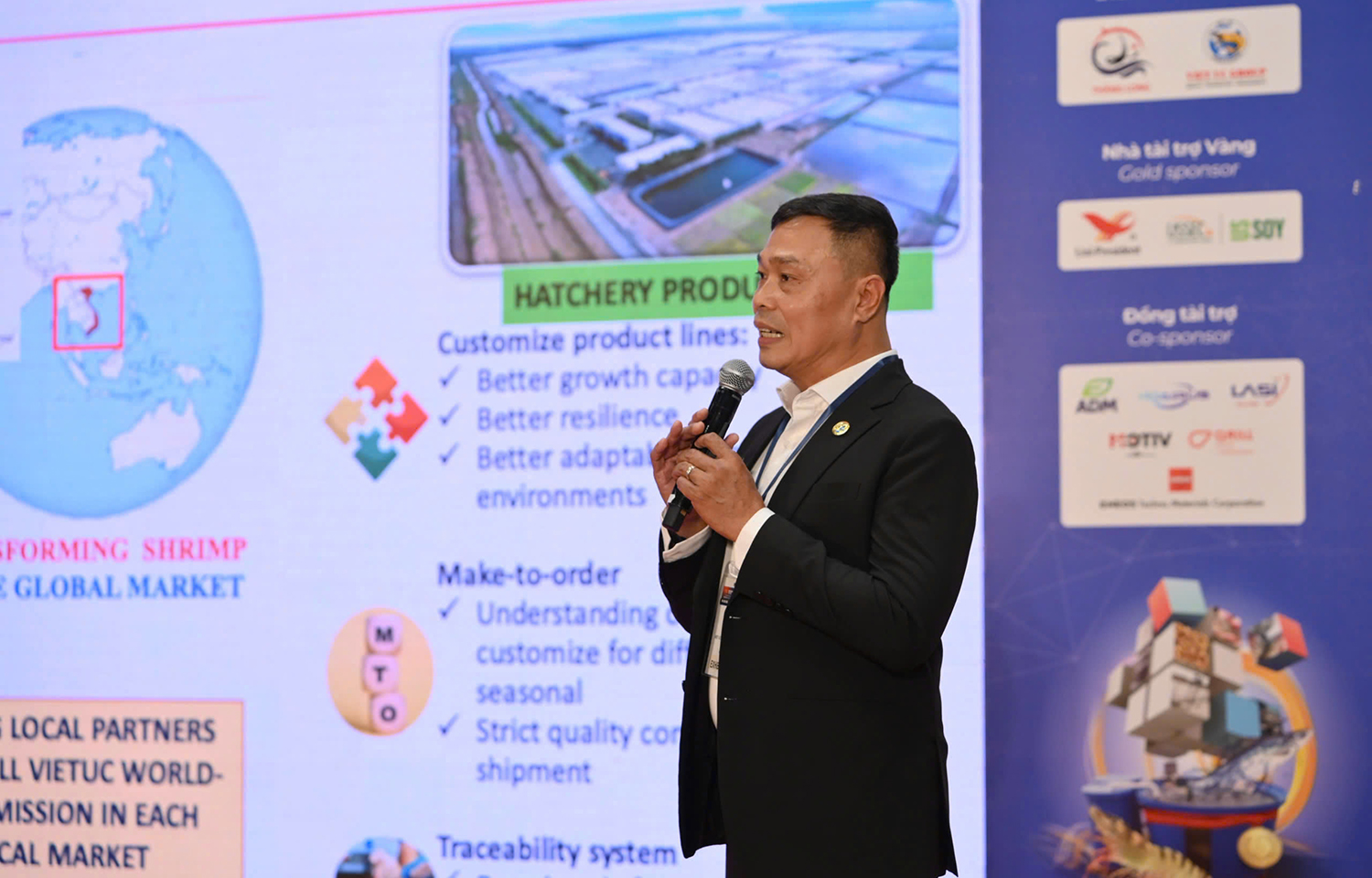
After more than 20 years of developing high-tech shrimp aquaculture production and molecular genomics systems domestically, the company has announced it is ready to transition into becoming a global player, Viet Uc CEO Ton That De told SeafoodSource during the 2026 VietShrimp Asia and Aquaculture Vietnam show in Ho Chi Minh City.
“Viet Uc's upcoming strategy is to go global. We are leveraging our core strength, which is our breeding program, utilizing molecular genomics technology combined with the high-tech production systems that Viet Uc has accumulated over the past 20 years. Viet Uc is confident that we are in a world-class position,” De said.
Viet Uc's strategy involves establishing local facilities in countries with high market potential to conduct in-country breeding programs and produce broodstock onsite, with whiteleg, or vannamei, shrimp being the core focus to start.
As the project launches, the company has honed in on two target markets in Asia under a dual-track strategy.
Under the Red Ocean strategy, the company will enter regions with established large-scale production and intense competition, with Viet Uc saying it is confident that its superior technology will allow it to effectively penetrate the market and win over share. Conversely, the Blue Ocean strategy focuses on emerging areas that lack professionalized seed production units, where the company intends to move in early to define standards and lead the market from its inception.
De declined to provide the names of the first locations, saying an official announcement and the commencement of commercial production are scheduled for this June.
Commenting on the Red Ocean track in particular, De explained that Viet Uc’s strategy is built on strategic local partnerships. The company has sought collaborators who possess a deep understanding of the local ecosystem and established infrastructure. Viet Uc then provides the critical “missing piece,” which includes advanced breeding technology and expertise in broodstock and post-larvae (PL) production.
The company is aiming for this to manifest in the form of joint ventures, delivering premium, high-quality seeds directly to local farmers.
In terms of scale, initial international facilities will match the capacity of the company's mid-sized Vietnamese units, which produce between 1 billion to 5 billion PL annually.
“Currently, almost all paperwork [for the two deals in Asia] are complete; we are just waiting until June to officially begin commercial operations,” De said.
The company’s long-term plan is to continue focusing on its strength in shrimp seeds and then apply this technology to other aquatic species.
Besides Asia, Viet Uc is planning to look into new markets, including some in South America and North America, where there are flagship species that align with the company’s strengths for building production facilities. The goal over the next five to 10 years is to expand into one to two new markets every year under this strategy, De said.
Viet Uc also plans to expand at home.
Domestically, the firm maintains a shrimp PL market share of over 30 percent, but it has a strategic goal to reach over 40 percent within the next five years. To achieve this target, the company said it does not necessarily need to construct new facilities because existing infrastructure already possesses a design capacity of 40 billion to 50 billion seeds. Instead, the company plans to meet this objective by increasing equipment investments, optimizing internal processes, and recruiting approximately 2,000 additional personnel.
Regarding other species, De said Viet Uc’s pangasius-breeding project is officially underway through a combination of research and practical application at a 127-hectare breeding and hatchery project site in the Mekong Delta region.
Current key performance metrics include fast growth, high survival rates, and premium fillet quality. Operations are progressing according to the project’s roadmap, and once these criteria fully meet their established goals within the next one to two years, the company plans to move into large-scale commercial production, De said.
He explained the project aims to solve major problems the pangasius industry in Vietnam currently faces, such as fragmented hatcheries that source broodstock from external providers, often forcing buyers to purchase seeds from multiple farms and, consequently, creating high risk for farmers.
By entering this sector, Viet Uc intends to provide a stable quantity of seeds that meet strict quality requirements.
De said Viet Uc has set an ambitious target to capture 50 percent of the seed market share within five years of launching to the market.
To achieve that growth, Viet Uc plans to collaborate with major pangasius players, such as Vinh Hoan, to provide broader support to the country’s farmers. By addressing the genetic inconsistencies found in many existing hatcheries that rely on external seed sources, Viet Uc aims to guarantee the quality of fingerlings for all producers, De said.
