




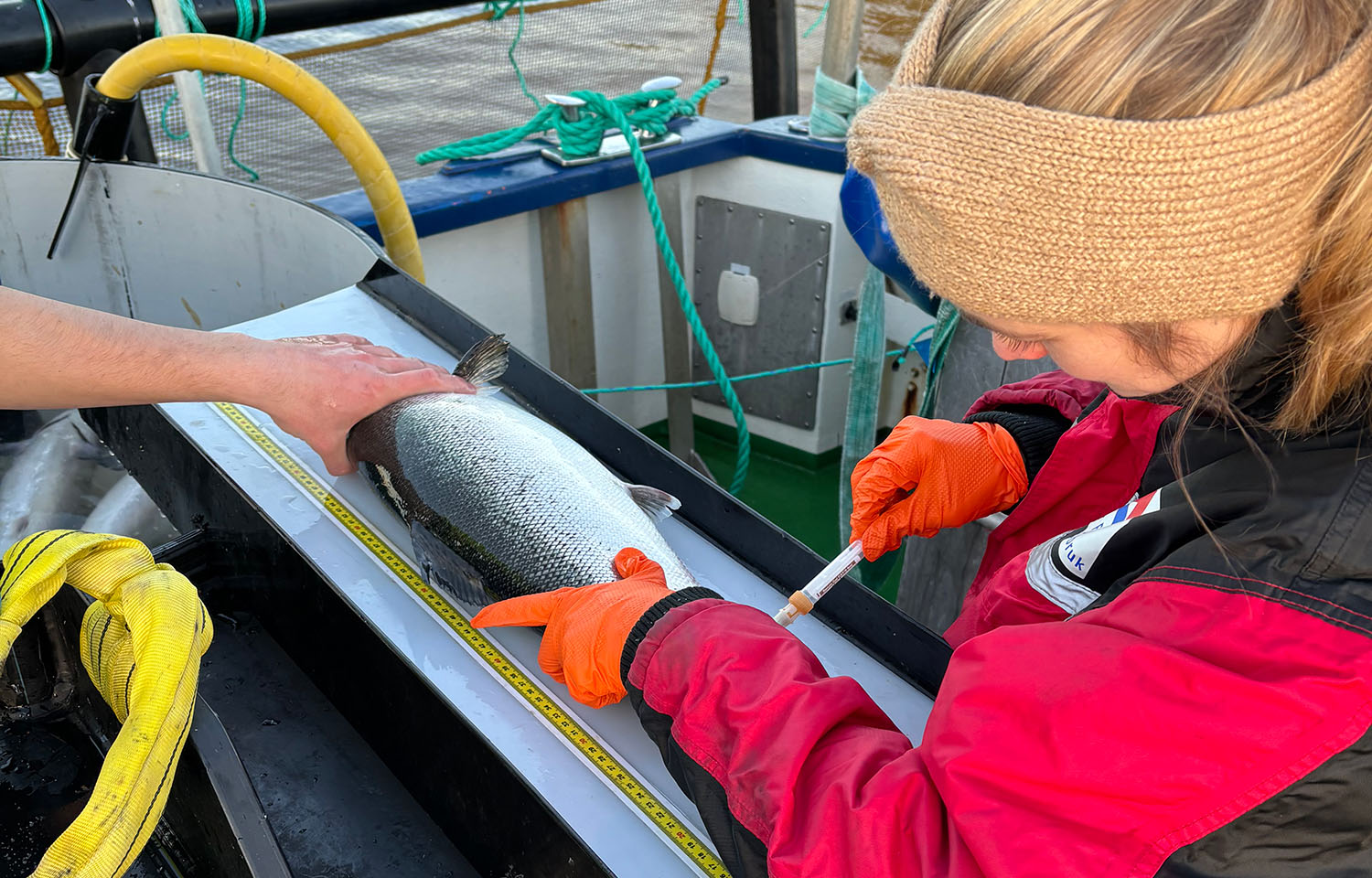
Paisley, Scotland-based biotechnology firm WellFish Tech has secured approvals from the Norwegian Food Safety Authority (Mattilsynet) to use its non-lethal blood sampling of Atlantic salmon in aquaculture operations.
According to the company, this marks the first time that Mattilsynet has given the go-ahead to a non-lethal blood sampling method, removing a prohibition that had existed for several years.
"We are proud of the rigorous work that underpins this approval," WellFish Tech CEO Charlie Granfelt said. "This has been a collaborative effort with the scientific community and regulators, with one goal: better fish health. Having a non-lethal diagnostic method formally recognised in Norway is a meaningful step for the industry."
WellFish Tech said the positive decision by Mattilsynet is the result of field and laboratory trials to address the animal welfare evidence that the authority needed. Trials were performed in Spring 2025 to assess the impact the method had on fish in water at 5 – 8 degrees Celsius, “some of the most demanding circumstances for welfare and wound healing, WellFish Tech said.
“A parallel controlled warm-water trial at AquaBioTech Group's facility in Malta provided complementary data at higher temperatures,” the company said. “Both trials demonstrated that the procedure can be performed without compromising fish survival, growth or welfare when carried out by trained personnel following WellFish Tech's standardised protocol.”
WellFish Tech has developed a tool that can use blood samples to provide a wealth of data for salmon farmers, giving mortality forecasting for the next seven, 14, and 28 days as well as a number of other predictions for farmers.
The blood sampling method allows salmon farmers to return fish to the production environment, in contrast to current methods which require euthanasia of the fish.
“The clearance applies to Atlantic salmon above 500 grams, with a maximum sample volume of 1 mL per fish and a minimum interval of 14 days between repeated samples of the same individual,” WellFish Tech said. “The method must be performed under the professional responsibility of authorized fish health personnel.”
