




A study recently published in Science Advances, funded by the National Science Foundation, found using a biopolymer mesh in a web-like formation – similar to that of seaweed – can capture oceanic microplastics in both freshwater and seawater environments as a powerful anti-pollution tool.
Four researchers from Raleigh, North Carolina, U.S.A.-based North Carolina State University's department of chemical and biomedical engineering published the study: "Artificial Neptune balls: Superadhesive biomimetic networks for broad-size microplastics capture and removal."
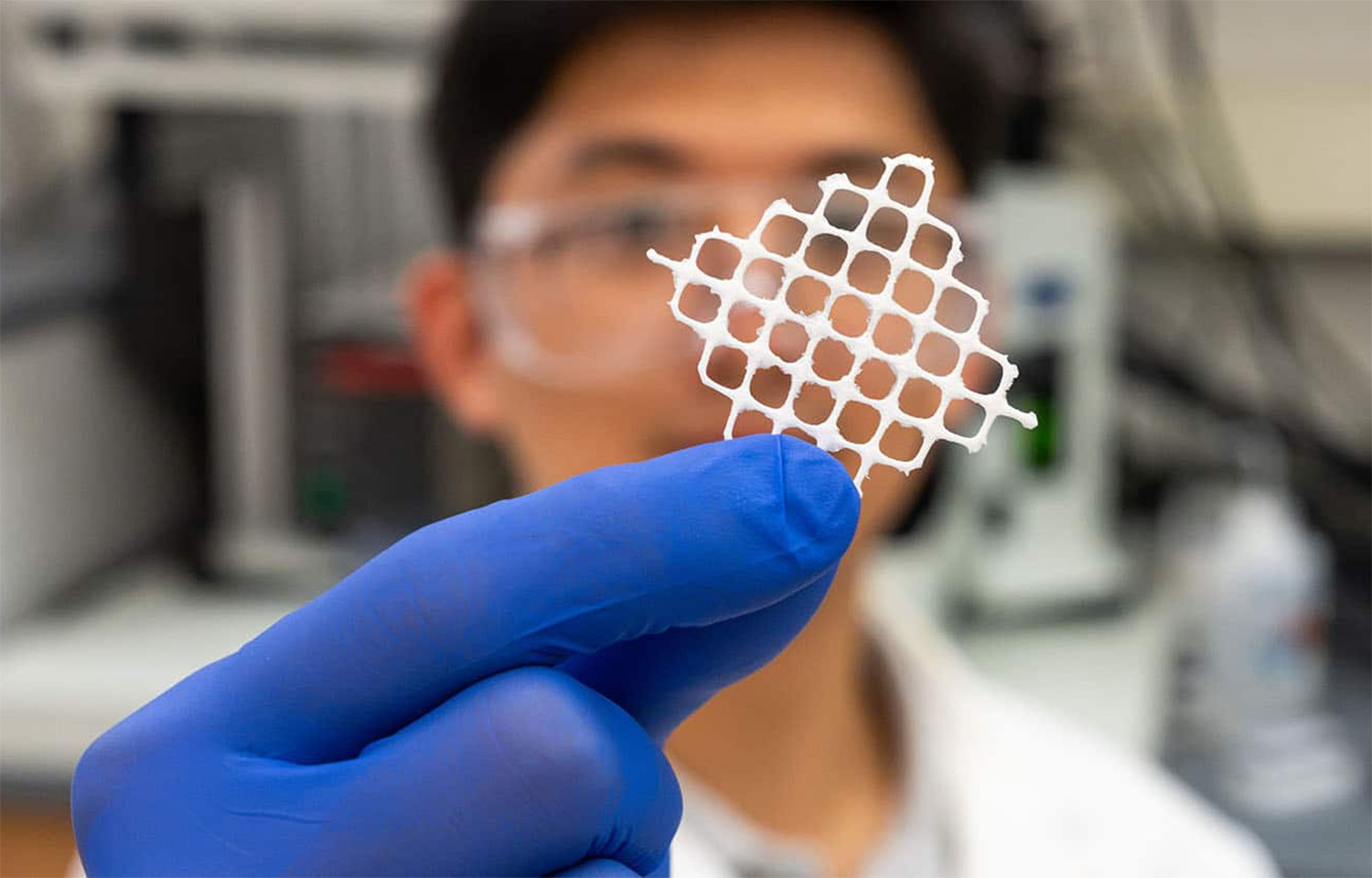
In a report on the study, researchers said they created "cleaners" formed from a highly porous, adhesive biopolymer mesh made from alginate and chitosan, derived from seaweed and shells from crustaceans. The cleaners were inspired by formations known as "Neptune balls," spherical balls of tangled seaweed which other research has proven already collects microplastics.
“We wanted to create structures that mimicked what the tangled seaweed is already doing,” North Carolina State University professor and study author Orlin Velev said in a release. “Our goal here was to develop a multiscale structure that allows us to capture the full range of plastic microparticles.”
With the new design, researchers found the "fluffy net" biopolymer mesh could trap both large and small microplastics using a porous structure for larger objects and a coating of branching chitosan nanofibers to stick to smaller plastics.
“The ‘net’ part of the structure is a mesh capable of capturing the larger plastic microparticles – a millimeter or larger in size,” Velev said. “Further, the individual strands of the net are ‘fluffy’ because they are coated with soft dendritic colloids, which are able to capture by adhesion even very small plastic microparticles – down to tens of nanometers in size.”
Additionally, researchers found that mesh could be collected and reprocessed after use through microbial digestion to break down the microplastics and mesh, which transfers the material back to biopolymer material to be used again.
“We’ve demonstrated that this design works,” Velev said. “And the materials we used are of natural origin and relatively inexpensive. So, it may present a viable path forward. Can it be used on a large scale? That depends on the extent to which we want to invest in scaling up such cleanup approaches.”
This research could counteract microplastics found in marine environments, which are in turn being found in seafood products. Researchers also found that microplastics are present in nearly everything, but depending on the size the products are either easily passable or potentially harmful.
