






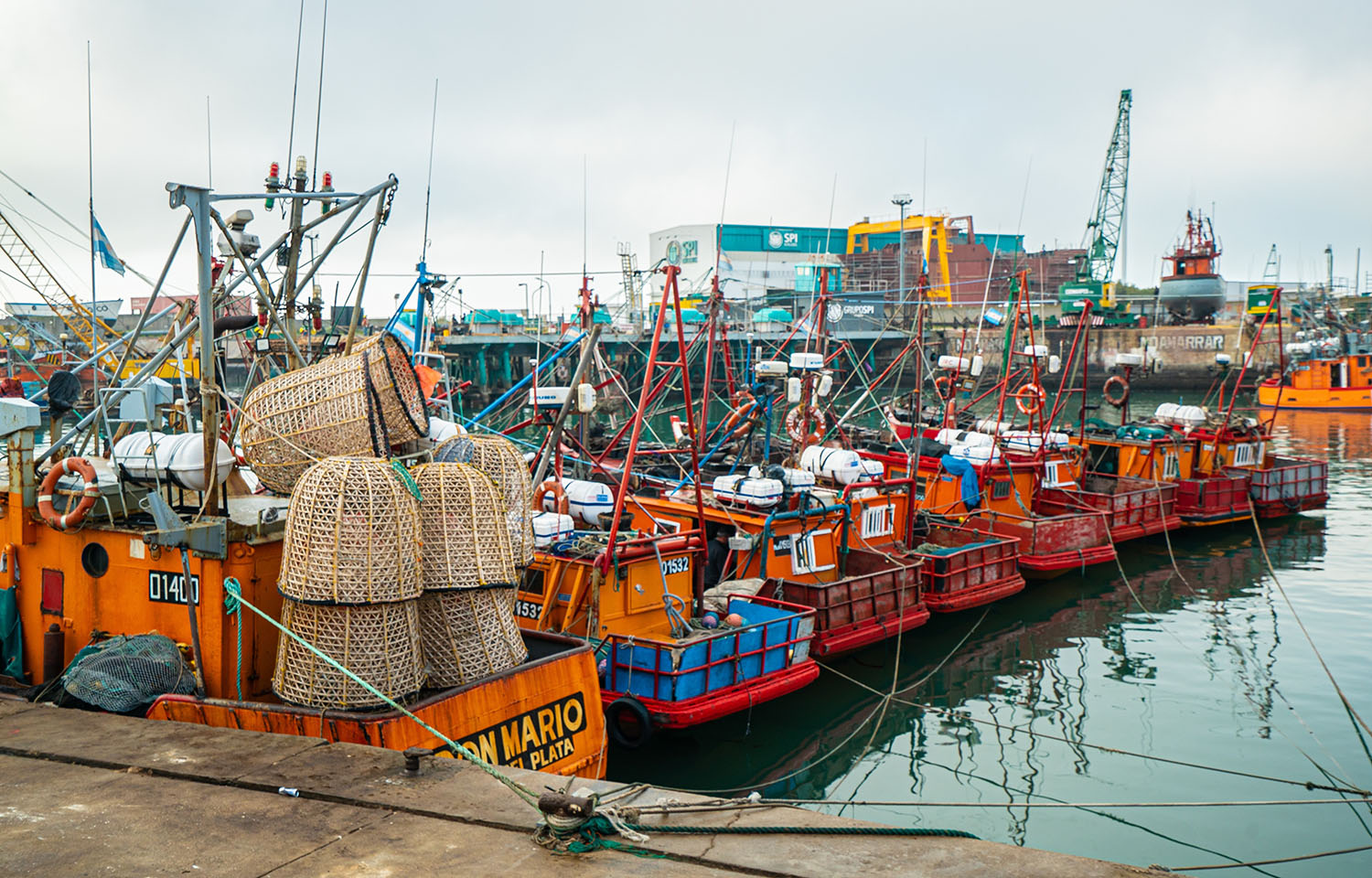
On 17 July, Argentina enacted legislation to address illegal, unreported, and unregulated (IUU) fishing by officially signing onto the United Nations-backed Port State Measures Agreement (PSMA).
The PSMA is an agreement administered through the United Nations' Food and Agriculture Organization that was developed 10 years ago. According to a release by the Pew Charitable Trusts, it's the only legally binding international treaty designed to combat illegal, unreported, and unregulated (IUU) fishing by denying vessels that have been caught from entering ports. There are over 100 signed participants in the PSMA, including major fishing fleets from the E.U. and China. Participants are subject to strengthened inspections and data sharing.
The PSMA agreement uses a global information exchange system (GIES) that categorizes standardized lists and codes that are translatable into six different languages.
Chile and Uruguay are also signatories of the PSMA, allowing for collective action on both the Atlantic and Pacific Ocean coastlines.
"As Argentina and its Southwest Atlantic neighbors move toward full PSMA implementation, dishonest operators will find it increasingly difficult to bring illegitimate catch to market in the region and will have to travel further to find a port, reducing their financial incentive for IUU activities," Pew said. "These outcomes, in turn, will further demonstrate that cooperative approaches to improving ocean and fisheries management are among the best ways to not only deter IUU fishing but also to protect vital ocean resources."
In February, Argentina also joined the International Maritime Organization's Cape Town Agreement, which is an internationally binding document that "sets minimum requirements on the design, construction, equipment, and inspection of fishing vessels of 24 meters in length and over or equivalent to gross tons." It also has mandatory requirements for stability, seaworthiness, machinery, electrical installations, life-saving appliances, communications equipment, fire protection, and fishing vessel construction.
