






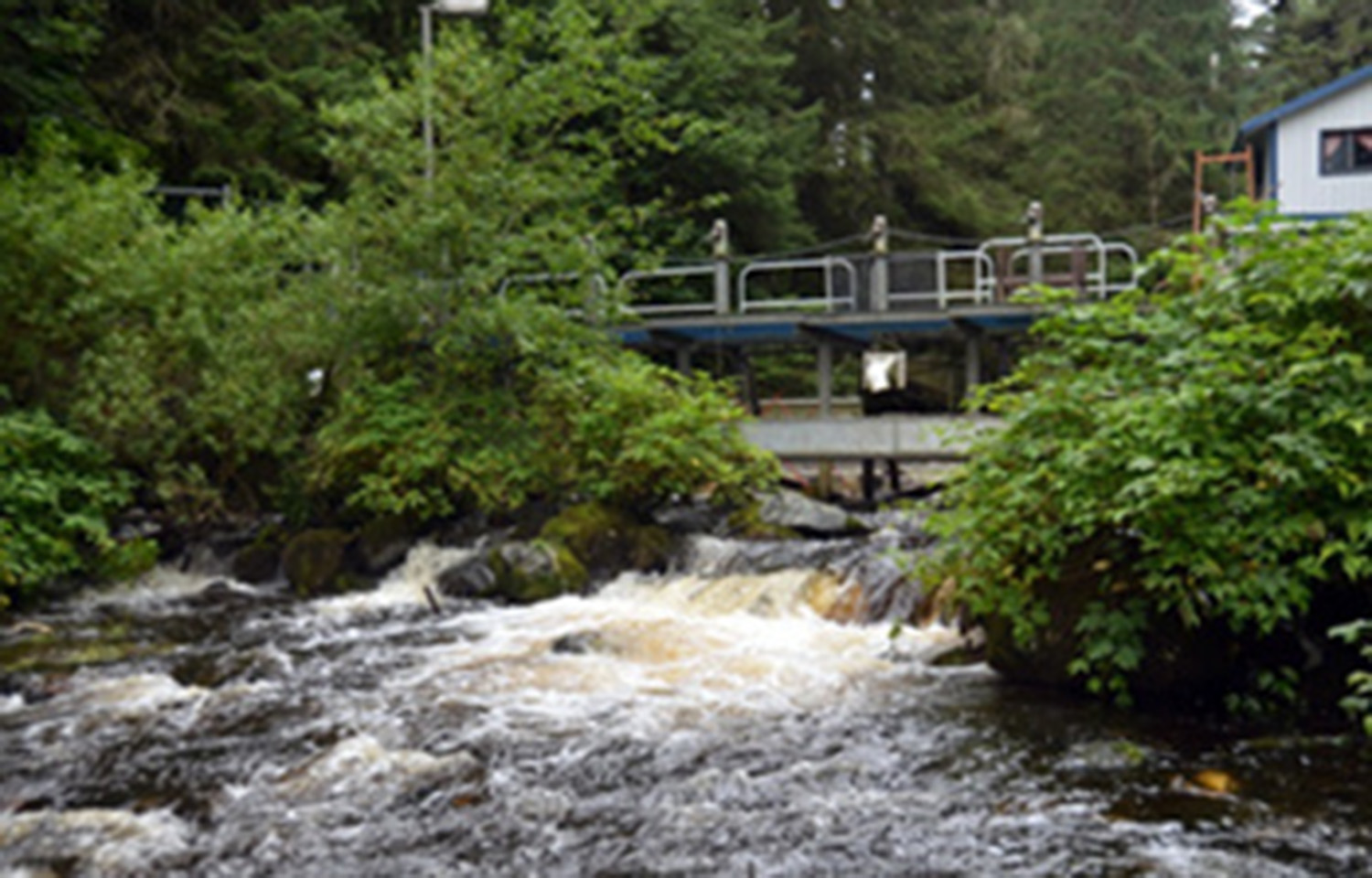
Recently published research by NOAA found that warmer water temperatures in Auke Creek in Juneau, Alaska, U.S.A. have affected salmon run times on the return home over the last 46 years.
"Rising temperatures in Auke Creek over the last 46 years appear to have had numerous influences on salmonids," researchers said in the published report. "Trends towards earlier migration midpoints have been reported previously across multiple species during both upstream and downstream migration in Auke Creek. This trend has continued during recent years with 2025 again having some of the earliest migrations on record."
By looking at migration data at Auke Creek Reserach Station dating back to 1980, NOAA found that the average annual temperature of Auke Creek has increased over the last 36 years both downstream and upstream. NOAA also found that while the water was warming, creek temperatures were also more variable from May to September, aligning with the months that salmon annual migrations occur.
In 2025, the average temperature was above the 1980-2024 average of 7.8 degrees Celsius, with the 2025 average temperature reaching 8.3 degrees Celsius. Temperatures during the 2025 downstream and upstream migration periods were near the 36-year average.
For commercial fishing, Auke Creek is home to large pink salmon spawning populations, and NOAA researchers said it's "become increasingly difficult" to differentiate early-run pink salmon from late-run pink salmon on factors such as sex ratio, general appearance, and daily abundance.
In 2025, however, abundance of pink salmon fry in the Auke Creek was below the 1980-2024 average of 85,430, totaling just 27,254. Abundance numbers of upstream migrant pink salmon adults were also below the long-term average by nearly 6,000, and only 1 pink salmon adult fish migrated in July 2025.
Midpoint wild adult upstream migrants fell 10 days earlier in August in 2025 compared to decades past.
For sockeye salmon, the abundance of downstream migrant sockeye fish was also below the 1980-2024 average in 2025, falling from 15,506 to 3,780; upstream abundance also dipped in 2025 from 2,411 to 1,326. For sockeye salmon, the upstream migration occurred 15 days later, on 6 August instead of 22 July.
Auke Creek Research Station also uses coho salmon as a Southeast Alaska wild indicator stock to cross compare with other regional stocks and inform the Transboundary River and Northern Boundary Areas of the Pacific Salmon Treaty.
Despite the rise in temperatures, NOAA confirmed that the only proven affect is on run time, confirming that abundance has remained stable since 1980 excluding even-year brood pink fry salmon.
Data collected at Auke Creek Research Station is used by ADF&G in setting both commercial and recreational fishing regulations.
