





U.S. Senate Republicans are making a push to pass fiscal year 2027 budget legislation before Democrats take over in January, and their NOAA Fisheries budget proposal rejects the Trump administration’s request to transfer the agency’s responsibilities under the Endangered Species Act (ESA) and Marine Mammal Protection Act (MMPA) to another agency.
U.S. President Donald Trump’s government has argued that responsibility for carrying out the ESA and MMPA should be unified under a single entity, the U.S. Fish and Wildlife Service (USFWS), which currently splits responsibility with NOAA Fisheries. The administration claims doing so would streamline permitting and improve efficiency in carrying out the law.
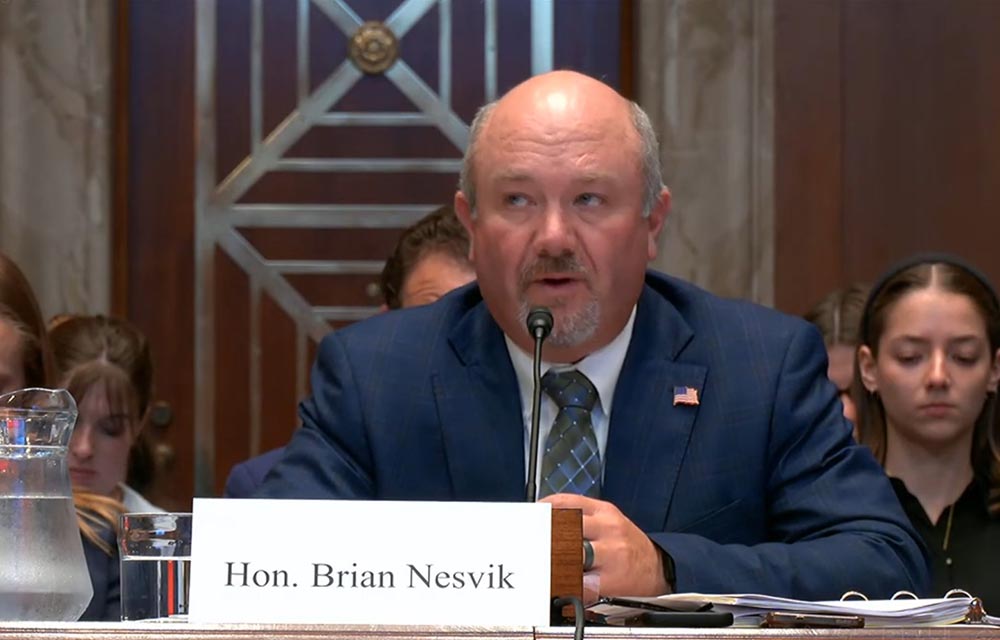
“Consolidation of [NOAA Fisheries and USFWS] will improve the efficiency of ESA implementation by ensuring that only one agency needs to review activities that potentially impact endangered species. This merger streamlines ESA implementation and facilitates more effective and efficient management of our land and water resources while decreasing costs over time,” USFWS Director Brian Nesvik testified before the Senate Environment and Public Works Committee 10 June.
The Trump administration initially proposed taking the action as part of the fiscal year 2026 budget process last year, however, lawmakers ultimately rejected the proposal, claiming they did not have enough time to consider it.
The Trump administration reiterated its request earlier this year in its fiscal year 2027 budget proposal, but Congress has given the president the same answer they did last year, verbatim.
“Due to the extremely late submission of the NOAA congressional budget justification, the Committee lacks sufficient detail to evaluate the legal, operational, and policy implications of the proposal,” the Republican-controlled Senate Appropriations Committee noted in its report on fiscal year 2027 legislation, released 12 November.
The House version of the bill, which was approved by the House Appropriations Committee in May, ignored the request entirely.
The proposal was not a subject of debate during Congress’s budget hearings earlier this year. In one of the only times it was brought up, U.S. Senator Sheldon Whitehouse (D-Rhode Island) asked Nesvik if USFWS had the staffing or biological expertise to take over NOAA’s current workload.
“Certainly, if this merger, this integration, was to come to fruition, there is existing expertise within NOAA [Fisheries] that potentially would be available. The details of that potential are not worked out yet, but you know, certainly we would leverage expertise that currently relies within [NOAA Fisheries],” Nesvik testified. “Within the Fish and Wildlife Service, we do have several very highly qualified biologists that understand marine biology, that understand the Marine Mammal Protection Act, and that we do have biologists that work on these issues.”
Congress was set to miss its deadline to pass fiscal year 2027 appropriations bills at the end of September, but lawmakers passed a short-term budget bill pushing the deadline to 11 December – after the U.S. midterm elections. Democrats won those elections handily and are set to take control of both houses of Congress in January 2026. Now, Senate Republicans are pushing to pass fiscal year 2027 appropriations bills before that happens, releasing a full slate of legislation in the weeks after the election.
However, it’s unclear if there will be enough political support to pass fiscal year 2027 budget legislation before the 11 December deadline. After Republicans released five more fiscal year 2027 appropriations bills 16 November, Vice Chair of the Senate Appropriations Committee U.S. Senator Patty Murray (D-Washington) expressed a desire for higher funding levels.
“Families want relief from sky-high prices and meaningful action to take on this administration’s corruption; the bills released today fail to do either,” Murray said. “Democrats cannot accept a topline agreement that delivers a windfall for defense contractors and crumbs for everyone else, so I am going to keep working with my colleagues to reset these backward funding priorities and do everything we can to negotiate final funding bills that actually meet this moment.”
