




Researchers from Corpus Christi, Texas, U.S.A.-based Texas A&M University's Center for Marine Aquaculture and AgriLife Research recently conducted research supporting the claim that parent oysters pass genes for low-salinity tolerance to offspring, leading to additional questions about how environmental conditions affect future breeding.
University researchers used new genetic tools to conduct this research on environments with lower salinity conditions, knowing that oyster survival rates depend on the right balance of salt and water. Salinity is affected by unpreventable events such as heavy rainstorms, and farmers often lack the data tools that could test salinity and survival rates per species.
“For oyster farmers, a single heavy rain event can wipe out an entire crop," Texas A&M AgriLife assistant professor Christopher Hollenbeck said in a release. "Understanding the genetic background of salinity tolerance allows us to precisely select and breed oysters that survive sudden drops in salinity, giving farmers a way to protect their crops.”
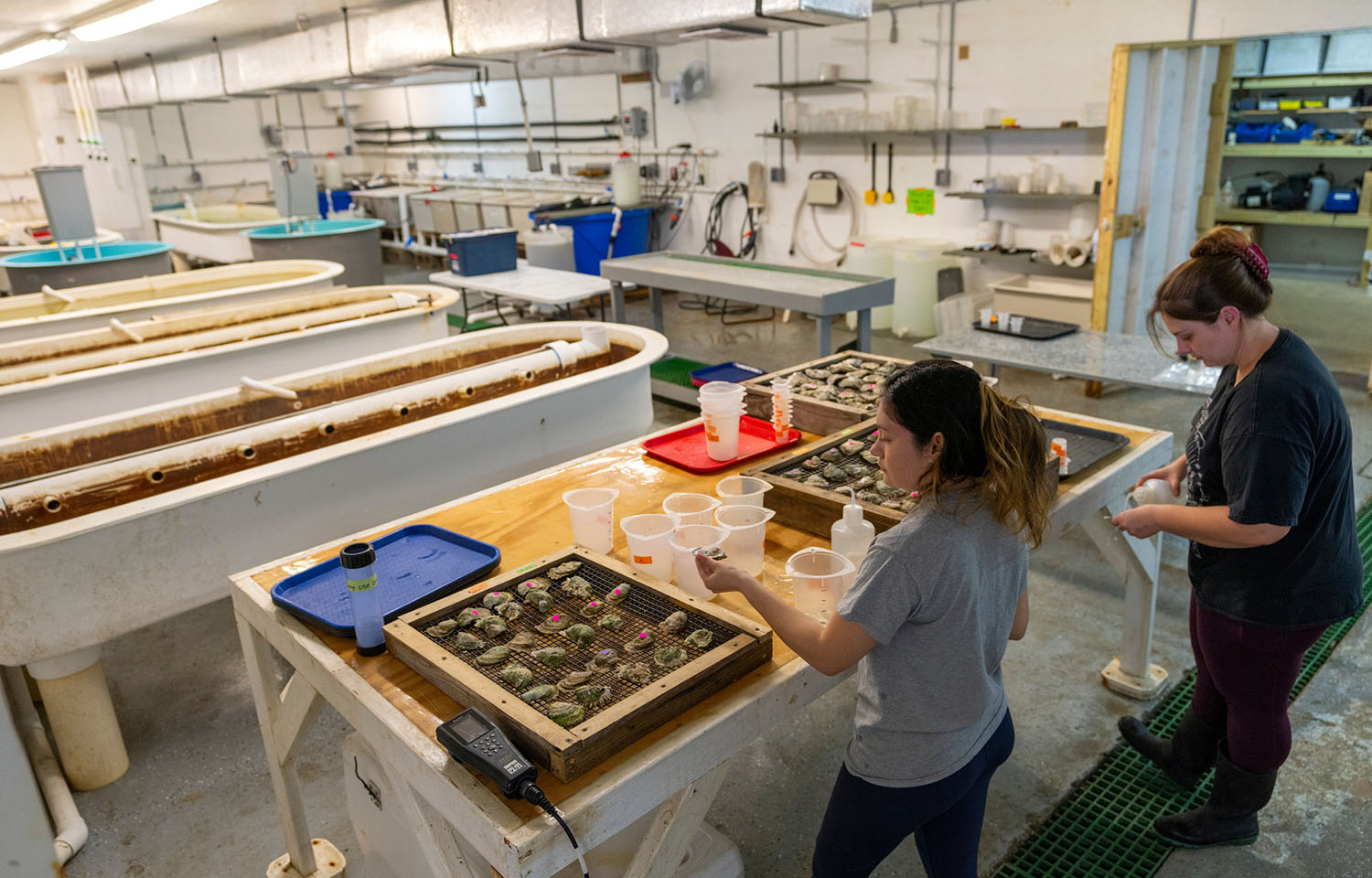
Texas A&M researchers bred oysters and exposed the young offspring to low-salinity water to track survival and mortality rates, which proved the hypothesis that low-salinity tolerance is an inherited trait from parents. This is known as a chromosomal inversion, and allows researchers to guide farmers to choose species with better ability to withstand low salinity, depending on changing weather conditions.
The research was conducted both in the lab setting and then at Texas farms. Researchers gave farms in different areas seed that could withstand the salinity conditions on the coast, promoting better commercial production for the farms, and reducing mass mortality events through mass die-off events.
The Foundation for Food and Agriculture Research (FFAR) funded this research in 2020 through the New Innovator in Food and Agriculture Award, which granted USD 445,122 (EUR 404,081). Texas A&M University matched that contribution, for a total funding amount of USD 495,122 (EUR 449,471).
According to the release, local Texas oyster farm owner Blake Whitney, who owns Three Sisters Oyster Company in Port Lavaca, Texas, U.S.A. was able to combat 21 inches of rain across 24 hours that killed a large portion of his crop by utilizing Texas A&M's oyster seeds that were built to withstand low-salinity levels and recoup his declined stock. Whitney said the seeds shared by the University only declined by 20 percent. Whitney added that across two years, the oysters developed by Hollenbeck's research team have survived better than other oysters through cyclical salinity changes.
“The work Dr. Hollenbeck and his team are doing is critical to the success of the Texas oyster industry,” Whitney said. “To be able to compete on a national and eventually international level, we need quality seed that survives to market size.”
