



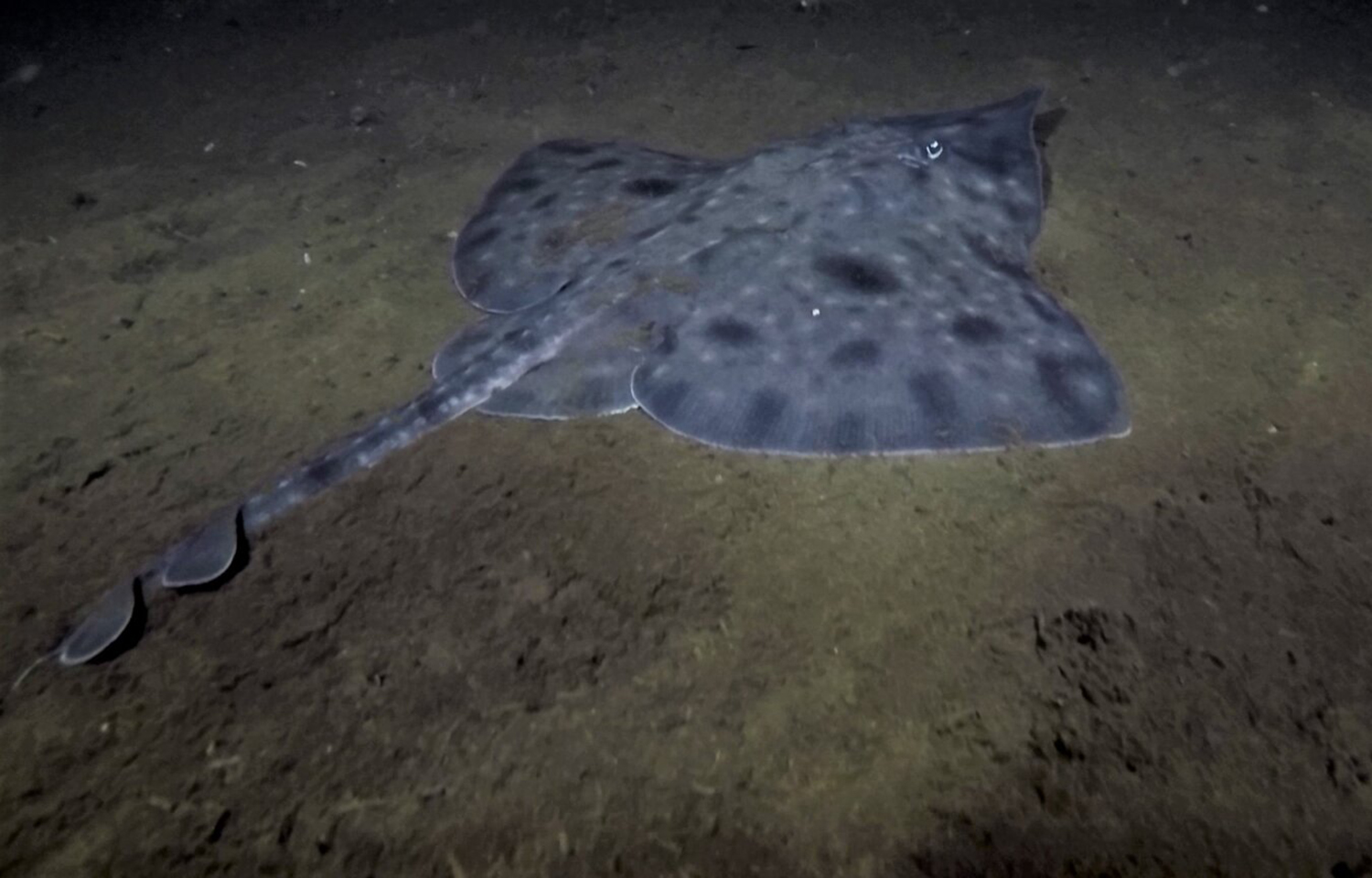
Australian politicians have called on United Nations specialized agency UNESCO to intervene over threats to the Tasmanian Wilderness World Heritage Area (TWWHA), which includes one-third of Macquarie Harbor – home to the endemic and endangered Maugean skate.
In a letter recently sent to UNESCO, independent politicians and some members of the Australian Greens party requested the agency undertake a reactive monitoring mission to assess threats to the TWWHA, including pollutants from salmon-farming operations that the authors claim place the skate at imminent threat of extinction.
Estimates suggest there are between 40 and 120 mature skates left in Macquarie Harbor, where conservation organizations have warned that the ancient ray species suffers from low oxygen levels. While some of the harbor’s low oxygen levels have been chalked up to natural geographical conditions, conservation organizations have argued that industrial operations, such as salmon farms, greatly exacerbate the issue and have continually argued for a ban on salmon farming as a result.
Such opposition has manifested in the form of shareholder resolutions calling for major Australian retailers to stop sourcing salmon from Macquarie Harbor, Organization for Economic Cooperation and Development (OECD) complaints against grocers, an open letter asking Australia Prime Minister Anthony Albanese to abandon commitments to the area’s aquaculture sector, and a public request to the nation’s minister for the environment and water to uplist the skate from endangered to critically endangered, all of which have been largely unsuccessful at scaling back salmon farming in the area.
The letter to UNESCO represents the latest attempt to protect the Maugean skate and aims to place pressure on the agency, which established the TWWHA as a World Heritage Site in 1982, to follow through on commitments made over a decade ago to establish co-management of the site with the Aboriginal Palawa people community and assess the area’s cultural values.
“The endangered Maugean Skate is facing a potential extinction, and the vulnerable population is now at greater risk than ever. Australia’s crossbench calling for this intervention from UNESCO highlights the necessity for increased management for the future resilience of this site and all its values,” Environment Tasmania Senior Campaigner Jess Coughlan said in a release. “Serious questions must be asked by UNESCO about why these protocols have taken so long to progress.”
The request comes soon after a study found Maugean skate populations have remained relatively stable yet still vulnerable in the harbor.
The study, conducted by the University of Tasmania and the Institute for Marine and Antarctic Studies, said recent demographic trends provide evidence of “recruitment pulses and continued stabilization of relative abundance.” Additionally, it found that the population has increasingly shifted into the TWWHA-protected area of the harbor.
In response, Environment Tasmania attributed that shift to salmon farming and said the study shows the population is still on “a cliff’s edge.”
“It appears from this report that the skate is in decline and seeking habitat away from salmon farms,” Coughlan said. “Skate populations are relocating to the TWWHA, but this doesn't necessarily mean safety for the species. Dangerously low oxygen levels persist in the Heritage Area.”
Coughlan has also highlighted that protection is especially crucial with El Niño conditions expected to bring warmer waters to the harbor as the year progresses.
"With El Niño conditions expected to bring warmer waters to Macquarie Harbor this summer, the endangered Maugean skate faces even greater pressure,” she said. “A UNESCO reactive monitoring mission and the return of regular State of Conservation reporting would bring much-needed accountability to the Australian government's failure to take the urgent action needed to protect this species.”
In 2019, which also featured an El Niño weather pattern, an upturning event in the harbor that dredged up low-oxygen, waste-laden water wiped out nearly half of wild skates in the harbor, according to the Australian Marine Conservation Society.
