




Salmon farmer Bakkafrost Group has increased its 2026 harvest guidance following a strong Q1 driven by record Faroese harvest volumes, lower farming costs, and continued biological improvements across its operations.
The group reported an overall operational EBIT of DKK 544 million (USD 84.6 million, EUR 72.8 million) for Q1 2026, up from DKK 505 million (USD 78.5 million, EUR 67.6 million) in the same period last year. The company attributed the growth to strong performances in the Faroe Islands, which offset continued losses in Scotland.
Revenues from Faroese operations rose to DKK 1.67 billion (USD 259.6 million, EUR 223.5 million), up from DKK 1.4 billion (USD 217.6 million, EUR 187.3 million) a year previously. Operational EBIT for the Faroese operations climbed to DKK 572 million (USD 88.9 million, EUR 76.5 million) up from DKK 435 million (USD 67.6 million, EUR 58.2 million).
Bakkafrost harvested 25,139 gutted weight tons (GWT) in the Faroe Islands (FO) during the quarter, up sharply from 18,914 GWT in Q1 2025 and representing the company’s highest-ever Faroese harvest volume for the first quarter of the year.
In contrast, the Scottish (SCT) business recorded an operational EBIT loss of DKK 28 million (USD 4.4 million, EUR 3.7 million) compared to a gain of DKK 71 million (USD 11 million, EUR 9.5 million) in Q1 2025, while its revenue fell to DKK 443 million (USD 68.9 million, EUR 59.3 million).
Farming SCT’s Q1 2026 harvest also dropped, falling 88 GWT to 6,198 GWT.
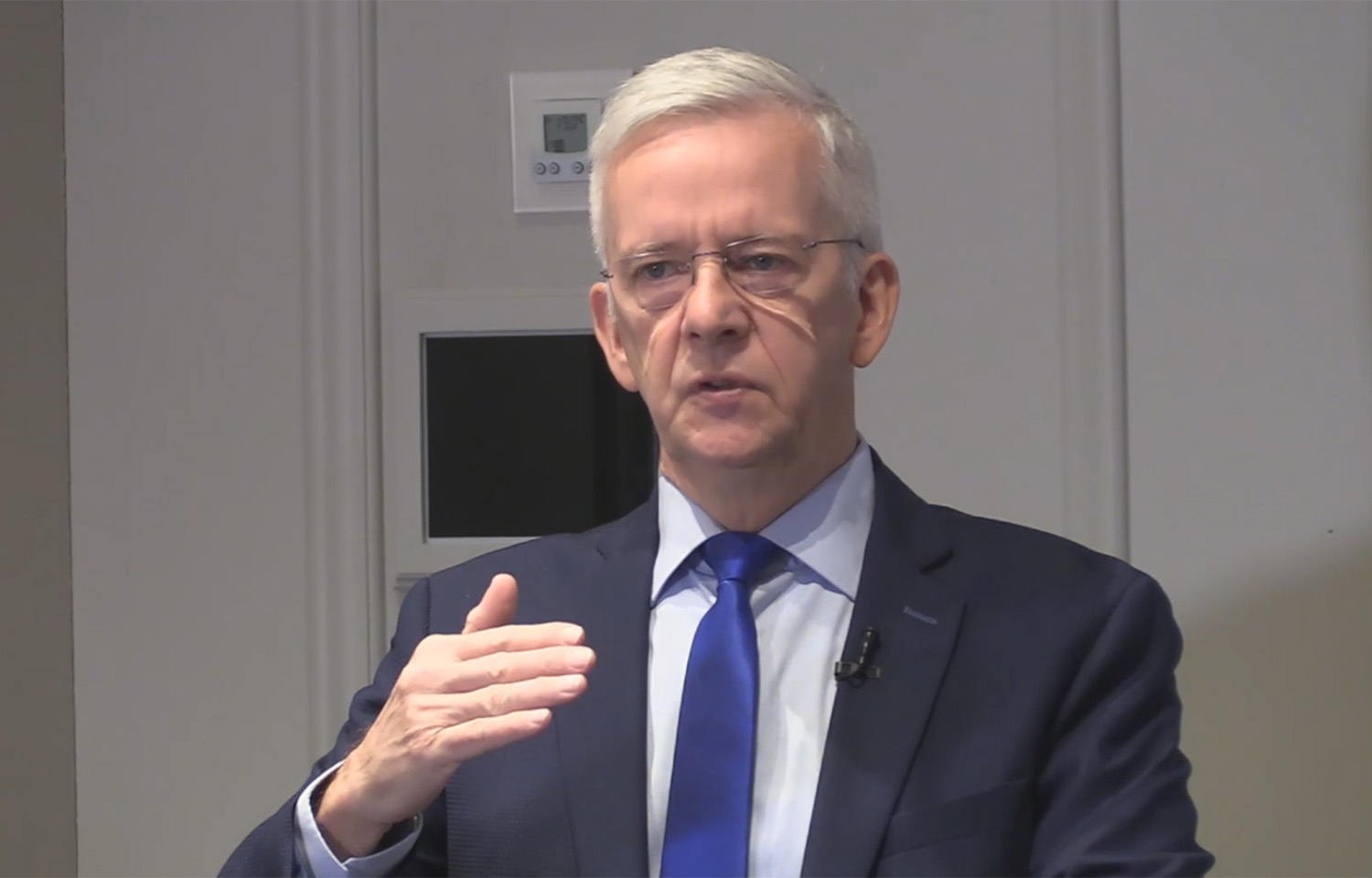
Bakkafrost CEO Regin Jacobsen said the producer entered the year with “a strong biological and operational foundation,” particularly in the Faroe Islands, where farming operations continued to deliver robust growth, record high harvest volumes, high harvest weights, and low feed conversion ratios.
At the same time, fish health remained strong and mortality was low, he confirmed.
The Scottish farming segment reported an operational EBIT loss of DKK 10.10 (USD 1.57, EUR 1.35) per kilogram, compared with a DKK 2.53 (USD 0.39, EUR 0.33) per kilogram profit a year ago. Scotland’s freshwater segment also posted an operational EBIT loss linked partly to technical and water quality challenges during the ongoing ramp-up of the Applecross hatchery facility. Despite those issues Bakkafrost said biological performance and survivability in Scotland had improved year-on-year, with the company continuing its transition towards larger, higher-quality smolt production.
The average transferred smolt weight from Applecross reached 269 grams during Q1, up 16 percent year-on-year, while average smolt weight across all Scottish transfers rose 29 percent to 218 grams.
Jacobsen said the benefits of the strategy are expected to become increasingly visible from 2027, with improved fish health, stronger growth, and lower biological risk.
“The negative EBIT is expected to turn positive with the ramp-up phase,” he said. “We see that the share of larger smolt is now increasing steadily in Scotland. This is the cornerstone of our de-risking strategy in the Scottish farming operation: Large smolt, shorter sea-phase cycles, and less exposure to risk. Once at full capacity, this will fundamentally change our risk picture in Scotland.”
Jacobsen said the company’s Scotland operations have shown steady improvement, which continued in Q1 2026.
“The sea farming operation in Scotland is improving biologically, with good growth, stable conditions, and low mortality,” he said. “But in this quarter, the main issues have been low prices and low volume – no scale, with the harvest in this quarter flat from last year.”
In the meantime, on the back of the strong biological performance and high biomass at sea, Bakkafrost has raised its 2026 Faroese harvest guidance from 92,000 GWT to 97,000 GWT. The total group harvest guidance is 117,000 GWT, including 20,000 GWT from Scotland.
To support higher biomass growth, the company has also increased its expected feed production for 2026 from 165,000 metric tons (MT) to 175,000 MT.
Jacobsen said that the broader salmon market remained challenging during the first-quarter as global supply increased 14.6 percent year-on-year – contributing to a 5 percent fall in benchmark salmon prices – averaging NOK 87.95 (USD 9.47, EUR 8.15) per kilo.
Nevertheless, the group saw demand remain strong across most markets, particularly in China, with the expectation that supplies will tighten through the remainder of the year.
“That will support stronger prices,” Jacobsen said.
Bakkafrost is continuing with its previously announced DKK 5 billion (USD 777.4 million, EUR 669.1 million) investment program for 2026-2030, aimed at reducing biological risk, improving efficiency, and supporting long-term production growth across both the Faroe Islands and Scotland.
This plan includes expanded smolt capacity, new farming technologies, processing investments, and additional freshwater treatment vessels. The company is targeting total annual harvest volumes of 162,000 GWT by 2030.
