




Norway-based seafood investment firm Bluefront Equity recently secured a new investment from Builders Vision – an impact platform founded by Lukas Walton – that shows the appeal of the firm to impact investors targeting the blue economy, according to Bluefront CIO and Founding Partner Simen Landmark.
Builders Vision’s investment for an undisclosed amount will support the firm’s second fund, Bluefront Capital II. Builders Vision is also working with Bluefront to form an Impact Advisory Council (IAC), a strategic initiative aimed at enhancing the firm's impact management and measurement (IMM) efforts.
“We have been in dialogue with Builders Vision for many years. We are very proud and humbled to get Builders Vision as investor. They help us with both network and knowledge,” Landmark said.
Landmark told SeafoodSource Bluefront is the only fund targeting the ocean space with a traditional buyout strategy, which has helped drive interest from many investors seeking exposure to this very important area. Bluefront’s investments center on improving ocean health, promoting fish welfare, and enhancing resource efficiency. Its first fund, Bluefront Capital I, closed at USD 62 million (EUR 60.4 million) in 2021.
Bluefront Capital II has already exceeded that amount and is continuing to fundraise until this summer. Most of the investors in the first fund have also invested in Bluefront Capital II, according to Landmark. Among these are Norway-based Havfonn (Bergersen family), Steensland Group, 3S Invest, Klaveness Marine, and TD Veen. Nordic private equity firm Cubera has also put money into the fund, as has U.S.-based asset management firm Commonfund.
Capital II maintains a similar investment mandate as the first fund by focusing on companies delivering products, services, and technologies that contribute to a more sustainable seafood value chain, Landmark said.
“In general, we search for a market-leading position in fast-growing and attractive niches with global potential,” Landmark said. “Since the launch of the first fund, several new low-emission production methods with significantly more investments per [kilogram] produced have gained traction. Rising ocean temperatures are an important ‘motivator’ for investments in new production forms. This results in sudden oxygen drops, sea lice attacks, and other predators entering new waters.”
Landmark said Bluefront experienced “great traction” in the ventures the first fund invested in and that the average growth in the portfolio last year was around 25 percent.
Landmark also said the portfolio addresses a number of key sustainability issues impacting the aquaculture industry’s ability to scale up, such as lack of oxygen competence, ocean health monitoring, certifications to prevent escapes, AI solutions to prevent overfeeding, temperature control using low/no-emission technology, and biosecurity solutions.
Landmark said Bluefront learned many lessons from its first fund. One is that being an industry-specific investor significantly reduces risk while also helping Bluefront select market segments and companies that grow faster than the general seafood megatrend.
Landmark said Capital II has also made its first two investments – in Cryogenetics and Horizon Software.
“Cryogenetics is a leading provider of technology and services for the preservation of aquatic genes, supporting sophisticated fish breeding and contributing to biodiversity conservation,” he said. “It also has a long history of profitable growth. Horizon Software (formerly FiiZK Digital) is an integrated part of the farmer’s operations. Their digital solutions optimize biological data and corresponding production planning, aligned with Bluefront's focus on improving fish welfare and operational efficiency in aquaculture.”
Referring to analysis from November 2024, he said the market is much larger than expected and growing by 12 percent each year.
“We experience increasing deal flow every year, and many of the targets have seafood as a small and growing segment in their strategy,” Landmark said. “We recently did an analysis of the relevant transactions in our investment universe and identified around 60 relevant transactions in 2024.”
As such, it is likely Capital II will be followed by more funds.
“Our vision is to build the world’s leading seafood impact investor, so our aim is to establish several new funds over the upcoming decades,” he said.
Landmark said in general there has been a notable increase in investments within the seafood sector, particularly in areas that enhance sustainability, such as digitalization, automation, improved fish welfare, and reducing the environmental footprint.
“Investors are increasingly focusing on solutions that address these challenges, recognizing the importance of sustainable practices in the industry's future.”
He said notable transactions include Novo Holdings’ acquisitions of Benchmark Genetics (genetics) and Stingray Marine Solutions (aqua-tech); Goldman Sachs’ acquisition of Frøy ASA (live fish transportation vessels); American Industrial Partners’ acquisitions of Aquaship/Internship (service vessels and live fish transportation vessels) and FSV Group (service and harvesting vessels); and CAI Software’s acquisition of Maritech (seafood trading software).
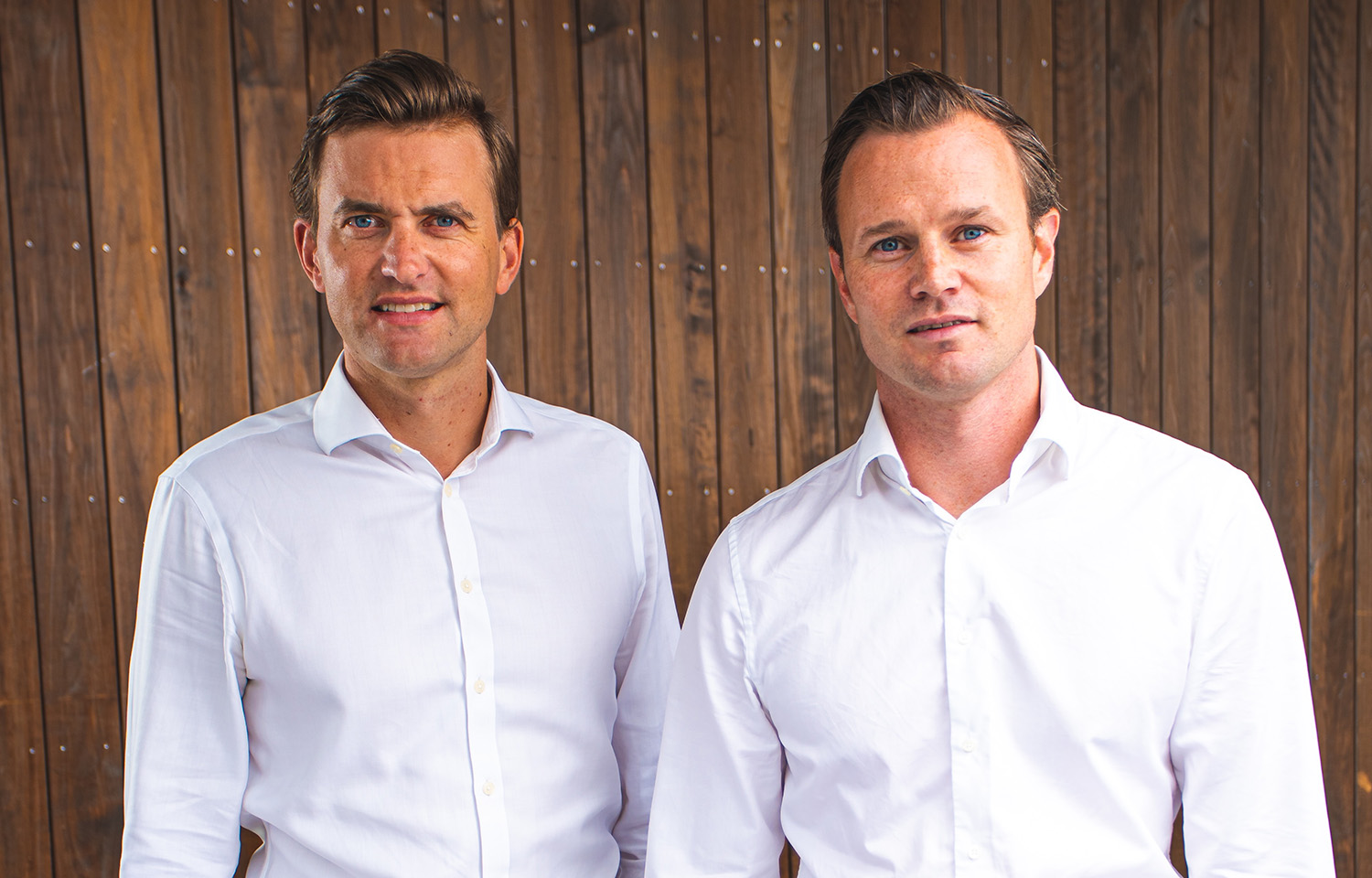
The firm hasn’t deviated far from the original strategy, devised by Landmark and fellow founder Kjetil Haga – who have known each other for over a decade.
“We actually met already at the soccer team at NHH (Norwegian school of economics) back in 2004. We discussed the idea of building a seafood-specific fund at the afterparty of a wedding of a mutual friend in the summer of 2015,” he said. “This eventually led to the establishment of Broodstock Capital, our legacy fund, in 2016. Finally, Bluefront was established during the pandemic in 2020 – around 16 years after our first meeting.”
