






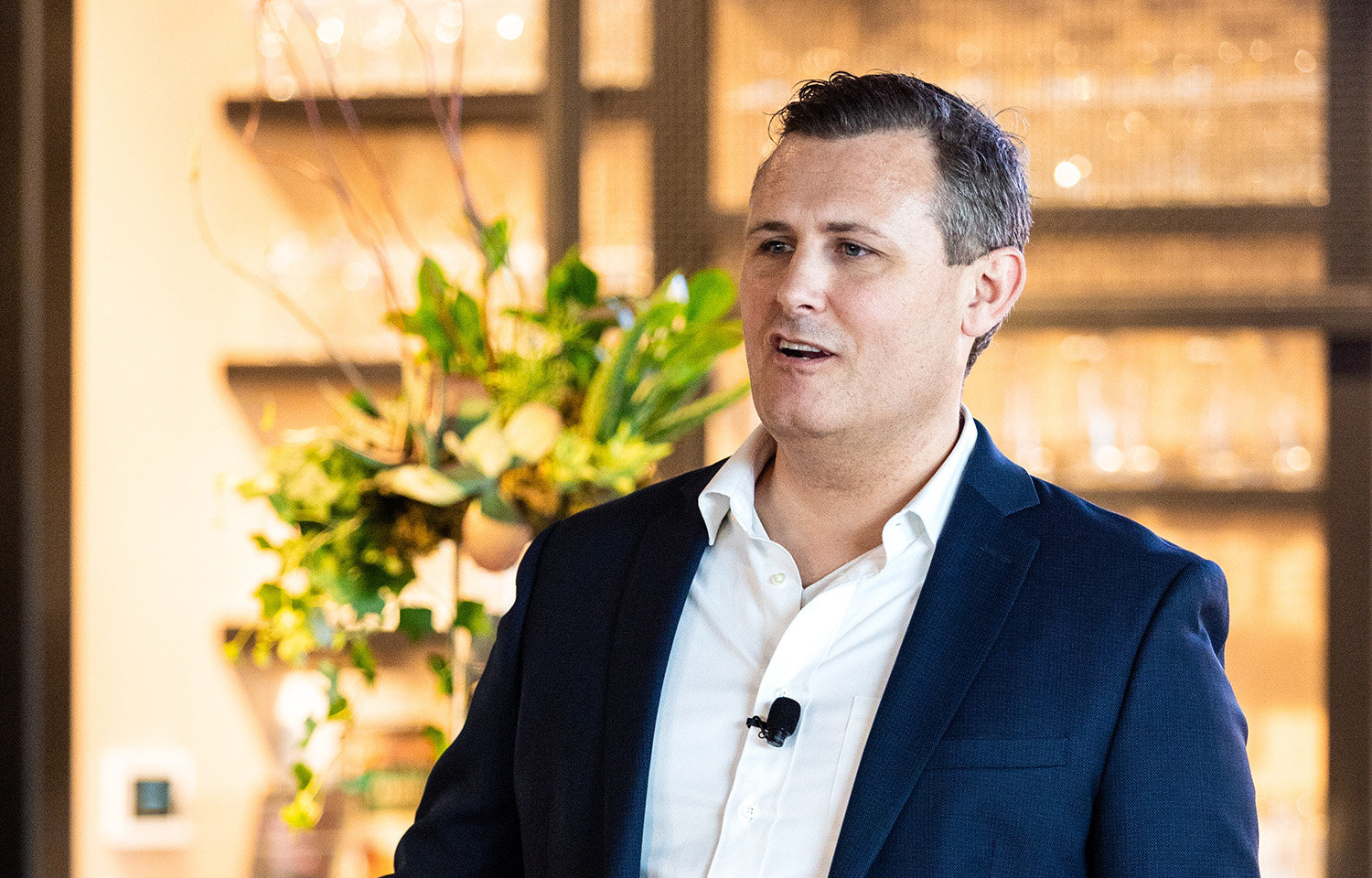
Larsen Mettler, the managing director Chicago, Illinois, U.S.A.-headquartered investment firm S2G Investments' ocean strategy, said he believes the world's oceans represent a huge investment opportunity that often goes unrecognized and untapped.
“The natural capital in the ocean is worth around USD 22 trillion to USD 25 trillion [EUR 19 trillion to EUR 21 trillion],” he said. “These are investable opportunities."
Though traditional investors have historically shied away from investing in the oceans, perspectives are starting to change, Mettler said.
S2G's ocean strategy launched in 2020 with USD 100 million (EUR 85.6 million) dedicated toward supporting blue innovations in the maritime sector. Mettler and Co-Managing Director Kate Danaher oversee the firm's oceans strategy, which is focused on “early, venture, and growth stage projects” ranging in focus throughout the sector, and investing in businesses that are ready to scale and commercialize in ways that can radically transform the ocean sector.
“That means companies with USD 10 million [EUR 8.6 million] plus of revenue and positive cash flows,” Mettler said.
Mettler explained that companies often hit trouble after they’ve achieved Series A funding and are ready to move on to series B and C funding. Impact investors and philanthropic funds are interested in supporting startups are no longer there to help them, he explained, and traditional investors are typically too conservative to take a chance on them until they’ve grown larger.
“It’s hard to find funding," Mettler said. “We’re hoping to fill some of that gap.”
S2G's ocean strategy is focused on four areas: ocean data, blue foods, maritime decarbonization, and blue biotech.
"One thing that’s different about our strategy is that we’re quite focused on areas that overlap with other verticals we have expertise in. We call it ‘investing at the seams,’” Mettler said, adding that this philosophy S2G employs entails thinking structurally about how the supply chains of its key investment areas in animal health, human health, and climate are connected and making investments to support those connections.
Mettler told SeafoodSource he sees particular promise in companies working in ocean data.
“We need to understand what’s happening in the ocean before we can make intelligent investment decisions in the space," Mettler said, explaining that ocean data companies are often able to unlock previously inaccessible capital in innovative ways. “If we’re investing in netpen aquaculture, for example, we want to be able to get data that can tell us how the sites have performed historically, such as water temperatures, superchill events, and algae blooms. If you get enough good data, you could then also go to insurance companies and maybe insure your biological stock. If you have insurance, maybe you can even go ahead and get a loan against some of your floating inventory, which would be new and novel.”
S2G's ocean strategy has also placed focus on maritime decarbonization and recently published a report on the topic which encouraged companies to adopt decarbonization technologies now, arguing that this would produce both business and sustainability advantages.
In that report, Danaher again emphasized that “investing at the seams” was important.
“This sector intersects nearly every part of our global economy – from energy infrastructure and food systems to industrial supply chains and consumer goods. That complexity makes decarbonization challenging, but it also presents a powerful opportunity to drive system-wide efficiency and emissions reductions,” she said. "While breakthrough innovations are on the horizon, there are existing market-ready solutions delivering real progress. With targeted investment and greater attention to these technologies, the industry has a real opportunity to accelerate progress on the transition."
Mettler agreed that there are technologies that are ready to advance change now.
“We are starting to see some of these early stage companies grow up," he said.
To prove his point, Mettler brought up the example of sea lice counting cameras. Until recently, this technology was solely recognized as valuable from an environmental and animal welfare perspective, but it did not offer an obvious monetary return on investment.
In June, however, Norway announced legislation that would link sea lice counts on salmon farms to allowable biomass, making it, in the words of Norway’s Minister of Fisheries and Oceans Marianne Siversten Næss, “more profitable to operate with a low environmental impact.”
Mettler called the new legislation a “game changer” for technology companies providing sea lice data services. The timeline between investment and return may be longer in the ocean sector, due to the inherent volatility of the ocean and its many stakeholders, but smart investments in the sector pay off, he said.
Mettler said he is confident that the success of the Ocean Fund will convince others to recognize the sector’s huge potential for investment.
“There’s been some narrative of, ‘Hey, there haven’t been any wins for investors in the ocean sector,’” Mettler said. “I respectfully disagree. Look at the number of billionaires who have been made out of aquaculture, or wild fisheries, [or] from shipping. You’re not going to have industries that feed 3 billion people on the planet not be investible.”
