





The Yucatán Peninsula in Mexico is home to the largest octopus fishery in North America and one of the largest in the world, and Instinción Trading Founder Fabrizio Mata wants more people to know about it.
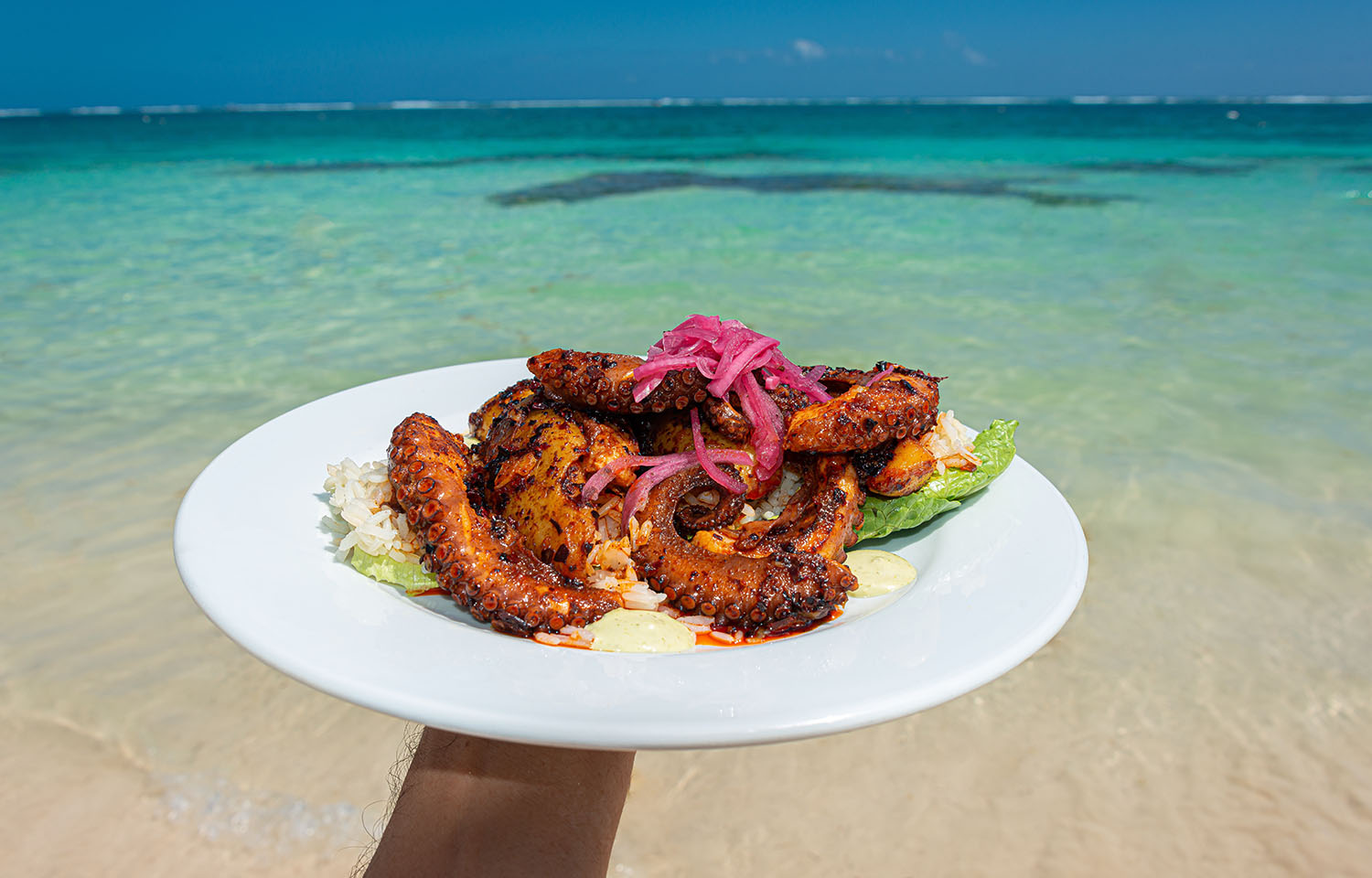
Maya octopus, also known as Yucatán octopus, pulpo Maya, or the four-eyed octopus, is caught in the region of Mexico that gave it its name. According to data from Mexico’s National Aquaculture and Fisheries Commission, the average catch is in excess of 20,000 metric tons (MT) a year.
The fishery is involved in a fishery improvement project that is working toward Marine Stewardship Council certification, with participation from the Mexican government. The fishery is one of the most important in its region, supporting thousands of jobs and millions in economic activity.
Despite its importance, Mata told SeafoodSource a lot of the octopus caught in the region is processed elsewhere, and many people barely know it exists.
“What happened was, back in the day, the producers here weren’t at the scale where they could work with advanced processing, and even to this day, the large ones don’t have a proper distribution engine and markets,” Mata said.
Companies in Spain, which already has its own octopus industry, quickly stepped in to fill that gap with their own processing capacity. According to Mata, a large portion of the catch in Mexico is sent to European processors before being sent to end markets.
This, he said, has led Instinción Trading to look into creating new opportunities in Mexico.
Mata is originally from Merida, which is located on the Yucatán Peninsula, and his grandfather – who emigrated from Spain to the region – was involved in fisheries and processing in the area. He said that as a kid, he moved to the U.S. due to his father’s job, and after graduating high school and college, he got a job in New York City in the finance sector.
Mata said he was involved in other industries for a time, but got reinvolved with the family business of octopus when his father had the opportunity to reactivate a processing plant for the species.
“He told me about it, and I was like, ‘I’ll take a look,’ and then I started digging deep,” he said.
Mata said the fishery immediately caught his attention as one with a great story as well as a great business opportunity.
He said one thing that stood out to him was the large volumes of octopus that Spain has been exporting to the U.S. every year. By value, frozen octopus is Spain’s largest seafood export to the U.S., and the country sent USD 115 million (EUR 100 million) worth of frozen octopus alone in 2024. Combined with other products like prepared and dried products, Spain’s total octopus exports to the U.S. totaled nearly USD 150 million (EUR 131 million).
According to Mata, a portion of those exports comprise octopus originally sourced in Mexico, and a lot of times, importers don't even realize the origin.
“They process it, and all of a sudden, you have a tentacle and it’s Spanish or it’s Italian,” he said. “They even sell it back to Mexico!”
Mata said Mexico's octopus fishery is leaving money on the table for fishermen, as most can expect their catch to be sold for USD 3.00 to USD 4.00 (EUR 2.62 to EUR 3.49) per pound, while processors will get many times that price.
Mexico already has a lot of processing capacity to handle octopus, Mata explained, leaving the door wide open to emphasize the uniqueness of the Maya octopus and extract more value.
“There’s no reason to export and reimport,” he said. “There’s no reason why all the production here needs to be outsourced.”
Mata said he’s already started to work with U.S. chefs in places like New York City to begin calling out the Maya octopus by name. The species also recently received Mexican Geographical Indication, which is a protection for the product that identifies its unique characteristics and origin. The program is similar to what established products like tequila and mezcal, which are associated with regions of Mexico.
“I think there’s a unique narrative,” Mata said. “I think the rails are in place for this species to become a special product.”
He said the initial goal is to use restaurants in the U.S. to drive recognition by tapping into foodservice trends. Yucatán has its own unique cuisine, something which is becoming increasingly recognized in fine dining. For instance, Holbox, a restaurant in Los Angeles named after an island off the coast of the Yucatán, was granted a Michelin star for its take on recipes from the region.
Barring any sort of special recognition or premium price point, he said the species still makes sense economically if processing is shifted away from Europe. Mexico is already known for its industrial capabilities – which are frequently cheaper than other places – so if processing is rerouted to Mexico, it still makes sense if it remains a commodity product considering Europe tends to be more expensive.
“That’s why when I saw this dynamic, I said, ‘There’s no way.’ It blows my mind because there’s no reason from an economic or sustainability standpoint; why do we have to freight this all to Europe?” Mata said. “Don’t get me wrong. There is demand from Europe, too, but the real market is the U.S."
For Mata, establishing a more robust supply chain in the Yucatán also means fishers whose livelihoods are supported by octopus can have better lives. Some rely on octopus fishing as a sole source of income, which is difficult when the fishery only lasts for three-and-a-half months out of the year.
“Everything is against the producer, the fisherman, the actual operator,” he said. “Even without the further downstream impact, if we can get to the level of at least the U.S. market accepting cooked and processed octopus out of Mexico, I think we can be very competitive.”
