

Norwegian land-based salmon farming company Salmon Evolution has raised NOK 365 million (USD 34.6 million, EUR 32.3 million) through a private placement to help fund the next phase of its operations.
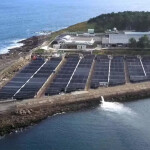
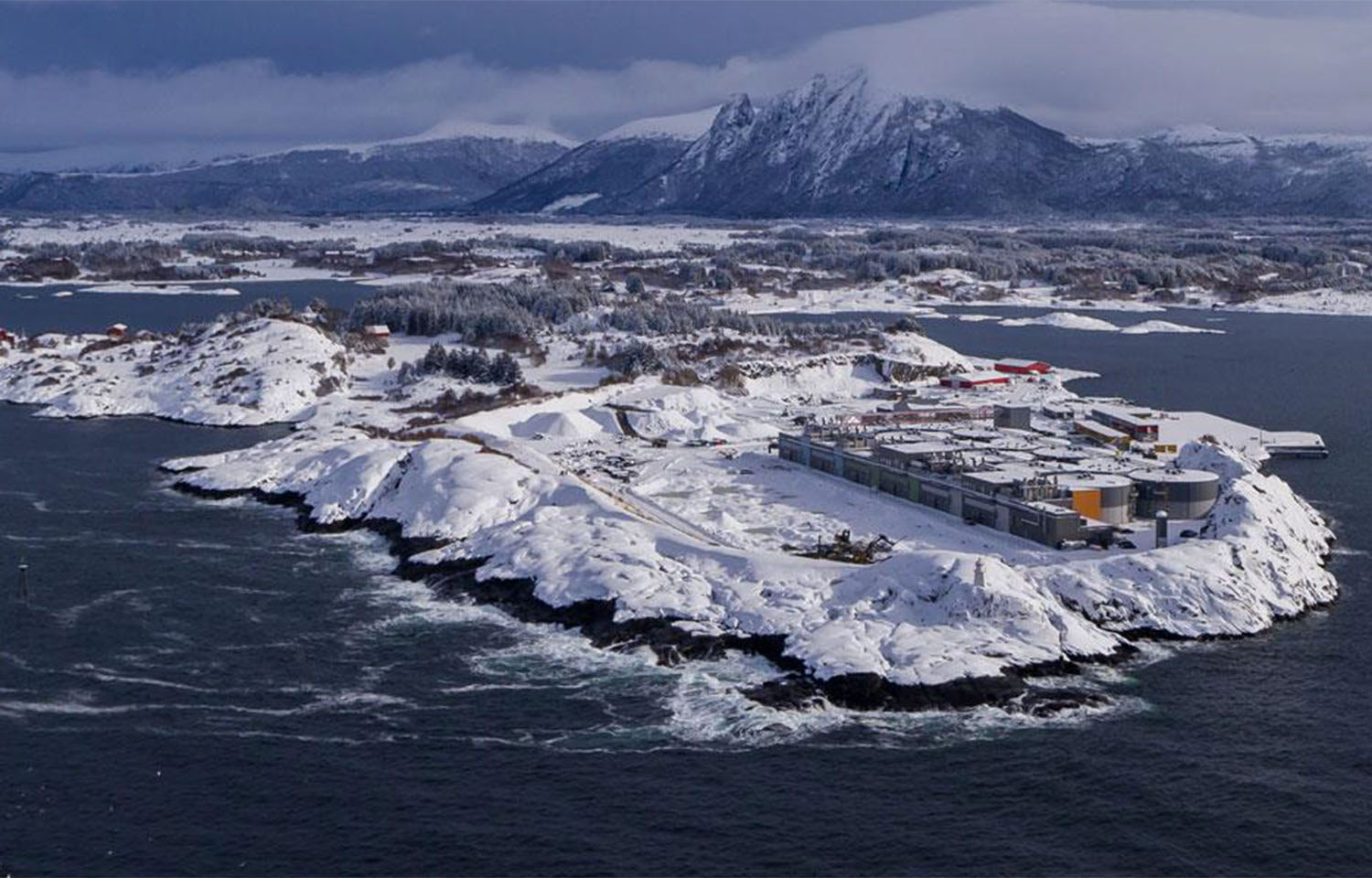
SalmonEvolution announced the private placement on 18 June to help it finance the first and second phase of construction of its flow-through salmon aquaculture facility on the island of Indre Harøy, Norway.
Salmon Evolution was initially seeking NOK 350 million (USD 33.2 million, EUR 30.9 million), but within eight hours, it had already raised NOK 365 million.
The private placement unlocked NOK 675 million (USD 64 million, EUR 59 million) in additional financing from unnamed banks, boosting its total accessible capital to NOK 2.225 billion (USD 211 million, EUR 196 million), subject to certain drawdown conditions. Between the private placement and the new financing agreements, the Phase 2 buildout is now fully funded “with a buffer,” Salmon Evolution said.
“This is really a transformative milestone, as we now are creating a fantastic platform that is fully funded for 18,000 tons gutted with a significant cashflow generating capacity that can support strong organic growth,” Salmon Evolution CEO Trond Håkon Schaug-Pettersen said.
Salmon Evolution recently posted its first positive earnings ever in Q1 2024 on the back of a successful harvest and strong pricing for its salmon.
Schaug-Pettersen said the newest private placement and financing “creates the foundation” for the future of the business via the construction of Phase 2, which will add 10,100 metric tons (MT) of head-on gutted salmon farming output.
“We have now been operating the farm for over two years, and really demonstrated the viability of farming salmon on land at scale, and with strong biological results,” he said. “During the first quarter, we finally demonstrated strong financial results. We are now very much ready for Phase 2.”
Phase 2 of the new facility will be an “improved copy” of phase 1, with additional tank capacity and a higher output.
“With Phase 2, our operations reaches critical mass, and it is expected to generate a substantial operating cashflow, putting us in a position with significant organic growth capacity both at Indre Harøy, but also elsewhere,” Schaug-Pettersen said.
Schaug-Pettersen said Phase 2 will enable the company to operate more efficiently and economically, as it will utilize some infrastructure from Phase 1. The growout infrastructure to be built in Phase 2 will be nearly identical to Phase 1, and the company's plan is to copy the plan for Phase 3 as well, according to Schaug-Pettersen. All told, the Indre Harøy facility has licensing and land sufficient to increase capacity to 36,000 MT of HOG salmon.
“Then we are talking about a quite substantial farming operation,” Schaug-Pettersen said.
Salmon Evolution is also making changes to its production plan to increase its capacity by using pre-growout-tanks to raise smolt up to 400 grams and then harvesting its salmon at lower average weights. The program will allow the company to conduct 8 harvest cycles annually, up from the previously planned 6 cycles.
“By having more batches, we also increase our regularity when it comes to harvest, which is important from a commercial perspective,” Schaug-Pettersen said. “We also reduced the operational risk, while at the same time getting more operational flexibility.”
Salmon Evolution estimates it will begin Phase 2 construction in Q3 2024, but added that no agreements or final decisions or agreements have been made.
