



The tide appears to be turning after a period of instability in Spain’s seafood industry.
On 3 October, Actemsa won court approval of a restructuring plan that will see the A Coruña, Spain-headquartered seafood firm avoid bankruptcy.
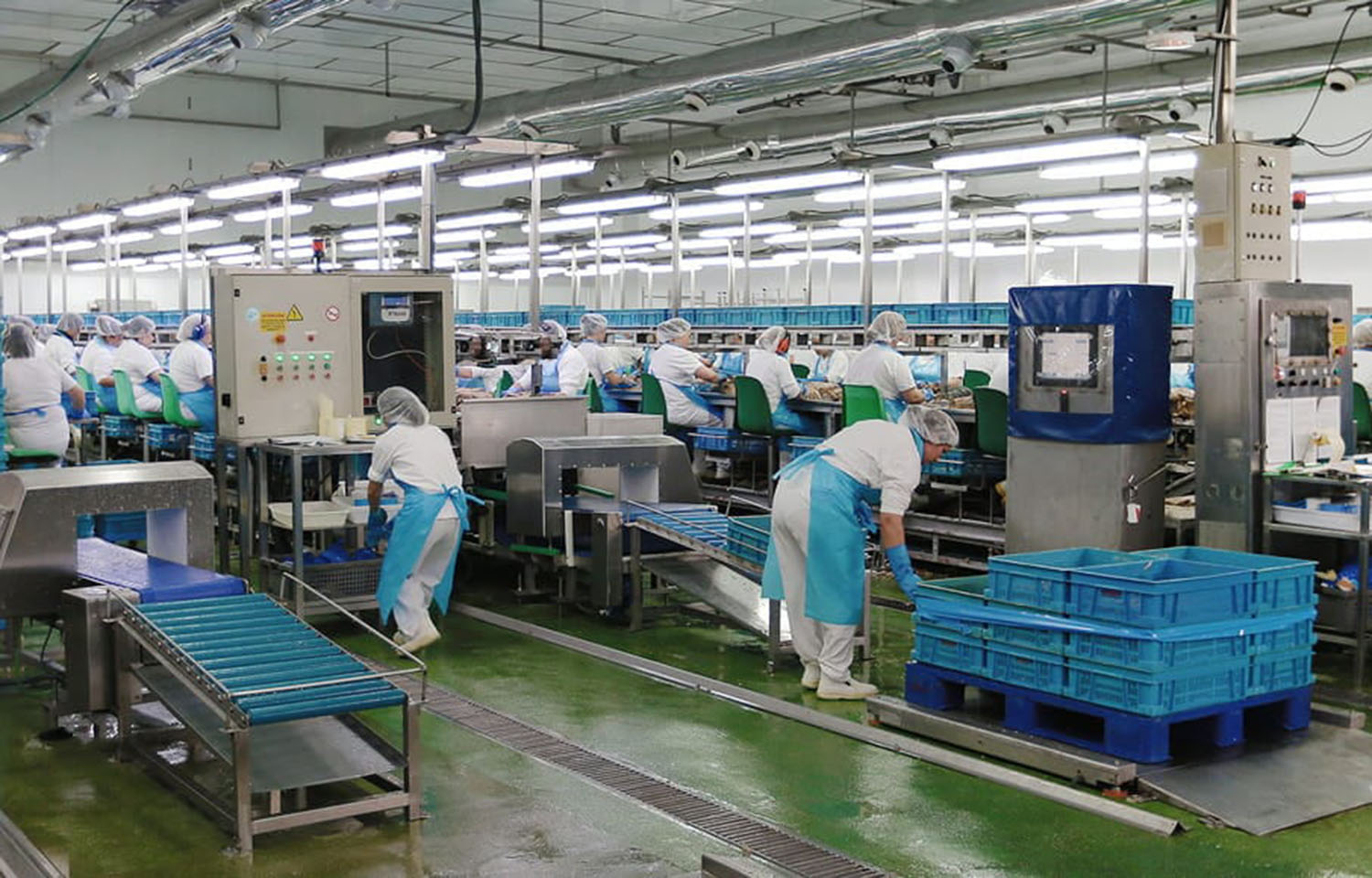
Actemsa, which operates a 12,000-square-meter processing plant as well as a canning facility in Brazil, filed a pre-bankruptcy notice on 27 October 2023, revealing EUR 114 million (USD 120.5 million) in debt as a result of struggles with overtstock and plunging tuna sales.
Under the restructuring, Actemsa will be merged with the Villaval real estate firm, and the new entity will become a limited company. It will contribute EUR 7.5 million (USD 8.2 million) to its creditors via a capital reduction, and fellow Spanish seafood firms Jealsa and Albacora will each contribute EUR 9 million (USD 9.9 million) in participatory loans, according to Faro de Vigo. Albacora will supply Actemsa with raw material, and Jealsa has promised to purchase Actemsa’s products.
“[They] are committed to providing the essential support and assistance to promote the viability and continuity of the chilled loin business over the 10-year period of the plan,” Actemsa wrote of Jealsa and Albacora.
The deal condemns financial creditors Santander, Sabadell, Ibercaja, and CaixaBank to take a 65 percent reduction on one of the tranches of its debt, with the remainder of their collective EUR 40 million (USD 44 million) in debt to be paid off as much as possible by Actemsa through the divestment of real estate assets and income from outstanding invoices. Of the EUR 95.3 million (USD 104.6 million) in assets affected by the restructuring, Actemsa has pledged to pay off EUR 20 million (USD 22 million) in total debt, with the remainder moved into a debt-for-capital swap to be repaid over 10 years with a 3.5 percent payment-in-kind interest rate, according to Faro de Vigo.
Keeping Actemsa an operating entity will ensure the preservation of 160 full-time jobs and 400 additional jobs indirectly tied to its business.
“This is a success story that shows that when all the parties involved in the restructuring join forces and row in the same direction, the rescue and continuity of viable companies from a business point of view can be achieved, despite the fact that they are going through a complicated financial situation,” José Carlos González, the managing partner of Ceca Magán, a firm that organized the restructuring, told Faro de Vigo.
Exhibiting its own strength, Jealsa recently committed to rebuilding its seafood-processing facility in Bodión, Spain, which was lost to fire in May 2021.
The company has not yet set a date to commence construction, but it plans to increase production fivefold, from 5,500 metric tons (MT) of tuna loins annually to 28,000 MT, with the majority of products made for its Rianxeira brand. It will also install a traditional peeling line and a state-of-the-art peeling line created out of internal research and development work, Faro de Vigo reported.
Raw materials will come from a shift in fishing activity from the Atlantic to the Indian and Pacific oceans, Jealsa CEO Jesús Manuel Alonso Escurís told Economía Digital in August 2024. Jealsa operates tuna purse-seiners and an auxiliary support vessel, which it is shifting to the Indian Ocean. It is also currently studying the potential of fishing in the Eastern and Western Pacific Ocean, which will help it attain synergies with its processing plant in Guatemala and better market opportunities in accessing the U.S. West Coast.
“Global fishing in the Atlantic has been declining over the last three years, leading vessels in the sector to abandon this ocean, concentrating their efforts mainly on the Indian Ocean,” Alonso Escurís said. “This, added to [International Commission for the Conservation of Atlantic Tunas] proposals to add new restrictions, has led [us] to rethink its strategy and explore new fishing alternatives through access to other fishing grounds.”
Jealsa’s strength and Actemsa’s recovery closes a chapter of relative weakness for Spain’s typically robust seafood sector. Over the past year, Fandicosta was bought out by Wofco; Atunlo entered bankruptcy proceedings and was recently declared worthless by its primary investor; Frime renegotiated its mounting debt; and Videmar has opted for liquidation, which is pending court approval.
Another positive sign for the industry was the recently released 2023 financial performance of A Coruña-based Congalsa, which operates five production plants with a combined capacity of 60,000 MT annually. The company surpassed EUR 150 million (USD 164.6 million) in revenue in 2023, up 14 percent. It is planning to build a sixth plant in A Pobra that will open by Q1 2025, according to its CEO, Julio Simarro.
“The aim is to expand our production capacity with products similar to those we already make,” Simarro told Faro de Vigo at the 2024 Conxemar fair.
Simarro said Congalsa is leaning hard on Sulpasteis for growth after investing EUR 8 million (USD 8.8 million) into its subsidiary, which it acquired in 2020.
“It is still very early, but we think that in a few years, this business can be multiplied by two or three,” Simarro said. “It is a business with much more potential."
