





Streamlined aquaculture regulations would help the U.S. boost sustainable seafood production, but according to experts recently speaking on a panel at Climate Week NYC’s Water and Blue Foods Summit, ensuring the success of such products must start with securing consumer awareness and buy-in.
“You’ve got to get it popular before the consumer,” Monterey Bay Aquarium Vice President of Global Ocean Conservation Jenn Kemmerly said. “If you’re not writing about it, educating the consumers about bringing diversity and different flavors to their plate, and the chefs aren’t on board, this is going to be increasingly difficult. The producers can do all they want, but we’ve got to get it in front of people. We’ve got to build awareness.”
Marine Stewardship Council (MSC) U.S. Program Director Laura McDearis explained that to sustain current demand and make room for increased consumption, the U.S.’s production of seafood, which primarily comprises wild-capture operations, will have to expand to aquaculture.
“The truth is that wild fisheries are basically already fished at maximum sustainability levels, so if we want to increase seafood production … [and] have healthy seafood available for more people, we need to turn to aquaculture,” she said.
Aquaculture Stewardship Council (ASC) Senior Programs Director Kathleen McDavitt further explained that responsibly farmed seafood uses less land and water and produces fewer greenhouse gas emissions than many land-based proteins, but emphasized that regulatory hurdles like open ocean permitting have held back U.S. aquaculture.
“There shouldn’t be quite so much red tape,” McDavitt said. “[Aquaculture] is something that’s very beneficial for environmental and social reasons, so we should be working together to make it easier between state governments and the federal government.”
The U.S. aquaculture sector has long sought for a new permitting framework for offshore fish farming, arguing that the current framework is too duplicative and costly, preventing commercial fish-farming operations from getting off the ground. Federal regulators have begun to take notice, with the administration of U.S. President Donald Trump recently releasing the America First Seafood Strategy, formally declaring its intent to create a more predictable permitting process in federal waters.
“We’ve prioritized sustainability of our wild-capture fisheries for a long time. Ninety percent of U.S.-based landings are voluntarily in the MSC program, which is higher than any other country across the globe,” McDearis said. “That’s the United States demonstrating their leadership in terms of sustainable management with seafood, but the opportunity is really to expand that into aquaculture moving forward.”
Still, even with federal backing, production can only go so far if the market for it isn’t there, according to Kemmerly.
“Even if we get increased production of farmed species here in the United States, even if we are sourcing the best seafood that’s produced environmentally and in a socially responsible way, we’ve got to get it into the market,” Kemmerly said.
When educating consumers on seafood sustainability, Marine Stewardship Council (MSC) U.S. Program Director Laura McDearis said the conversation should not focus on the differences between wild-caught and farmed seafood.
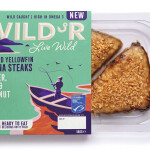
“It shouldn’t be either/or; it should be both,” she said, adding that the MSC, as well as the Aquaculture Stewardship Council (ASC), have developed eco-labels that can be found on products and menus that make it easy to identify whether seafood is coming from a sustainable wild-catch fishery or a responsible farm.
Kemmerly added that consumers clearly care where their food comes from and what environmental impact it has, so the seafood industry’s next logical step is to market sustainable seafood as something shoppers actively want.
“We’re seeing U.S. consumers – and consumers across the globe – changing their diets for environmental reasons. People are increasingly concerned about the state of our world’s oceans,” she said. “But, the positive here is that most of them already think that the challenge we have can be overcome, that we can still save our planet from irreparable damage. Our marine ecosystems and planet can truly recover, but more importantly, the choices that people make matter. So, buy local, buy sustainable, [and] continue to eat seafood so we can continue to support our industry.”
