






Seattle, Washington, U.S.A.-based American Seafoods is the world's largest at-sea processor of Alaska pollock and Pacific hake. The firm’s two primary fishing locations – the Bering Sea for pollock and the North Pacific Ocean for hake – are both Marine Stewardship Council (MSC)-certified.
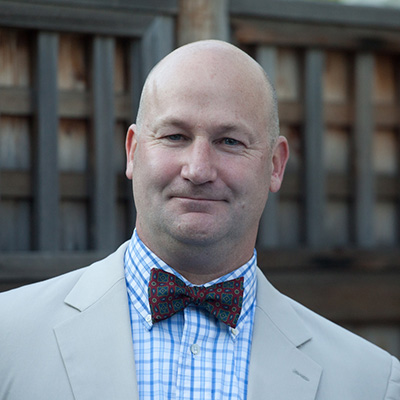
Tim Fitzgerald joined American Seafoods as chief sustainability officer in 2021. Prior to joining American Seafoods, Tim worked for nearly two decades at the Environmental Defense Fund (EDF), where he led the organization’s work with investors and industry to improve the sustainability of global fisheries and aquaculture.
SeafoodSource spoke with Fitzgerald about how American Seafoods leverages sustainable fisheries and responsible practices to create value for the company and its customers.
SeafoodSource: Can you provide an overview of American Seafoods’ operations – where you fish, what species, the number of boats you have, processing capabilities, etc.?
Fitzgerald: American Seafoods owns seven catcher processor vessels that operate in the Alaska Bering Sea pollock fishery and the Pacific hake fishery. We process and freeze our catch at sea within minutes of coming onboard and have a logistics network that distributes our products to hubs in North America, Europe, and Asia. Our primary production is for fillet blocks and surimi, but our factories are optimized for 100 percent utilization – meaning we also produce large volumes of high-quality fishmeal and fish oil from processing byproducts. Our fish is a key ingredient in thousands of products from McDonald’s Filet-o-Fish sandwiches and California rolls to premium pet food and everything in between.
SeafoodSource: With that scope of operations and harvesting activities, what are the sustainability issues that are priorities for American Seafoods?
Fitzgerald: We are fortunate to operate exclusively in two of the world’s most sustainable fisheries. Not only are these highly productive ecosystems, but we also benefit from an adaptive science-based management system with a decades-long track record of excellence. That allows us to invest in things like gear innovation, reducing incidental catch, and maximizing operational efficiency. In short, our goal is to catch our quota as quickly, safely, and sustainably as possible.
SeafoodSource: What types of sustainability issues, data collection, and reporting requirements are coming from government regulation and which are coming from buyer procurement policies?
Fitzgerald: I think it’s safe to say that we are experiencing more regulatory compliance and reporting burden than ever before. Off the top of my head, I’d say we are governed by at least 10 federal agencies and regulatory bodies on everything from fisheries management and maritime operations to worker safety and food quality.
On the buyer side, our European customers are really driving the conversation in terms of sustainability/ESG reporting. In some cases, they rely on our data to help inform their own sustainability targets; in other cases, they have their own compliance requirements at the country or E.U. level on issues like carbon accounting or extended producer responsibility that eventually trickle down to us.
Luckily, we’ve developed sustainability priorities and a voluntary reporting scheme that aligns with many of these topics, so we generally feel well-equipped to respond. But, I’d be lying if I told you I enjoy filling out dozens of different surveys every year.
SeafoodSource: How has sustainability evolved for American Seafoods in terms of internal priorities and external requirements?
Fitzgerald: For us, everything flows from well-managed, science-based fisheries management. With that as a foundation, we’ve been able to achieve third party eco-certification, end-to-end traceability, and a transparent code of conduct for our crew in a relatively straightforward manner. It also allows us to sidestep some of the stickier issues currently facing the seafood industry like IUU or human rights abuses that occur in less transparent fisheries and more complex supply chains.
With these issues more or less in hand, we’ve been able to expand the horizon of our sustainability program to include things like pressure-testing our logistics and procurement networks, carbon accounting and decarbonization efforts, new recycling programs, packaging optimization, ESG reporting and transparency, technology innovation, exploring alternative fuels, and more.
SeafoodSource: What values are returned to American Seafoods for its sustainability work?
Fitzgerald: Probably more than I can name! In some cases, we are directly delivering cost savings to the business every time we figure out how to burn less diesel, ship fewer pallets, use less packaging, or divert operational materials from the landfill.
Beyond that, I fully believe our emphasis on sustainability strengthens our market position, provides extra assurance to our owners, lenders, customers, and other stakeholders, gives our crew and employees a sense of pride, and perhaps even helps bring more young people into our industry.
SeafoodSource: What are the key elements of a company sustainability strategy that helps realize those values?
Fitzgerald: I think it really comes down to integration. If sustainability is just a word or program that exists in a silo or an annual report, it will never really deliver true impact. We’ve had the most success when our operations teams, engineers, warehouse staff, procurement specialists, logistics experts, and vessel crew are bought into the program. That’s when the strategy really starts to translate into results.
