

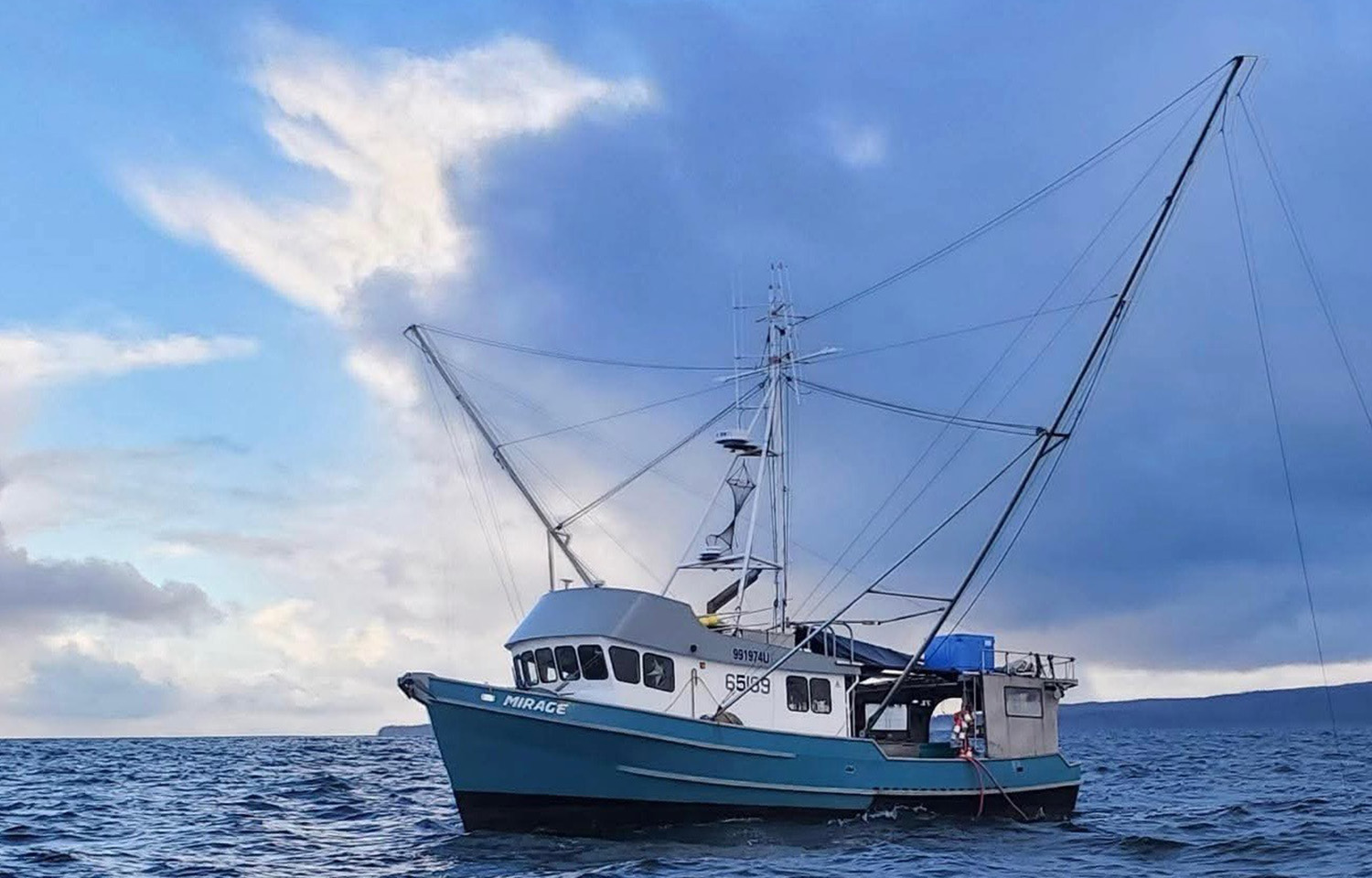
Jeff Turner has owned and operated his commercial fishing vessel Mirage since 2010 in Sitka, Alaska, U.S.A.
This year, thanks to a U.S. Department of Energy (DOE) grant awarded to the Alaska Longline Fishermen’s Association (ALFA), his boat was rebuilt to have hybrid diesel-electric capabilities.
“This electrification project came up through ALFA, and I applied. They sized the boat, it had space for the project, and they motivated me to be the crash test dummy, if you will, to see if we could put it to use,” Turner said. “It’s been pretty exciting; the team was excellent. Everyone involved from all the vendors, every person, every craftsman throughout was extremely motivated and excited to work on it. I’ve never suffered so enjoyably.”
ALFA is an Alaskan nonprofit founded in 1978 to represent small-scale fishermen and promote the health of local fisheries and fishing communities. Membership comprises local fishermen who help with research, attend management meetings to testify for sustainability measures, and work to maintain the health of fishing communities.
“I fish alongside them, so I know and care about them and their families a lot,” ALFA Executive Director Linda Behnken said.
The DOE grant for USD 700,000 (EUR 594,510) was awarded to ALFA in 2023 for a project known as ALFA BETA, or ALFA Boat Energy Transition Accelerator. Behnken said the project was inspired by six years of work with the Alaska Fisheries Development Foundation collecting data on energy usage with a broad array of fishing boats to learn how to lower operating costs through operational changes and boat modifications.
Once the grant funding was secured, Turner’s 50-foot steel boat underwent construction in Sitka’s boatyard for about five months through what he called the region’s worst winter in memory, with multiple days below 10 degrees Fahrenheit.
Mirage is a longline and troller vessel that fishes for halibut and sablefish and also fishes hook and line for salmon.
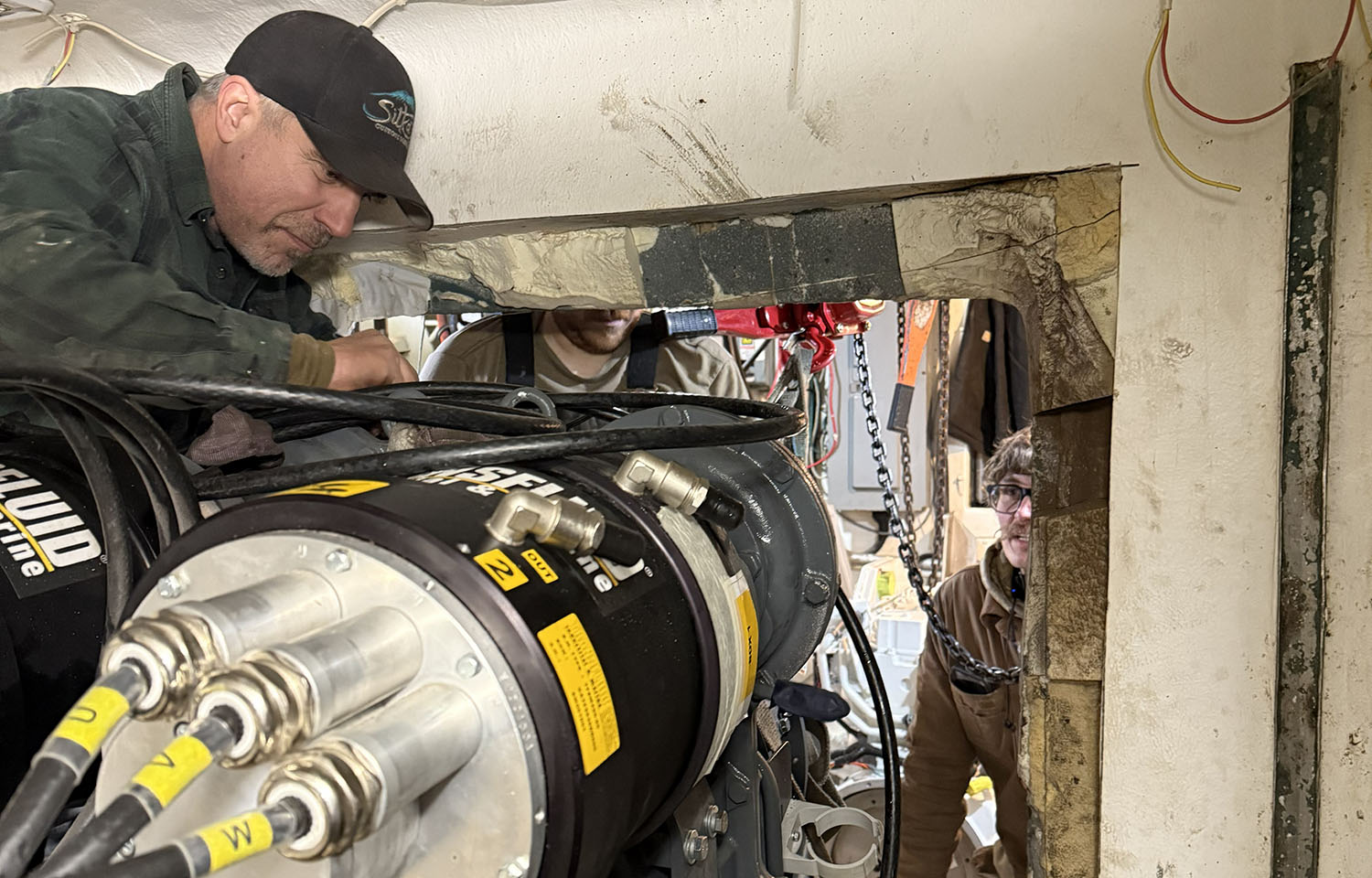
The project installed a transfluid system, which includes a parallel diesel and electric motor, giving Turner the ability to operate either on diesel fuel or on a set of noiseless, rechargeable batteries. Behnken said it’s the first hybrid fishing vessel in the nation with commercial capabilities.
“It’s just been a lot of time working on it, raising the money for it, and making it happen,” Behnken said. “This is the way a person not only makes their livelihood, but their life depends on the equipment working when they’re out at sea, especially in bad weather with a crew depending on them. Making sure it would work and making sure we were there to answer any questions or solve any challenges that came up was pretty big. There was some pressure.”
It was also important to source work locally in Sitka, Behnken said.
Jeremy Serka, owner of Sitka Custom Marine, led the project, alongside Ben Matthys of marine electrical business Southeast Sparks and University of Alaska Fairbanks Professor Chandler Kemp, who is an engineer.
“Jeff and I worked together over the last 15 years, so we’ve done a lot of work on Jeff’s boat in the past. I was excited to be able to keep working on Mirage,” Serka said. “It’s a really nice combo fishing boat for Southeast Alaska, and Jeff’s a good fisherman and does a good job taking care of his boat. Everybody worked really well together.”
Serka said the team moved the diesel engine about 22 inches forward to make room for the new hybrid electrical motor between the engine and transmission.
“We all took a sacrifice with this because this is a learning deal. Nobody really made a lot of money off it or even made our money [back], but we’re all happy to do it,” Serka said. “Jeff’s doing a lot of sacrificing, figuring the bugs out in the system, and so are we.”
For Turner, years of taking Mirage across the Gulf of Alaska from Southeast Alaska to Kodiak and seeing the fuel he burns inspired him to take part in enhancing his vessel.
“I’m not so sure if first is a good thing – first is risk, first is the unknown, first is the explorer, first is, ‘Oh my God, what have we done?’ I’m a data collection site,” Turner said. “Everything that happens, I pass it on to the engineers; they pass it on to the software developers and to the equipment designers, and they’re always trying to make it better. I talk to them every day. They’re like family dang near.”
One of the largest project complications was sourcing specialty parts for Mirage, which was built in Italy, and Turner said operating new software while the wind was blowing 25 knots and the waves were 10 feet high was nerve-wracking. However, he added that constant communication with engineers and ALFA made the process one he knew would be worth it.
Turner added that getting to use his brain in a different way has offered a good change of pace, and being able to operate Mirage noiselessly provides some peace and solace on the water.
Serka said he hopes this project will have a ripple effect and more fishermen will want to spend money on investing in electric capabilities, adding that he even hopes U.S. manufacturers will get involved in creating new technologies like this on a larger scale.
To that end, funding from the grant will now go toward building the same system on a gillnetter vessel and a Kodiak-based mariculture skiff.
On “launch day” for the Mirage, Senator Lisa Murkowski (R-Alaska) stood on the helm at the anchor alongside Behnken and Turner and popped a bottle of champagne to celebrate the achievement.
“When the senator comes calling, she’s on your boat, actually gets down to the engine room, is getting oil on her clothes, and is hearing your story, it kind of makes you want to try harder and do more,” Turner said.
