





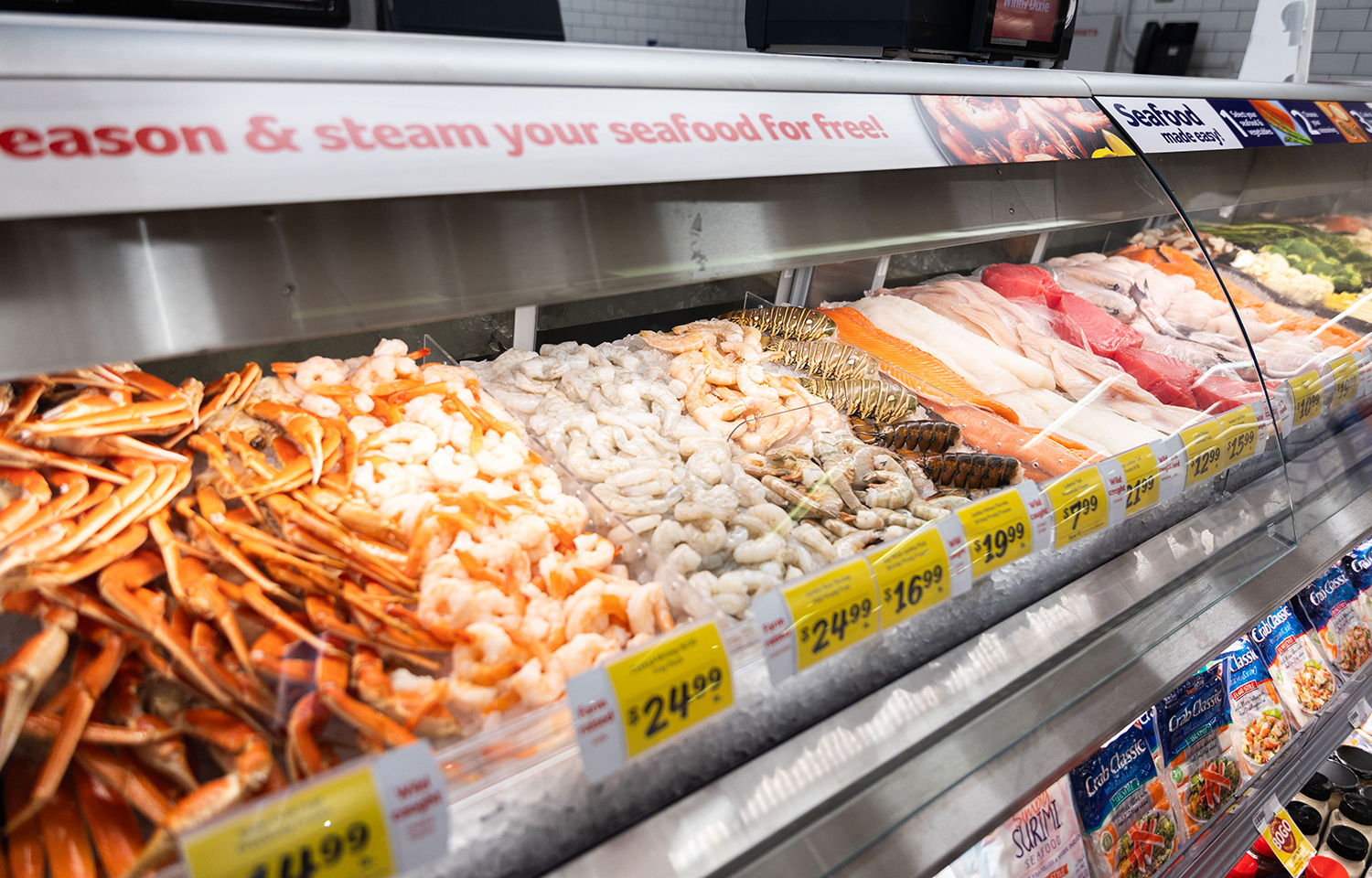
Seafood prices continued their inflationary trend in June at U.S. retail, rising 4.1 percent in the fresh category, 7.8 percent in shelf-stable, and 12.5 percent in frozen seafood, according to Circana data analyzed by 210 Analytics.
Depending on the species, inflation was even more dramatic. For instance, frozen shrimp prices rose 18.5 percent year over year in June, while frozen crab prices increased 13.5 percent. In the fresh category, tilapia prices rose 8.3 percent, and trout rose 5.8 percent.
Partly due to this inflation, sales by volume in fresh seafood dropped 2.2 percent year over year, and sales by value increased just 1.4 percent to USD 695.5 million (EUR 606.8 million).
Salmon remained the top-selling species in the category, with sales by value rising 4.5 percent to USD 338.8 million (EUR 295.6 million), and sales by volume rising 1.8 percent. Trout and tilapia both realized an increase in sales by value, but sales by volume fell 1.2 percent for trout and 1.7 percent for tilapia. Catfish sales by value in the category dropped 4.7 percent to USD 16.2 million (EUR 14.1 million), while sales by volume fell 11 percent.
In frozen, sales by volume fell 5.3 percent but still rose 6 percent by value to USD 667 million (EUR 581.9 million) thanks to inflation.
Frozen shrimp sales dominated the category by value, rising 6.9 percent to USD 327.9 million (EUR 286 million) but falling 8.2 percent by volume. Salmon sales in the category spiked 12.5 percent by value to USD 95.4 million (EUR 83.2 million) on the back of a 5.5 percent increase in sales by volume. Frozen cod sales by value saw big gains, rising 18.9 percent to USD 27.7 million (EUR 24.2 million), while sales by volume rose 4.8 percent.
Shelf-stable by value, despite inflation in the category, rose by both value and volume. Sales by value increased 12.6 percent to USD 299.6 million (EUR 261.4 million), while sales by volume rose 4.5 percent.
Tuna remained the biggest sub-category, but sardines continued its impressive run as a standout offering, jumping 40 percent in sales by value and 30 percent by volume.
“Annual sales [of sardines] now exceed USD 423 million [EUR 370 million], supported by a 19.3 percent increase in unit sales over the past year,” 210 Analytics Principal Anne-Marie Roerink said.
Seafood inflation, according to Circana, was on pace with overall food and beverage inflation during June.
Other data sources, such as the U.S. Bureau of Labor Statistics’s Consumer Price Index for June, found a 2.7 percent year-over-year increase in food-at-home prices for the month and a 0.2 percent increase month over month.
"June's relatively steady food inflation report should be welcome news for grocery shoppers following the larger increases we saw earlier this year, even as the longer-term outlook remains uncertain,” FMI – The Food Industry Association said in a statement. "While food prices remain elevated compared with a year ago, June’s historically consistent increase is an encouraging sign for families who continue to carefully manage their household budgets.”
Nevertheless, there are still “significant uncertainties” ahead, FMI warned.
"Developments in global energy markets, geopolitical tensions, and other supply chain pressures could affect food costs in the short and medium terms. The recent resumption of conflict in Iran serves as a reminder that global events can quickly ripple through the food supply chain. Energy prices, transportation costs, fertilizer, animal feed, packaging, labor, weather-related disruptions, and international trade all play a role in determining the prices consumers ultimately see on grocery store shelves,” the organization said.
