





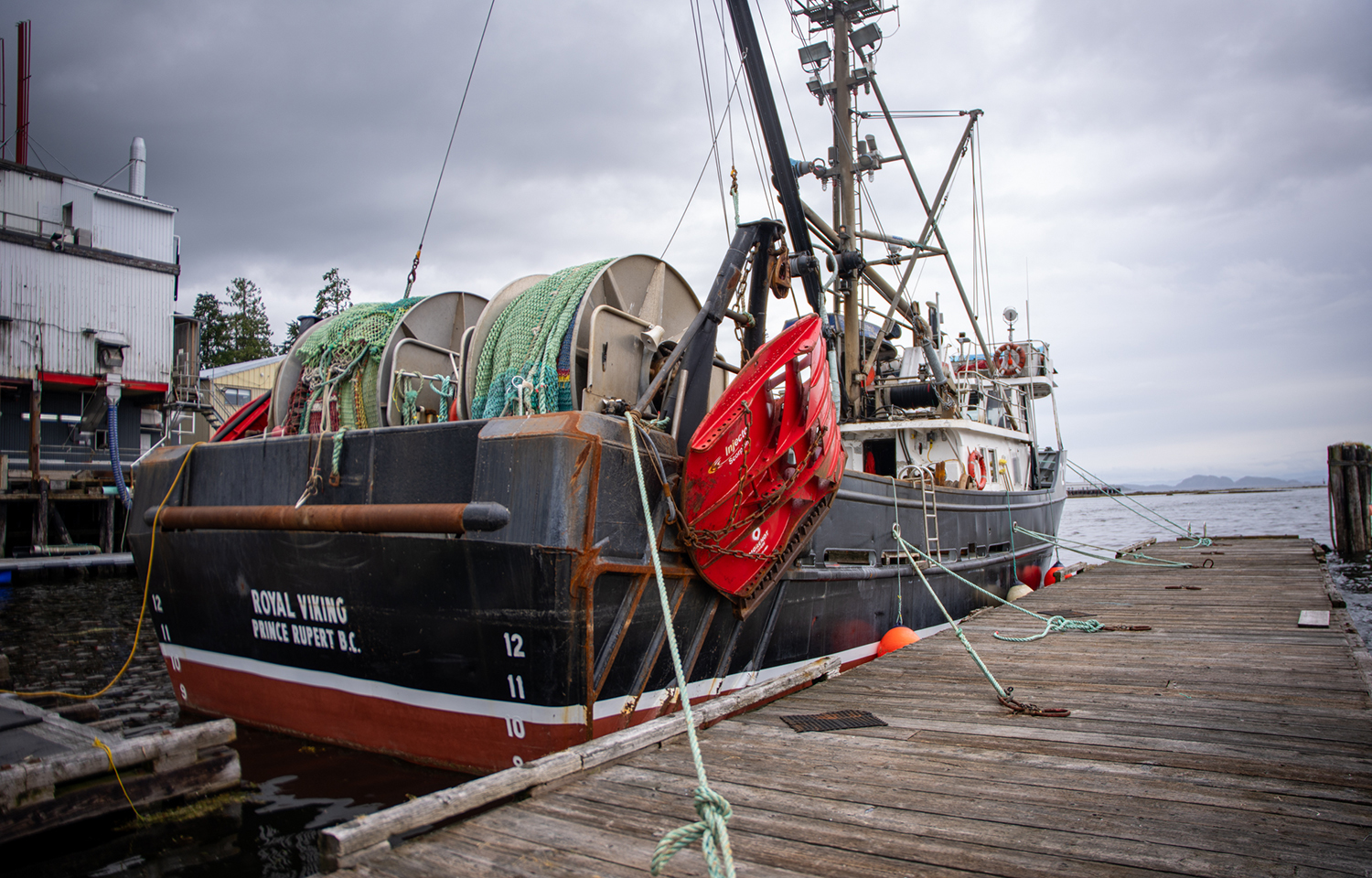
British Columbia’s groundfish trawling fleet has secured Marine Stewardship Council (MSC) certification, which the Western Canadian province’s fishing industry said is a reflection of its work to address longstanding concerns over conservation of delicate marine habitats.
The MSC certification covers both bottom trawl and midwater trawl fishing in Canadian Pacific waters off the coast of British Columbia for 16 groundfish species, including sole, sablefish, lingcod, pollock, and several types of rockfish.
Zoe Ahnert, the executive manager of the Deep Sea Trawlers Association of British Columbia, said achieving this certification is a major milestone for the fishery, coming after a decade of collaboration between the industry, scientists, and fisheries managers to rebuild stocks, introduce measures that aim to protect delicate marine habitats, and improve accountability and monitoring of the fishery.
“The British Columbia groundfish trawl fleet operates under one of the most rigorous harvesting sustainability frameworks in the world. We have an award-winning industry-led trawl footprint that was developed to protect sensitive deep-sea habitats, including coral and sponge ecosystems,” Ahnert said. “We have also been a driving force behind key initiatives such as 100 percent rockfish retention and the establishment of the Habitat Conservation Review Committee, alongside the implementation of the trawl footprint. All of these initiatives reflect our ongoing commitment to a sustainable trawl fishery in British Columbia.”
According to Ahnert, the British Columbia trawl fleet produces over 132 million high-protein meals annually, provides 1,100 jobs in fishing and related activities, and generates CAD 68 million (USD 49 million, EUR 42.2 million) in annual wages.
The fishery is managed via total allowable catch rates, individual vessel quotas, gear and area restrictions, and bycatch management rules. Canada’s Department of Fisheries and Oceans Canada (DFO) sets quotas for the fishery and carries out audits and stock assessments to ensure sustainability, Ahnert said.
MSC certification of the fishery expires in December 2030.
Along with other North American trawl fleets, the fishery has been heavily scrutinized by conservation groups and other stakeholder groups, some of which have called for a ban on industrial trawl fishing entirely.
British Columbia’s trawlers in particular were the focus of a June 2024 report from Canadian conservation group Pacific Wild that examined the environmental footprint of trawling on Canada’s Pacific coast.
While Ahnert said actual trawling currently takes place on less than 6 percent of the province’s coast, the report claims that nine trawlers have collectively fished 89,700 square kilometers over the past 13 years – an area larger than Ireland.
The report also alleges the British Columbia fleet is responsible for large amounts of bycatch, including of salmon species like Chinook.
In 2024, DFO implemented a salmon bycatch management plan in conjunction with the trawl fishing industry, with a salmon bycatch cap of 9,500 pieces for the fleet. Measures such as vessel bycatch limits, daily reporting, and mandatory retention and monitoring of all salmon caught are also included in the plan.
Certification of British Columbia’s groundfish trawl fleet comes after the MSC recertified groundfish trawling in the Bering Sea Aleutian Islands and the Gulf of Alaska flatfish fishery.
The Amendment 80 fleet that secured certification comprises roughly 20 groundfish-trawling vessels and targets Akta mackerel, Pacific cod, rock sole, yellowfin sole, flathead sole, and Pacific Ocean perch in the Bering Sea.
That certification process led to criticism from nonprofits, fishing organizations, and Tribal groups who claimed the MSC’s credentialing lacked transparency and amounted to “greenwashing.”
“At best, MSC’s certification of the Amendment 80 fleet raises serious questions about how sustainability is defined. At worst, it enables greenwashing by giving industrial trawling a pass while ecosystems and coastal communities pay the price,” Bering Sea Fisherman’s Association Executive Director Karen Gillis said. “When industrial trawl fleets receive sustainability labels while small-scale fishermen and subsistence users bear the consequences, the system is failing the very people and ecosystems it claims to protect.”
In response, the MSC and the Groundfish Forum – a trade group representing trawl catcher-processors in Alaska – said the critical claims made were inaccurate and misrepresent the process MSC and MRAG Americas, the third-party auditor that certifies fisheries to the MSC standard, went through to reach the decision to recertify the fleet.
