






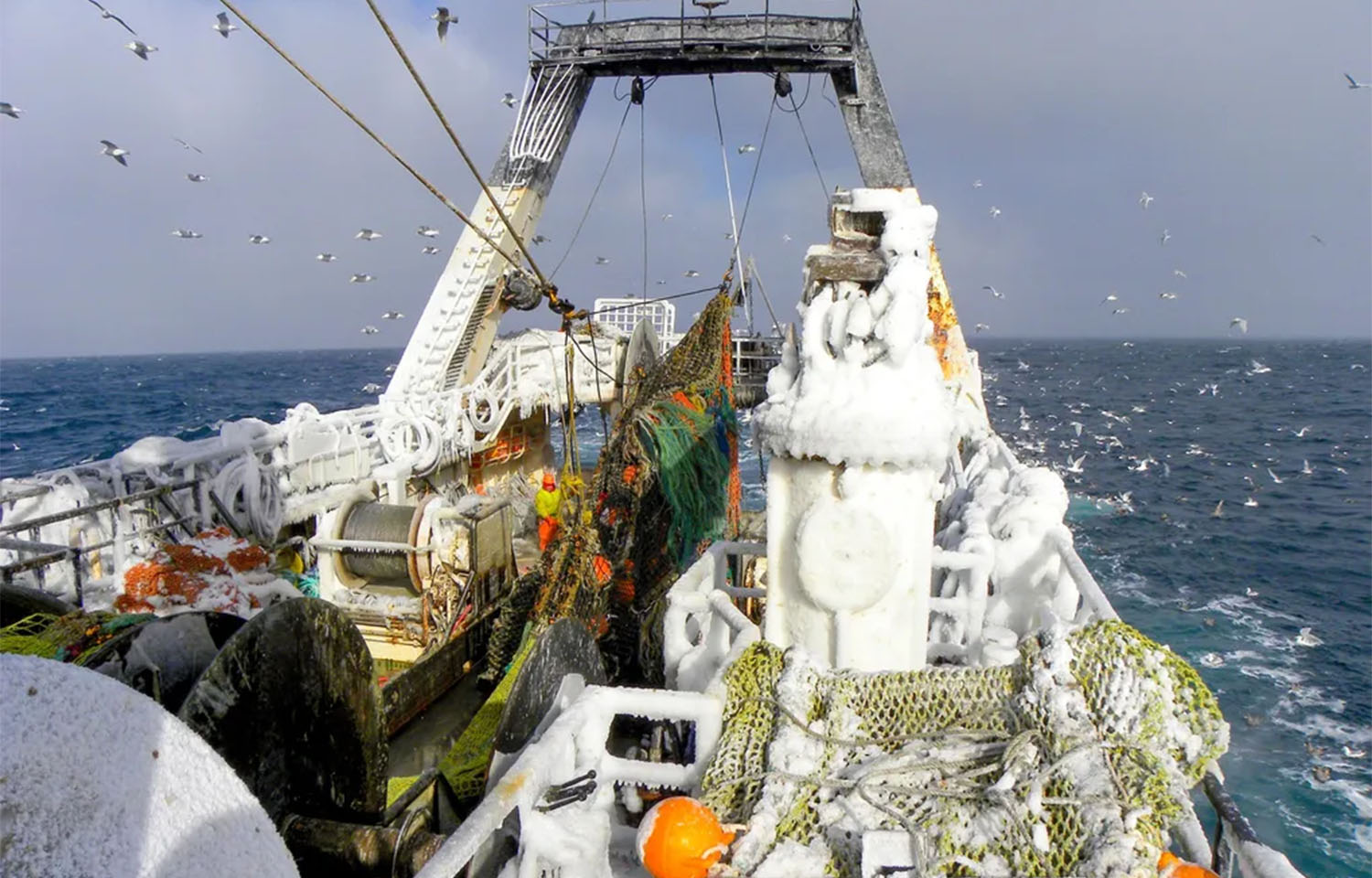
The Marine Stewardship Council (MSC) and the Groundfish Forum – a trade group representing trawl catcher-processors in Alaska – are pushing back against claims by a coalition of NGOs that the recent recertification of an Alaska flatfish fishery amounts to “greenwashing.”
A coalition of several NGOs, including SalmonState, the Bering Sea Fishermen’s Association, and Alaska Longline Fishermen’s Association, claimed the recent recertification of the Bering Sea Aleutian Islands and Gulf of Alaska flatfish fishery lacked transparency and was undertaken with little input from stakeholders. Both MSC and Groundfish Forum said those claims are inaccurate, and misrepresent the process MSC and MRAG Americas, the third-party auditor that certifies fisheries to the MSC standard, went through.
“The recent press release by SalmonState and others disparaging the re-certification of Alaska Flatfish by the MSC contains falsehoods, numerous factual errors, and misrepresentations about the sustainability of the Alaska flatfish fishery and the MSC certification process,” Groundfish Forum said.
The Groundfish Forum said the claims made by SalmonState are in some cases provably false. In the release, SalmonState Ocean Justice Program Coordinator Jackie Arnaciar Boyer claimed the lack of objections to the recertification process was because “no one, particularly in Alaska, even knew this was happening.”
MSC U.S. Program Director Laura McDearis also said the claims that stakeholder input was not involved in the certification process are “inaccurate.”
“The MSC assessment process requires third-party assessors to publicly post annual audit schedules, re-assessment timelines, comment periods, and certification deadlines on fisheries.msc.org,” McDearis said.
McDearis said the process to become a stakeholder and to get involved with how to engage with the MSC assessment process is readily available, and has been available for years.
“The flatfish fishery has been MSC certified for more than 15 years, and stakeholders have had – and still have – the opportunity to register at any point,” she said. “The list of stakeholders registered and consulted during the assessment is listed in the associated determination report.”
Groundfish Forum said that list of stakeholderse shows there’s clear evidence SalmonState, and Boyle, knew about the recertification process well in advance and had ample opportunity to comment.
Groundfish Forum said the MSC’s final certification report shows that SalmonState representatives attended a meeting with the MRAG Americas assessment team and an MSC representative on 29 April, 2025 – with Boyer listed as an attendee of the meeting.
“SalmonState’s claim that they were ‘unaware’ defies believability,” GFF said.
Groundfish Forum said the Alaska flatfish fishery is federally managed via a science-based process involving NOAA Fisheries and the North Pacific Fishery Management Council in a way that is open and transparent to the public.
“This system is globally recognized as the standard by which the sustainability of fisheries should be judged,” Groundfish Forum said. “Highlighted by its robust monitoring and enforcement safe guards, including two onboard fishery observers, vessel monitoring system, video monitoring cameras, and strict allocation limits in the rationalized Bering Sea fishery, the Alaska flatfish fishery has been independently certified as sustainable by the MSC for more than 15 years and was recertified in December 2025 for the third time.”
Groundfish Forum also pushed back on the NGOs’ claim that bottom-trawling destroys benthic habitat and degrades ecosystems on a large scale, making them inherently unsustainable.
“Calling a fishery sustainable when its bycatch and habitat impacts are bankrupting the future of our ocean and fishing communities undermines the credibility of the MSC label,” Alaska Longline Fishermen’s Association Executive Director Linda Behnken said in the release.
Groundfish Forum said the MSC report takes habitat impacts into account, and the flatfish trawl works to mitigate its habitate impacts through gear innovations and extensive area closures.
“Over 60 percent (over 645,000 nm2) of the EEZ off Alaska is already closed to bottom trawling to protect sensitive benthic habitats,” the Groundfish Forum said.
The organization also said the fishery worked with NOAA’s conservation engineering program to develop and test new gear to limit impacts, and peer reviewed science has shown trawl impacts are “not more than minimal” and impact just 4 percent of habitat in the North Pacific.
Groundfish Forum also said that the claims the flatfish fishery’s bycatch is unsustainable also ignores the MSC assessment’s efforts and the extensive oversight of the fishery, along with continued decreases in allowable bycatch.
“There is no suggestion in the MSC assessment or any stock assessment that flatfish trawl bycatch is impeding halibut or crab stock sustainability,” Groundfish Forum said.
Groundfish Forum said the fishery is one of the most highly monitored in the world, with controlled bycatch and minimal habitat impacts.
“The assessment further reflects the fishery sustainably produces large volumes of domestic seafood under a well-managed and science-based management structure,” Groundfish Forum said.
