

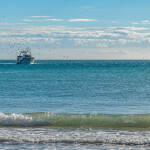

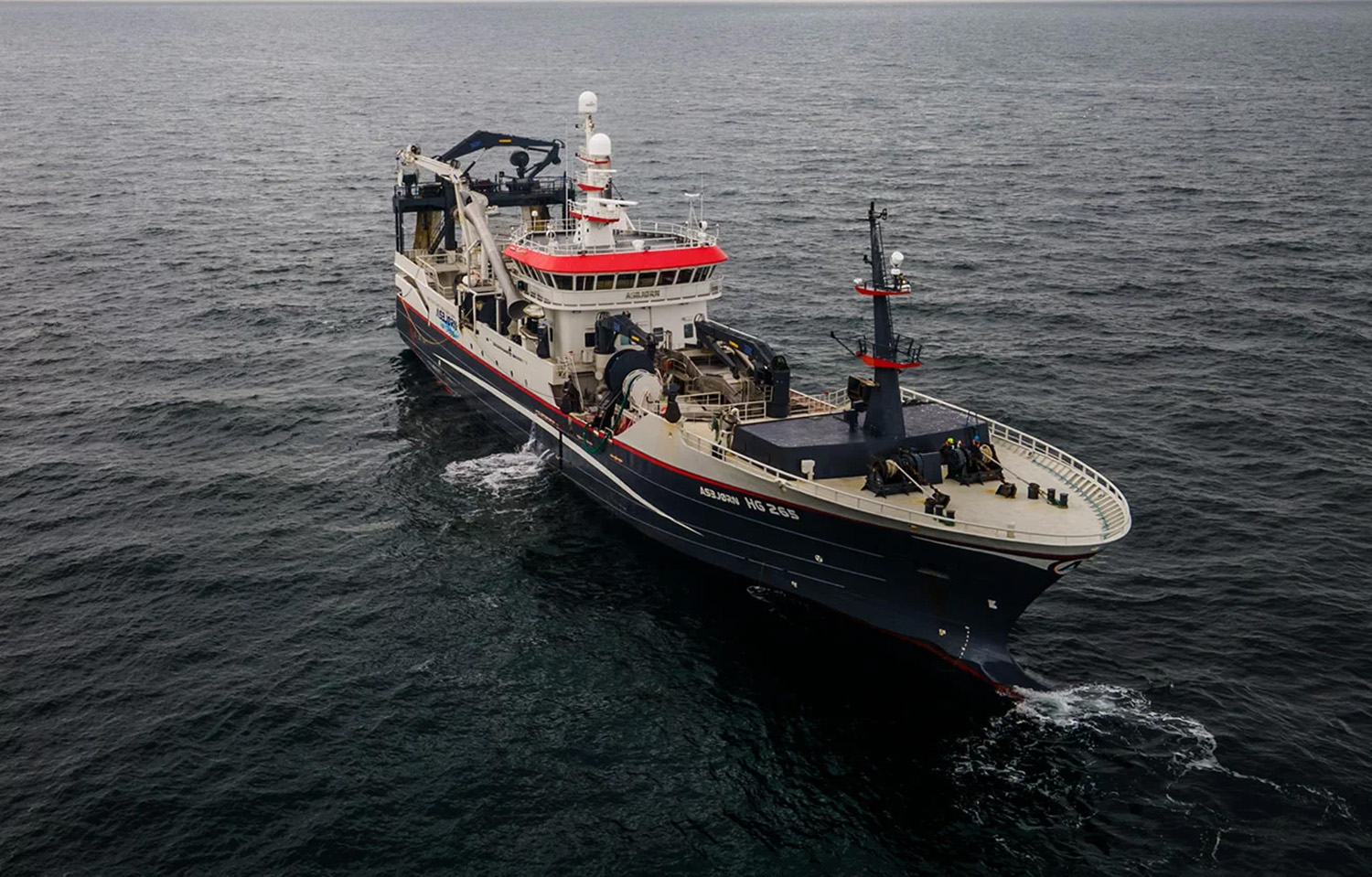
The Danish Pelagic Producers Organization (DPPO) set a goal in 2019 of achieving net-zero carbon emissions across its members’ vessels by 2040 through such innovations as intelligent trawl doors, implementing more electrical capabilities in ports, and more.
According to Esben Sverdrup-Jensen, the CEO of the Danish Pelagic Producers Organization (DPPO), an industry representative group with a member base that catches 10 percent of the E.U.’s catch by volume, the value proposition for engaging in the initiative was not always clear to Denmark’s pelagic fleet.
However, with the ongoing war in Iran causing fuel prices to skyrocket, he said it is much more clear now.
“It was fairly difficult to build a strong business case. The cost of producing your own electricity compared to getting your vessel normally into port was pretty much the same, so there was no return on investment, but that flips when fuel prices are doubled. I’m seeing more interest now in what we’re doing. With the current price, the business case is completely different,” Sverdrup-Jensen told SeafoodSource at the 2026 Seafood Expo Global, taking place in Barcelona, Spain, from 21 to 23 April.
He explained that the war in Iran is a different situation than global events that have caused shocks to the industry in the past, such as Brexit or the Covid-19 pandemic, and has forced fishers to look at short-term costs that may help establish longer-term stability.
“Nobody can really see an end to it, and it seems like it can happen again at any time. That brings people into a different type of perspective. We’ve always had a focus on reducing fuel costs as that’s a major part of running a company, but this has gotten people’s attention in a different way, meaning people may be more willing to run some risks in investing in new tech,” Sverdrup-Jensen said.
He explained that the fleet is no stranger to innovation, as DPPO members have already upgraded their vessels immensely; therefore, any opposition to carbon-reduction efforts was not related to disinterest or aversion to change but solely due to the economics behind such a transition.
“It’s probably one of the most modern fishing fleets in the world. The average age of a vessel is less than 10 years, so they’re already pretty far at the forefront in terms of energy efficiency [in regards to] heating, lighting, engines,” Sverdrup-Jensen said.
As the fleet aims to navigate the fuel crisis, he also called on the Danish government to move toward professionalizing the sector, specifically calling out legislation that places strict limits on who can own a fishing vessel.
“There is a feeling that we are falling behind because of some of the structural limitations within fishing legislation and the whole approach of looking at the fishing community as a culture more than a business while meeting the demands of global consumers. It is not only on a Danish level but also on a European level and probably a global level,” Sverdrup-Jensen said. “Give us the freedom to develop our businesses, and we will respond by delivering on a more responsible approach to everything we do. If you have limitations … we can’t take the next leap into a fully green transition.”
