






The Global Seafood Alliance (GSA), which operates the Best Aquaculture Practices (BAP) certification program, has announced a new marketing campaign in response to the results of an independent survey into the decision-making of consumers around sustainability certifications.
The study surveyed over 1,000 seafood-buying consumers from Canada, France, Spain, the U.K., and the U.S. It found that many seafood consumers are concerned about the way the fish they eat is farmed and that seafood certification labels influenced their decision-making.
Nearly half of the consumers surveyed were concerned about how the seafood they bought was produced, and more than half of consumers (53 percent) were concerned about the ethics and sustainability practices of aquaculture producers.
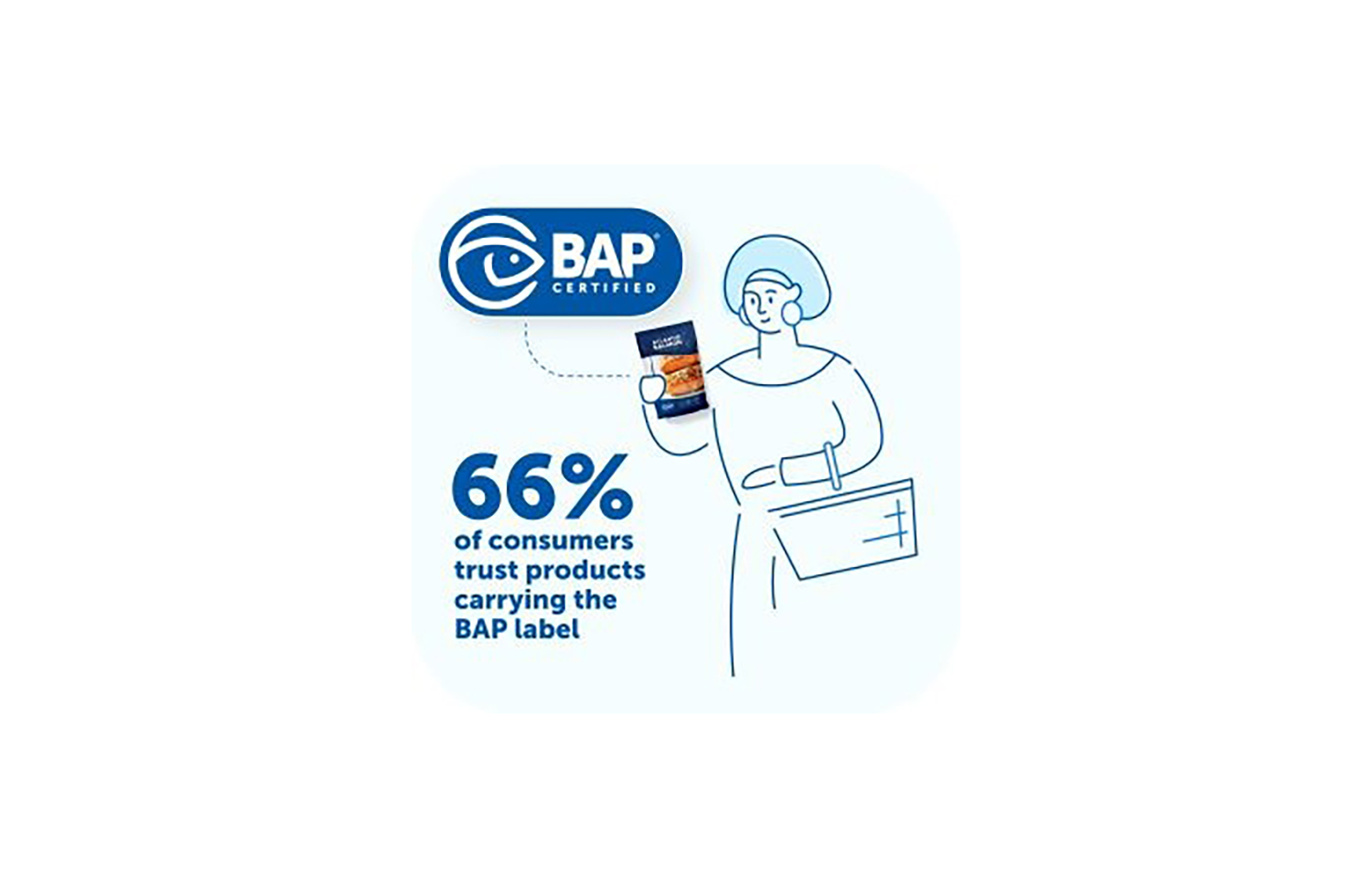
Four in 10 consumers surveyed said they choose eco-labeled fish and seafood products over non-certified and labeled products. Two-thirds of those surveyed said they trusted the BAP label, and 53 percent said the label influenced their decision about which seafood to buy or eat. Consumers from Spain felt the strongest about the importance of the BAP label, results showed.
"It's encouraging to see consumers recognizing the value of responsible seafood," GlobeScan Principal Gayle Chong said. "Credible certification plays a vital role in guiding purchasing decisions and sends a powerful signal to the industry that integrity matters."
GSA said that the survey’s findings have informed its new marketing campaign.
"We are excited to leverage this research to guide our 2026 consumer campaign," GSA Marketing Director Elise Avallon said.
"Our chosen tagline, Seafood You Can Trust, was one of the top chosen taglines by consumers across all countries – a simple yet effective message," she said. "We look forward to working with retail and foodservice partners, as well as BAP-certified producers, to bring this campaign to life."
A similar survey conducted by GSA recently about the value of the BAP label in China also showed that there is demand for certified seafood, as well as willingness to pay higher prices for it.
