




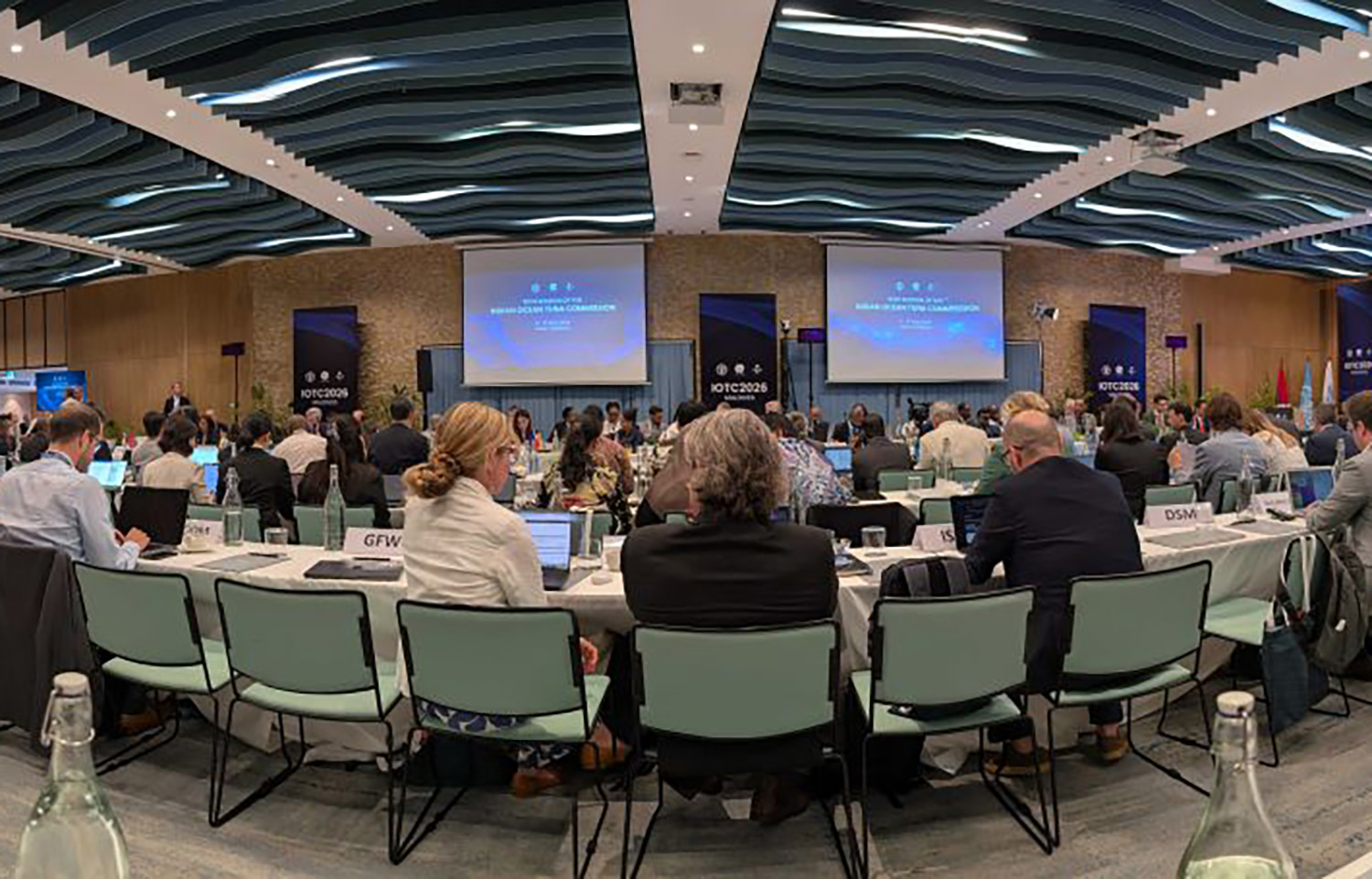
The Indian Ocean Tuna Commission (IOTC) is hosting its 30th annual meeting from 11 to 15 May in Male, Maldives, and the International Seafood Sustainability Foundation is pushing for more progress on fish aggregating devices (FADs) and harvest strategies.
U.S.-based tuna conservation nonprofit ISSF told SeafoodSource it is hoping the IOTC will use this year’s meeting to build upon the tangible progress it has made over the past few years, which has come in the form of new management measures for FADs, the establishment of management procedures for skipjack and bigeye tuna, steps to improve member adherence to the Port State Measures Agreement, strengthen shark protections, and more.
Holly Koehler, the vice president for policy and outreach at ISSF, told SeafoodSource the IOTC should largely focus on actions that ensure the effectiveness of these measures.
“There are a few baskets of issues where we are seeking progress this year, and this is set in the framework of maintaining momentum that has already been achieved by the IOTC,” she said.
One of those baskets for ISSF is reinforcing the management procedures it already put in place and ensuring that the establishment of procedures for such species as albacore and yellowfin proceeds at a quicker rate through such actions as securing resources for management strategy evaluation and adopting permanent reference points for those two species.
“Yellowfin and albacore both need to really have accelerated work done on management procedures, and that is going to require some funding. We would like to see an outcome in this meeting in which the IOTC can secure funding that sets it on the path to adopt procedures,” she said.
In the meantime, ISSF said that while the RFMO works on developing procedures, the IOTC should develop total allowable catch limits for yellowfin that follow advice from the IOTC Scientific Committee.
Yellowfin was recently classified as no longer subject to overfishing in Indian Ocean waters after a long history of overfishing concerns, and to ensure that the stock continues trending in a positive direction, Koehler said enforced TACs that align with scientific advice will be essential over the next few years.
“We want to ensure that catch levels don’t go above a range that could result in reversing the recent progress on that stock,” she said.
For skipjack and bigeye, which are already under management procedures, Koehler said the catch limits laid out in the procedures need to function as intended, as recent catch totals for both species have exceeded agreed-upon limits in recent years.
“We have had recent years where catches have been higher than what were agreed. If that continues, that undermines the effectiveness and credibility of the management procedures the IOTC has in place” she said.
Elsewhere, ISSF aims to ensure that the IOTC reduces bycatch among its members, especially the unintended catch of sharks, mobulid ray species, seabirds, and sea turtles.
“The types of mitigation measures need to be improved to be in line with science-based measures, as many of them are outdated. We have been asking for seabird and sea turtle measures to be modernized … and although they have some guidelines on how to handle mobulid rays, they also need to be updated,” Koehler said.
In order to do that effectively, Koehler said the IOTC needs more reliable data and, therefore, needs to implement better monitoring practices. Koehler highlighted that the IOTC lags behind many RFMOs when it comes to observer coverage requirements, mandating just 5 percent minimum observer coverage across member vessels.
“That is quite a low amount of coverage, and we hope the commission adopts a progressive increase in its observer coverage, which can come in the form of human observer coverage or the use of electronic monitoring [EM]. The IOTC already has EM standards that they could operationalize to do this,” she said.
