






The International Seafood Sustainability Foundation (ISSF) is once again calling on the Indian Ocean Tuna Commission (IOTC) to enhance monitoring of its fisheries and engage in science-based conservation of the tuna fisheries it manages.
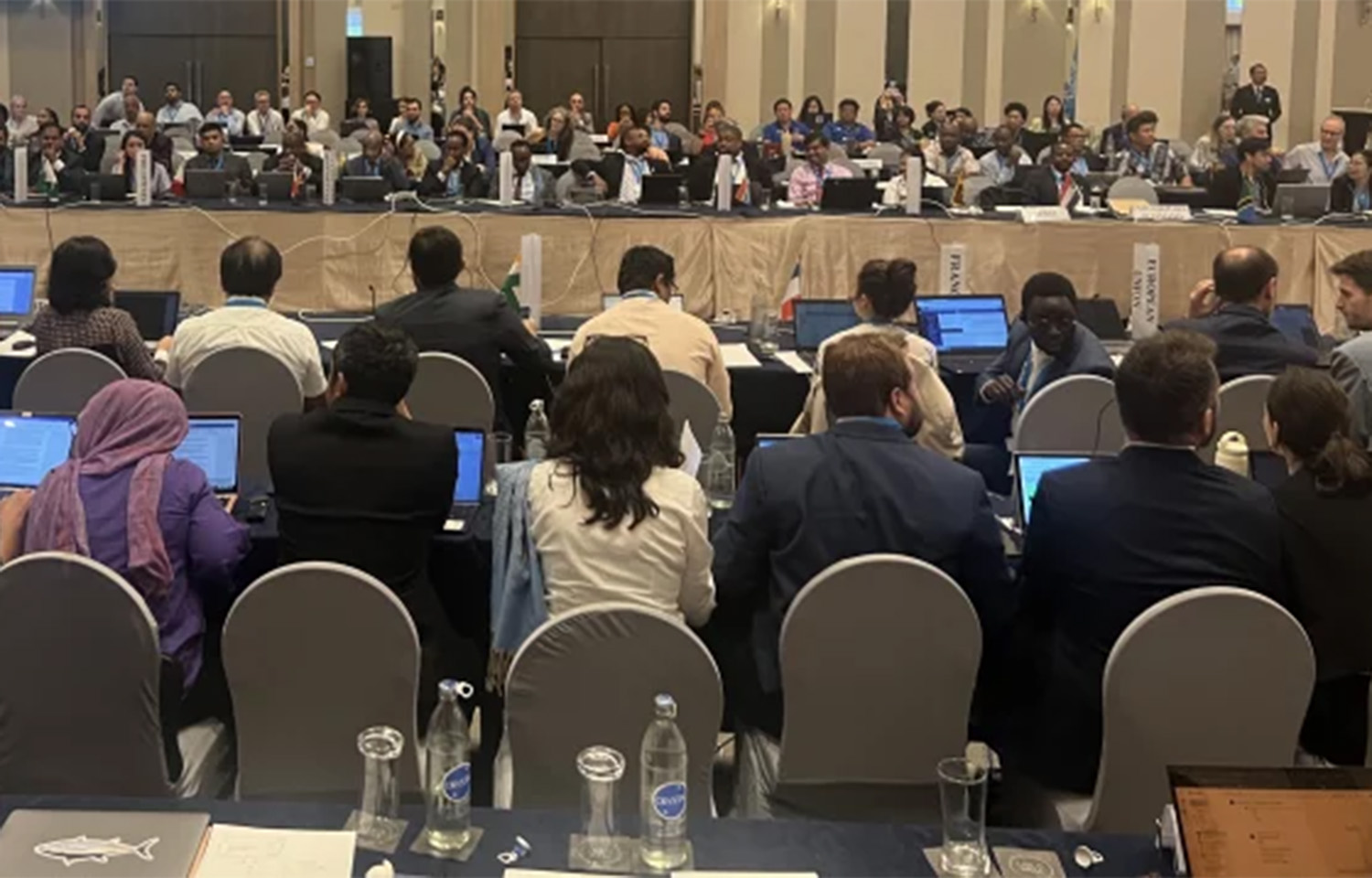
The IOTC is holding its 29th annual meeting from 13 to 17 April, bringing together member nations of the regional fishery management organization (RFMO) to work on management of a range of tuna stocks in the Indian Ocean. The ISSF is calling on the RFMO to tackle a number of new initiatives, including establishing observer coverage of the fisheries through electronic monitoring, better bycatch mitigation and shark protection, and science-based management of the tuna stock.
“Without the adoption of catch limits and other management measures to ensure stringent adherence to such limits – all of which also demand robust compliance monitoring systems – the health of tuna stocks and the broader marine ecosystem remain at risk,” the ISSF said.
The ISSF is calling on the IOTC to stick to scientific management of its tuna fisheries – especially the yellowfin tuna fishery. Yellowfin tuna had long been considered overfished, and at the IOTC’s 28th meeting in May 2024, it failed to adopt any improvements to curtail yellowfin tuna fishing – a stock that had been considered overfished since 2015 – despite multiple calls from NGOs to tackle the issue.
That issue will be less pressing at its 29th meeting in April, as the IOTC Scientific Committee’s latest assessment of the stock issued a “green” rating for yellowfin tuna. That rating used a series of revisions to a model developed in 2021 to calculate the stock’s biomass, which determined that at current fishing pressure the stock was not overfished and was not subject to overfishing.
ISSF said it is still vitally important to continue monitoring stock status indicators for the fishery to confirm that green rating and use analysis of metrics like catch per unit effort to make sure yellowfin continues to recover.
While the yellowfin stock is on a more positive trajectory, ISSF said skipjack and bigeye tuna stocks both continue to have management concerns.
“Skipjack catches have consistently exceeded established Harvest Control Rule (HCR) limits, with a record-high catch in 2023. Urgent action is needed to prevent continued overshooting of HCR limits,” the ISSF said.
Environmental NGOs have criticized the IOTC’s handling of skipjack after IOTC data in 2020 indicated the species was overfished.
Bigeye tuna is similarly overfished and subject to overfishing, and according to the ISSF, a 12 percent reduction in catch is needed to align with sustainable thresholds.
“To facilitate bigeye tuna’s recovery to healthy levels, the IOTC must adopt a revised Total Allowable Catch (TAC) for bigeye and enforce stricter compliance measures to ensure adherence to the TAC,” ISSF said.
Regardless of what TAC the commission chooses, ISSF said the actual catch will remain a mystery without the RFMO increasing monitoring of its fleet. Currently, just 5 percent of the fishery is required to be covered by observers, and the ISSF is pushing the commission to adopt implementation of electronic monitoring to supplement the observer programs.
“IOTC must also join its peer RFMOs and adopt a binding measure that will ensure the safety of human observers, including those on supply and carrier vessels,” ISSF said.
The Western and Central Pacific Fisheries Commission, which met in late 2024, recently adopted interim electronic monitoring standards after a 10-year back and forth on what those standards should look like.
ISSF is also calling on the IOTC to adopt better bycatch mitigation and shark protections. ISSF said the commission should adopt a fins-naturally-attached mandate and should require scientifically proven bycatch mitigation measures that would reduce bycatch of marine turtle species.
“Implementing science-based catch limits, enhancing compliance and monitoring, and adopting stronger conservation measures for bycatch species will collectively advance the IOTC’s efforts for the long-term health of tuna stocks and the broader marine ecosystem,” ISSF said. “The time for decisive action is now. Ensuring that tuna fisheries operate responsibly today will secure their future for generations to come.”
