



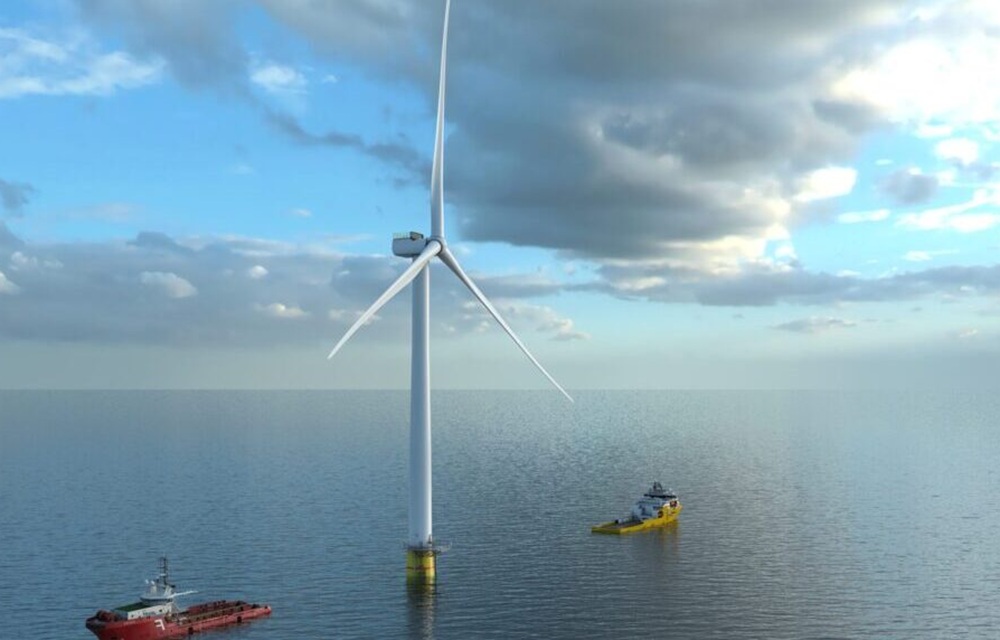
The Virginia Institute of Marine Science (VIMS) is calling on the seafood industry to participate in a survey about potential offshore wind energy development.
According to VIMS, the “Seafood First Sale Value Added Survey” is intended to better understand the business operations, economic contributions, and value of various parts of the seafood industry in the Mid-Atlantic and Northeast U.S. The survey was funded by a grant from the Science Center for Marine Fisheries (SCEMFIS) and, according to a release, is designed to fill information gaps on how offshore wind development could impact shoreside businesses and the fishing economy.
“Compensation programs cannot fairly account for shoreside losses unless decision-makers understand how seafood moves from the vessel through the other businesses that support the commercial fishing economy,” Peter Hughs, the director of sustainability for Atlantic Cape Fisheries and an advisor to the multistate Fisheries Compensation Program. “This survey gives those businesses an opportunity to document their economic contribution and explain what reductions in regional landings could mean for their operations, employees, and communities.”
VIMS said it plans to use the survey results to get a wider understanding of the economic impacts that could result from offshore wind energy installations.
The seafood industry and offshore wind energy have had a tumultuous relationship as advocates for U.S. fisheries have pushed back on installations that they say will have adverse impacts on the industry. Commercial fishers have sued to block wind energy installations off the East Coast of the U.S., including a lawsuit by Responsible Offshore Development Alliance which ultimately failed after the U.S. Supreme Court denied to hear an appeal to a lawsuit it lost.
U.S. President Donald Trump has issued multiple executive orders attempting to freeze offshore wind development, though the first was struck down by a federal judge in December 2025 before he signed another in January 2026, though that, too, ultimately failed.
Trump’s latest effort is to pay offshore wind farm developers to buy them out and encourage investments in other forms of power production.
As the fight over offshore wind grinds its way through the courts, the exact impacts on the seafood industry are still unclear, which is part of the motivation for the VIMS survey.
“The businesses operating on shore are an indispensable part of the commercial fishing industry, and it is important to be able to quantify their potential losses,” Jeff Kaelin, director of sustainability and government relations for Lund’s Fisheries and a stakeholder in the Fisheries Compensation Program, said.
SCEMFIS said strong industry participation in the survey will be essential to provide baseline economic data, which can be used to advocate for the seafood industry as governments make offshore wind energy policy decisions.
“Seafood businesses should take the time to participate so future compensation policies are based on credible information from the people who buy, handle, process and distribute the catch,” Kaelin said.
