





A group of United States lawmakers have proposed tweaking federal law that allows offshore oil and gas operators to transform decommissioned rigs into artificial reefs, claiming the marine habitats support the domestic fishing industry.
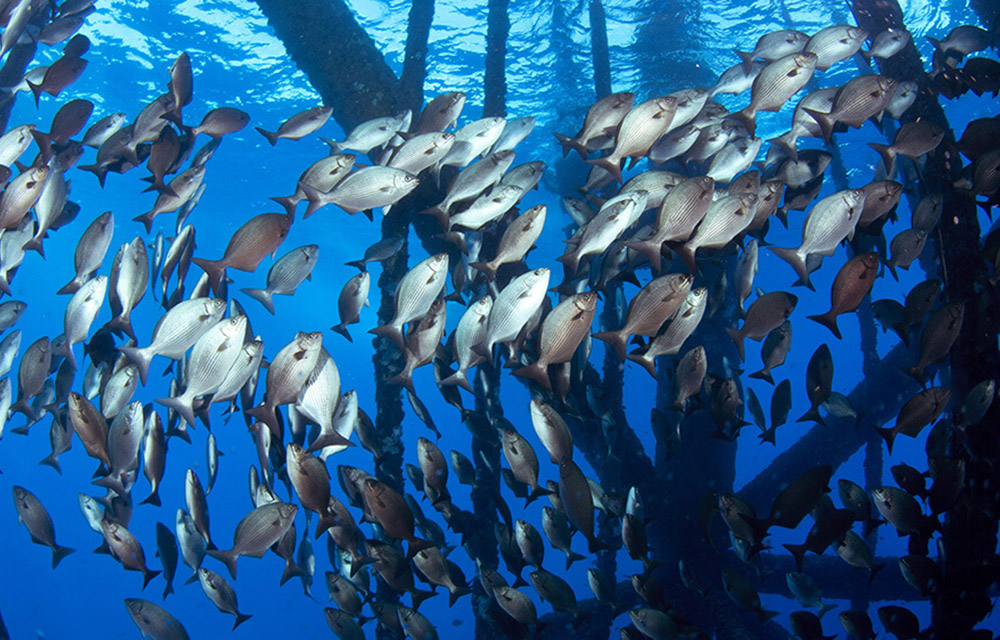
According to the bill’s sponsors, offshore oil and gas platforms are already “thriving habitats for marine life,” and the Marine Fisheries Habitat Protection program would provide a pathway for companies to work with the state and federal governments to turn platforms in the Gulf of Mexico, currently referred to as the Gulf of America by the administration of U.S. President Donald Trump, into “permanent artificial reefs,” instead of fully removing them as required under current law.
“At its core, the Marine Fisheries Habitat Protection Act is a simple yet powerful idea,” U.S. Representatives Mike Ezell (R-Mississippi) said in a release. “Instead of tearing down structures that have become vibrant marine ecosystems, we can repurpose them to benefit the environment, fishermen, and taxpayers alike. As someone who has fished in the Gulf my entire life, I can tell you that the best fishing is always near these rigs. When we remove them entirely, we’re not just losing a structure; we’re destroying entire ecosystems. This bill is a no-brainer for coastal communities, sportsmen, and marine life alike.”
U.S. Representative Troy Carter (D-Louisiana) and U.S. Representative Marc Veasey (D-Texas) are the other two lawmakers behind the bill.
The U.S. government already allows companies to turn decommissioned rigs into artificial reefs in partnership with state programs; 634 platforms installed in the Gulf of Mexico had already been reefed as of June 2023, according to a January 2025 Government Accountability Office (GAO) report. Veasey said the new legislation would improve the existing program while providing a new pathway for additional conversions.
“Our legislation will help create a pathway for more rig conversions and bolster the overall program that is repurposing out-of-service offshore oil and natural gas production platforms into thriving areas for aquatic wildlife,” Veasey said.
Veasey introduced a similar bill with other lawmakers in 2023, but it never got out of committee. The administration of former U.S. President Joe Biden raised questions about the legislation, with the Bureau of Safety and Environmental Enforcement (BSEE) testifying in March 2024 that it had concerns over how the bill would impact government oversight of decommissioned oil and gas infrastructure.
“BSEE is concerned about the legislation’s proposed changes to the Rigs-to-Reefs process and policy that could fundamentally change the scope and intent of the program,” the BSEE testified. “The bill, as written, is not entirely clear as to whether the intent is to provide greater authority to NOAA to establish a national Rigs-to-Reefs program on the [Outer Continental Shelf] in the Gulf of Mexico, with NOAA taking on liability for artificial reefs established in NOAA-designated reefing areas, in addition to the state programs.”
The BSEE also pointed out that the bill seemingly includes pipelines in the Rigs-to-Reefs program, even though they “are not currently considered adequate or appropriate reefing materials” by the government. The BSEE speculated that the bill would impede its efforts to ensure decommissioning activities happen in a “timely manner” because it requires the government to wait until the completion of a NOAA assessment of idle structures before enforcing decommissioning requirement.
According to the Government Accountability Office, more than 500 platforms in the Gulf of Mexico were past their deadline for decommissioning as of June 2023.
The bill has been backed by the Congressional Sportsmen’s Foundation, the International Game Fish Association, and the American Sportfishing Association.
