




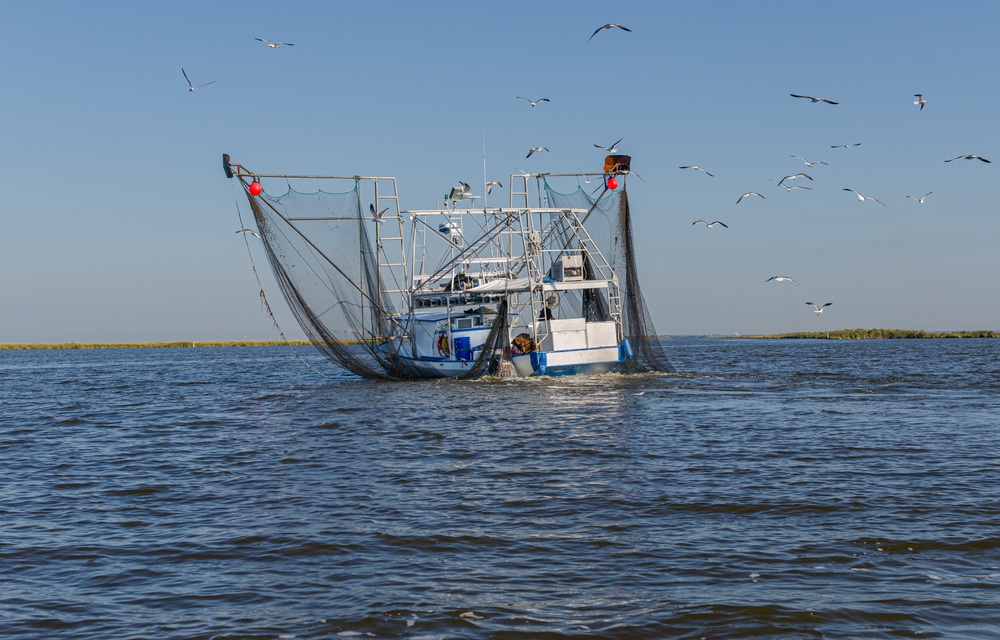
A study from the University of Miami found that the installation of wind power infrastructure in the Gulf of Mexico, currently referred to as the Gulf of America by the U.S. government, is unlikely to impact commercial shrimping operations.
The development of offshore wind projects in the United States has been contentious for much of the commercial fishing industry, with fishers claiming turbines in the ocean block them from accessing valued fishing grounds and disrupt the ecosystem. Wind turbines have also posed a problem for NOAA Fisheries, forcing the agency to reconsider how it conducts fisheries surveys as its traditional research vessels can’t navigate too close to the structures.
To study whether commercial shrimpers would be impacted by wind turbines in the Gulf, researchers with the Cooperative Institute for Marine and Atmospheric Studies (CIMAS) at the University of Miami's Rosenstiel School of Marine, Atmospheric, and Earth Science decided to look at how the industry currently interacts with offshore oil rigs, which are already plentiful in the Gulf.
Researchers took GPS data from shrimp vessels to see how they operate around oil rigs, using them as an analog for wind farms. The study found that shrimpers largely avoid the rigs, but there does appear to be a “sweet spot” roughly 3 miles between rigs that shrimpers trawl more frequently.
“To balance offshore energy development with fishing, we need high-resolution vessel data like this to see where activities overlap,” lead author of the study Brendan Turley said in a release. “As the ocean becomes more industrialized, combining different data sources is key to preventing conflicts between economically important marine industries.”
The study – which was published in the journal Marine and Coastal Fisheries – also found that the areas slated for wind power development generally avoid popular shrimp-trawling areas, with only 2.5 percent of total shrimping effort between 2015 and 2019 occurring in those areas.
“Beyond commercial activity, oil rigs also serve as popular recreational fishing and diving sites, highlighting that offshore infrastructure has complex, nuanced impacts rather than being simply labeled ‘good’ or ‘bad,'” Turley said.
Regulators and fishing groups have long recognized that offshore oil rigs can become hotspots for marine life, providing a structure for shellfish to grow on and creating a welcoming habitat for many fish species. In the Gulf, federal and state governments incentivize energy companies to transform decommissioned oil infrastructure into artificial reefs instead of removing them from the water completely.
As of June 2023, 634 oil platforms in the Gulf had already been reefed.
In October 2025, U.S. lawmakers introduced the Marine Fisheries Habitat Protection Act, legislation that would tweak the government’s artificial reef program to make it easier for oil companies to make the conversion.
“Instead of tearing down structures that have become vibrant marine ecosystems, we can repurpose them to benefit the environment, fishermen, and taxpayers alike,” U.S. Representatives Mike Ezell (R-Mississippi) said in introducing the bill. “As someone who has fished in the Gulf my entire life, I can tell you that the best fishing is always near these rigs. When we remove them entirely, we’re not just losing a structure; we’re destroying entire ecosystems. This bill is a no-brainer for coastal communities, sportsmen, and marine life alike.”
