






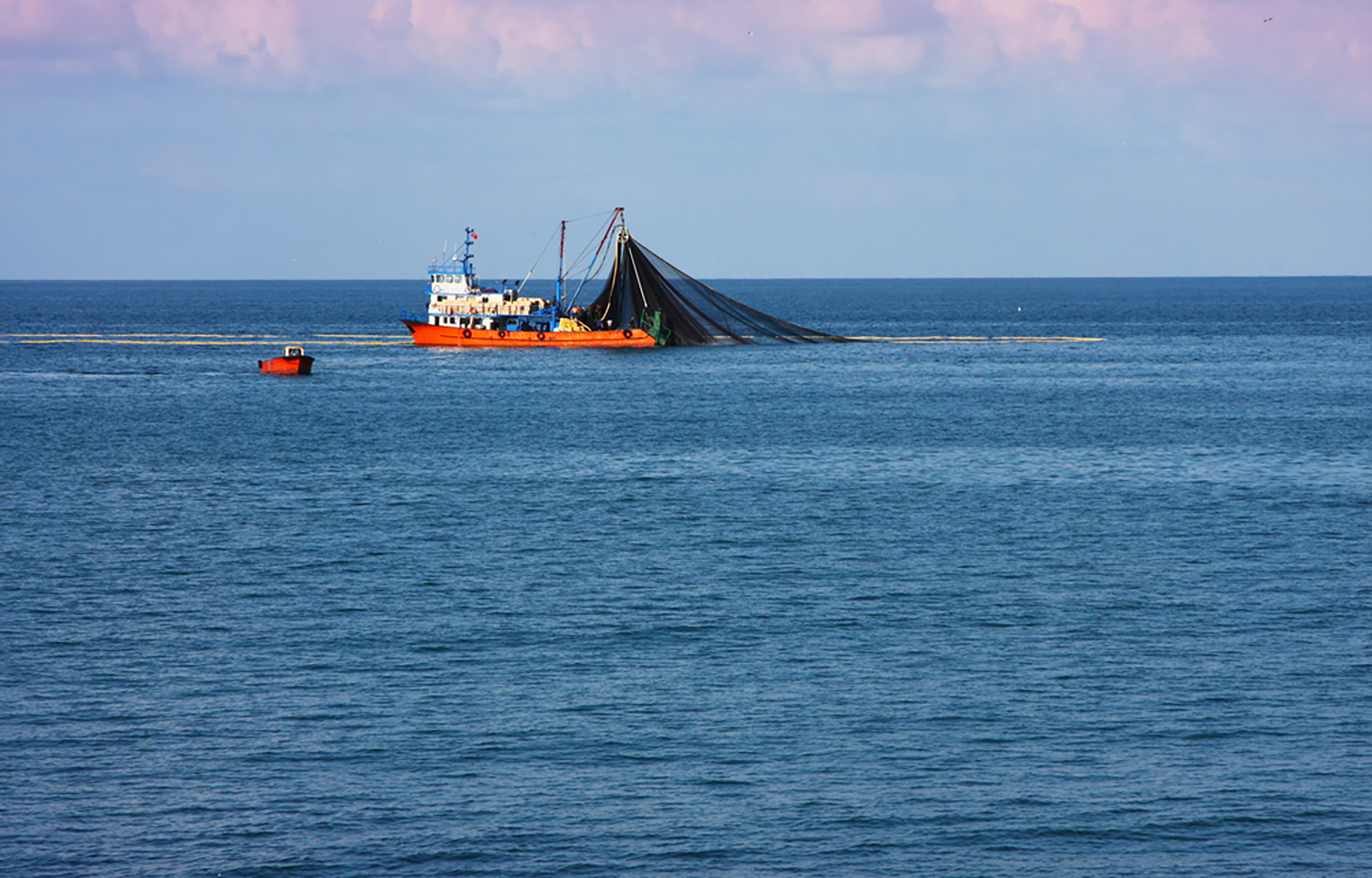
A new report from the United Nations’ Food and Agriculture Organization (FAO) has found that overfishing in the Mediterranean and Black seas has dropped to its lowest level in a decade, with several key stocks showing clear signs of recovery.
FAO’s “State of Mediterranean and Black Sea Fisheries” (SoMFi) report, the most recent edition of which comprised contributions from more than 700 experts and assessments of 120 stocks, showed that overfishing has dropped from 87 percent in 2013 to 52 percent in 2023 in the two bodies of water. Over the same period, fishing mortality has fallen by 50 percent, biomass has rebounded by 25 percent, and aquaculture has rapidly become integral toward protein supply in the region – now accounting for more than 45 percent of the region’s aquatic food production.
Together, according to the report, fisheries and aquaculture produced 2.06 million metric tons (MT) of aquatic foods in 2023, generating USD 21.5 billion (EUR 18.5 billion) in revenue and supporting close to 1.2 million jobs.
For a region that has long struggled with overfishing, complex politics, and slow regulatory reform, the report said improved and coordinated scientific advice, binding management plans, and a burgeoning aquaculture sector have been key drivers toward reversing negative trends.
As a result, fish stocks that are overseen by the General Fisheries Commission for the Mediterranean (GFCM) have recovered or are gradually moving toward sustainability, but those that don’t have fisheries management plans in place continue to deteriorate, making continued effort essential, according to FAO Assistant Director-General and Director of the organization’s Fisheries and Aquaculture Division Manuel Barange.
“It's not rocket science, but it's still science,” he said.
Welcoming the report’s findings and also its confirmation of Turkey as GFCM’s leading producing nation of wild-caught and farmed aquatic foods, Elif Çomoglu Ülgen, ambassador and permanent representative of Turkey to the FAO, cautioned that the Mediterranean and Black seas continue to be two highly sensitive basins that require continuous monitoring.
“The continued presence of fishing pressure above sustainable levels shows that all coastal states must pursue science-based approaches with unwavering determination,” she said.
For instance, while the report highlighted good progress made across a range of species, including common sole in the Adriatic Sea – which has seen a 42 percent drop in fishing mortality and a 64 percent rise in biomass since 2019 – and turbot in the Black Sea – which has experienced an 86 percent reduction in fishing mortality and a 310 percent increase in biomass since 2013 – other stocks like sardines have been subjected to sustained overexploitation over time and continue to show signs of biomass depletion.
GFCM Executive Secretary Miguel Bernal also highlighted European hake, which, despite years of effort, maintains wide variations in mortality and biomass across subregions.
“In these past 10 years, we have improved a lot. There are significant examples and already some success stories on sustainability, but still, half of our populations cannot yet be considered sustainable, so there’s still a lot of work ahead of us,” he said.
In the near future, the region’s demand for aquatic foods is expected to continue rising due to growing populations and changing consumer preferences, with the report estimating seafood production will need to increase by up to 29 percent by 2050 to allow all countries to maintain current consumption rates.
To ensure demand is sustainably met, the report insists fisheries must continue rebuilding toward long-term sustainable yield and aquaculture must scale responsibly.
Besides ensuring sustainable growth, Bernal also said the industry needs to work on attracting the next generation of professionals.
“We need to diversify the workforce – attract a new generation of fishers and aquaculture farmers … and if we talk about employing more women and attracting more to the sector, there are definitely a lot of margins for improvement,” he said.
