



The Food and Agriculture Organization (FAO) of the United Nations has released its latest review of the state of the world’s marine fisheries resources in what it is calling its most detailed assessment yet, finding many of the UN's sustainable development goals (SDGs) set out in its 2030 Agenda for Sustainable Development will be out of reach.
This year, the annual report analyzed 2,570 disaggregated fisheries stocks, ramping up its analysis significantly from the 450 aggregated stocks used in previous FAO assessments. FAO said the disaggregation of so many stocks allows for more granular analysis, providing better information to monitor the state of resources.
Analysis of those of those 2,570 stocks was informed by more than 650 experts from over 200 institutions in more than 90 countries, FAO said. The review was based on complementary information up to 2023 and official catch statistics through 2021.
Through its analysis, FAO determined that 64.5 percent of all fishery stocks are currently being exploited within sustainable levels, while 35.5 percent of stocks could be classified as overfished. When weighted by total production, FAO said 77.2 percent of fisheries landings come from biologically sustainable stocks.
Part of that analysis also found a clear gap between marine fisheries areas that are under effective management and those that aren’t.
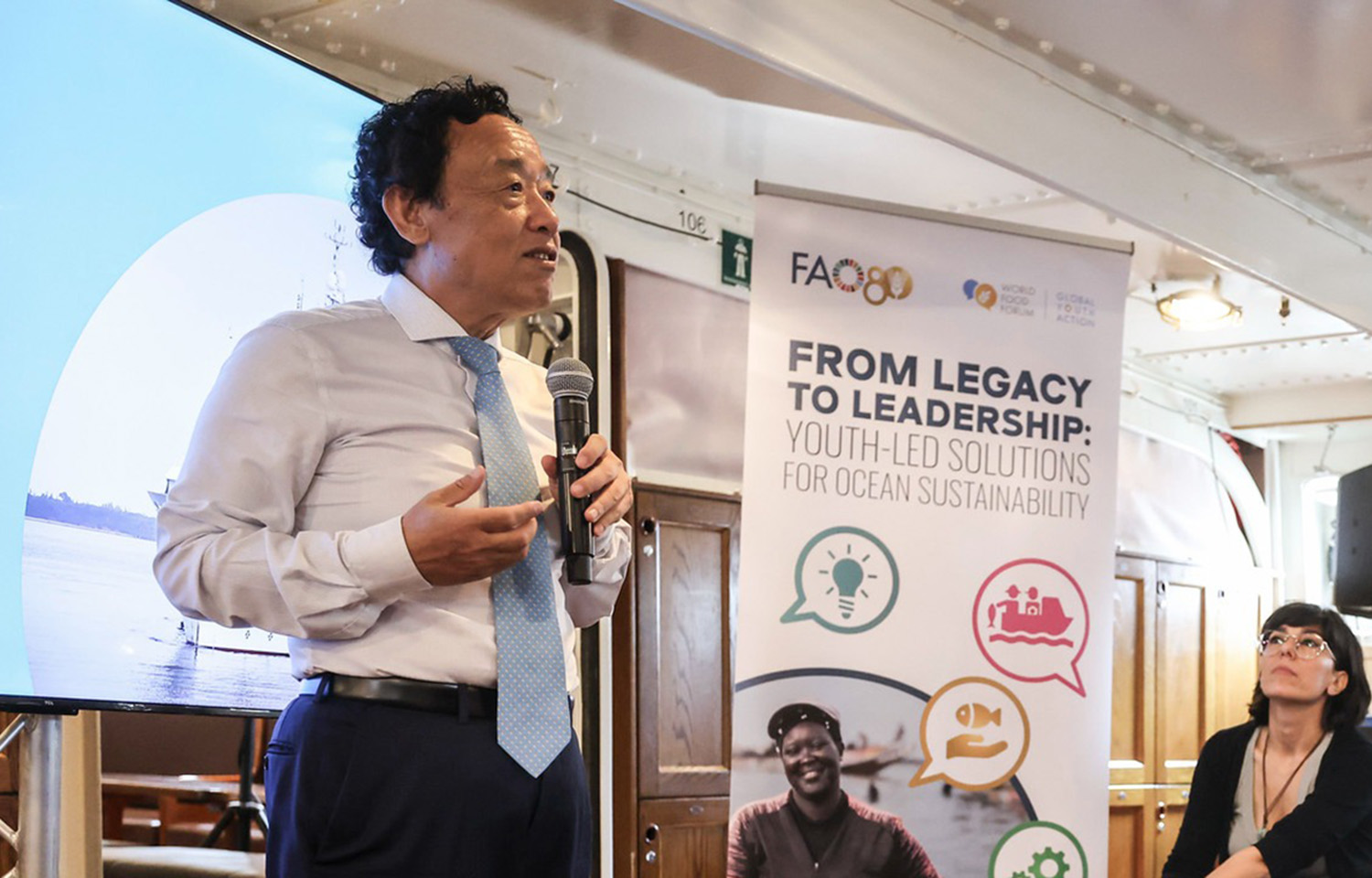
“Effective management remains the most powerful tool for conserving fisheries resources. This review provides an unprecedentedly comprehensive understanding, enabling more informed decision-making based on data,” FAO Director-General Qu Dongyu said. “This report gives governments the evidence they need to shape policy and coordinate coherently.”
The FAO said that where management is effective, such as in the Northeast Pacific and the Southwest Pacific, sustainability rates increase. In the Northeast Pacific, for example, 92.7 percent of stocks are sustainably fished, and those stocks make up an estimated 99 percent of all landings in the region.
The Antarctic, which was included in the report for the first time, has managed to reach 100 percent sustainable exploitation due to ecosystem-based management and international cooperations like the Commission for the Conservation of Antarctic Marine Living Resources (CCAMLR), FAO said.
“Positive outcomes like the Antarctic, Northeast Pacific, and Southwest Pacific reflect the benefit for sustainable fishery management of having strong institutions, consistent and comprehensive monitoring, the integration of scientific evidence into management decisions and the implementation of precautionary and ecosystem-based approaches,” CCAMLR Executive Secretary David Agnew said.
FAO’s report found that of the top 10 species in terms of declared landings, 60 percent are biologically sustainable and 85.8 percent of landings are from biologically sustainable stocks. The status of tuna and tuna-like species also showed positive results, FAO said. The report found 87 percent of stocks could be considered sustainable, with 99.3 percent of landings by volume coming from sustainable stocks.
“This is particularly due to the implementation of effective management plans by fishing nations through regional fisheries management organizations,” the FAO report said.
Other regions showed the opposite, with the report finding only 46 percent of stocks in the Southeast Pacific and 47.4 percent of stocks Eastern Central Atlantic are sustainably fished. FAO said those regions often feature countries where fishing is central to food security, but fragmented governance and data gaps continue to cause issues.
FAO said through its work on the report, it has become “increasingly clear” that many of the SDGs adopted by the UN in September 2015 will be out of reach. The main goal related to the ocean, SDG 14, “Life Below Water,” is one of the least-funded SDGs set forward by the UN, and achieving SDG 14.4 – which calls for the regulation of harvesting; the elimination of illegal, unreported, and unregulated (IUU) fishing; and the implementation of science-based management plans to manage fish stocks – is “increasingly uncertain.”
“Nonetheless, global efforts have continued to push forward toward achieving sustainable fisheries,” the report said.
The Marine Stewardship Council called the latest edition of the FAO assessment a “real step forward,” especially thanks to the report’s updated methodology and more granular analysis.
“We congratulate the FAO on their new methodology. It brings greater accuracy to the data, allowing us to focus on those areas that are particularly in need of improvement and target our efforts to end overfishing,” MSC Chief Executive Rupert Howes said.
Howes said the report shows overfishing is stabilizing, and the report backs up FAO’s stance during the UN Ocean Conference – which is running from 9 to 13 June in Nice, France.
“FAO today described fisheries management as the best conservation tool we have. This report backs that up. The data shows that if fish stocks are well-managed, progress can be made. Sustainable fisheries management is essential to ensure not only that the ocean can thrive but that its resources can remain available to future generations,” Howes said. “At the ongoing UN Ocean Conference in Nice, there has been a clear, global consensus on the need for action. We hope this renewed sense of urgency will lead to a significant reduction in overfished stocks as we approach 2030.”
Qu said the new report by FAO offers the clearest view of the state of marine fisheries ever and should be used as a jumping off point for the world’s governments.
“The next step is clear: Governments must scale up what works and act with urgency to ensure marine fisheries deliver for people and planet,” Qu said. “This is the essence of FAO’s Blue Transformation, a call to build more efficient, more inclusive, more resilient, and more sustainable aquatic food systems to increase their contribution to global food security, meet nutrition requirements, and improve livelihoods of a growing population.”
