
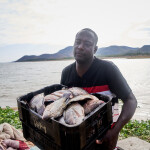




A kelp forest restoration project conducted by Ålesund, Norway-based ocean technology and seafood firm Ava Ocean is using kelp-eating sea urchins removed from the ocean floor to produce a novel alternative to traditional fertilizers for agricultural operations.
The urchin initiative arises from a study conducted by the Norwegian Institute of Bioeconomy Research (NIBIO) and has become part of Ava Ocean's Ocean Green Project to create commercial markets for overgrazing sea urchins that have decimated Norwegian kelp forests.
“When you remove urchins for kelp restoration, you address the cause but are left with a huge volume of urchins with little current monetary value,” Ava Ocean Chief Impact Officer and Ocean Green Project Lead Dagny-Elise Anastassiou said. “Instead of wasting these urchins, we are turning them into a valuable resource. Being able to produce fertilizer alternatives is one way of applying a zero-waste approach to one of the causes of kelp deforestation.”
Ocean Green is a three-year research project led by Ava Ocean and supported by NOK 47 million (USD 4.7 million, EUR 4 million) in Green Platform funding from the Norwegian government.
“The aim is to tackle urchin barrens and restore kelp forests by developing restorative fisheries with monetary value for harvested urchins,” Ava Ocean said.
In search of a market for this underused resource, NIBIO researchers created and tested a novel biostimulant made from urchins. What they found is that the urchin biostimulant not only improved agricultural yields but reduced reliance on synthetic fertilizers, thus contributing to a more circular economy.
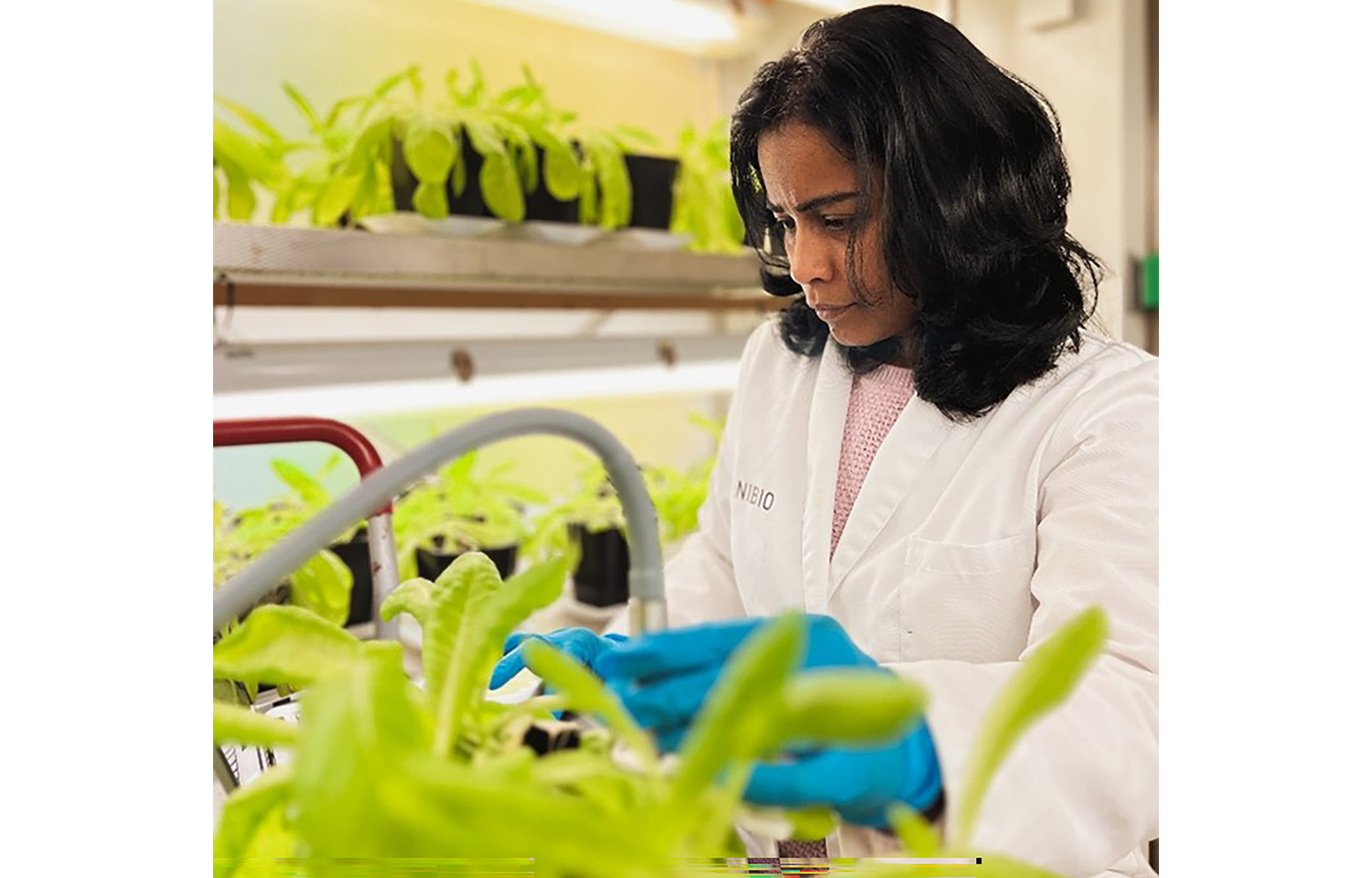
“We’ve been looking at the impact of our urchin biostimulant on lettuce for 67 days now,” NIBIO Research Scientist Abirami Ramu Ganesan said. "What we’ve found is a significant increase in biomass production compared to the control – and compared to a seaweed-based extract as well."
According to Ava Ocean, the results suggest that urchin biostimulant is a highly effective growth enhancer, which can even outperform established commercial biostimulants.
Gansen’s team tested the urchin biostimulant on lettuce in its Bodø lab, which is more than 1,000 kilometres north of Oslo and some 70 kilometers into the Arctic Circle. The team chose to study the biostimulant’s effect on green leaf lettuce largely because it was likely to grow well in the limited space of the lab but also because that part of the country does not have too many sources of healthy vegetables for residents.
“Here in the north, we don’t have any farmer’s markets,” NIBIO researcher Ralf Rautenberger said.
Rautenberger explained that an effective, fertilizer-free biostimulant could prove useful to the health of regional inhabitants.
"The range of what we eat needs to be expanded – if only for nutritional reasons," he said. "So, if you could introduce a new vegetable for Norwegians to eat, then green lettuce is a good choice."
Anastassiou pointed out that commercial agriculture can be a cause of damage to the coastal marine environment, “with fertilizers leading to overgrowth of algae that can have potentially disastrous consequences for local biodiversity.”
The reduction of chemical fertilizer could help with that issue.
“By using the urchins from the fishery to offer substitutes for these products, we add value both financially and ecologically,” she said.
