





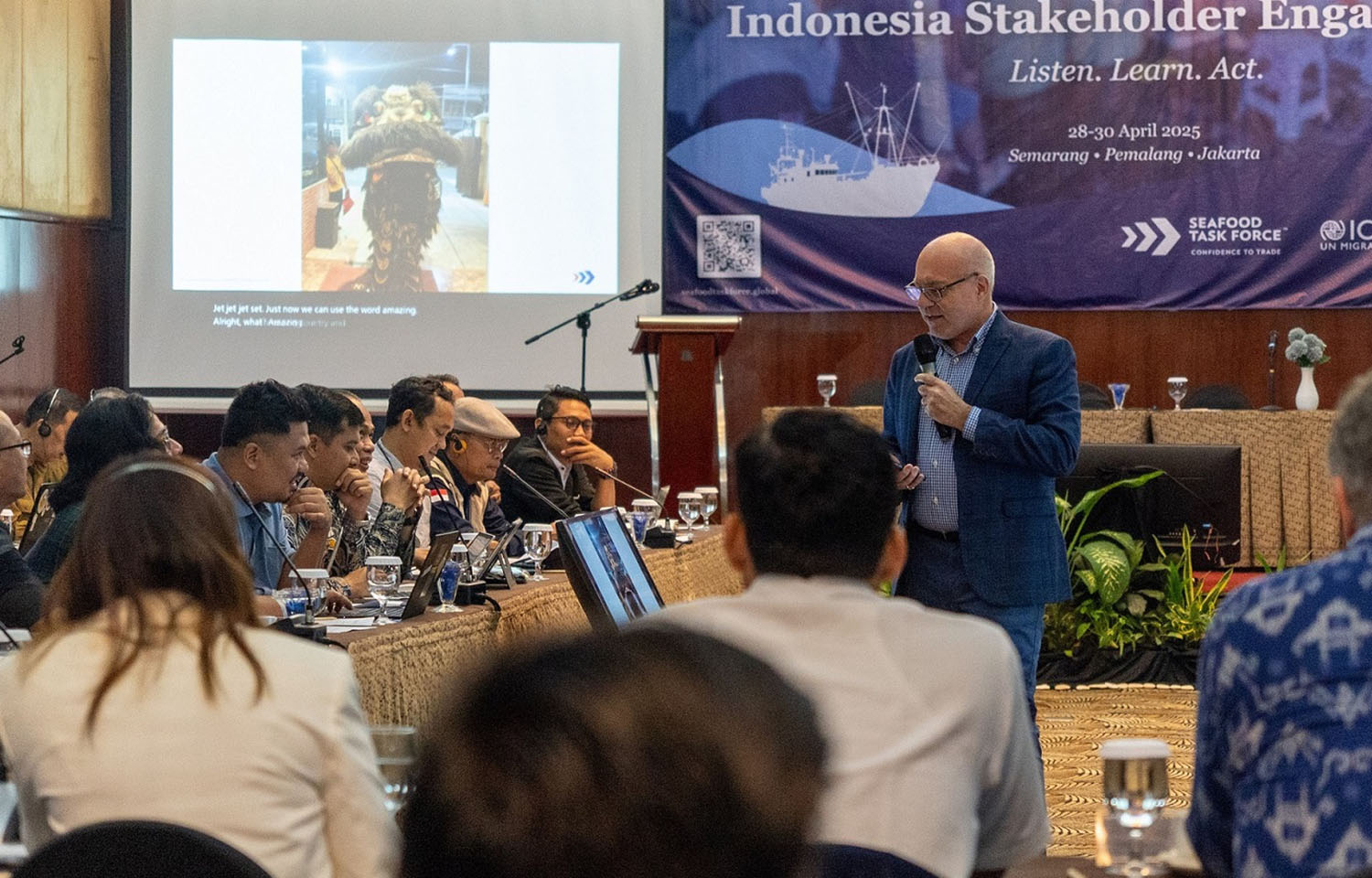
The Seafood Task Force (STF), a U.S.-based nonprofit trade association that represents major retailers, brands, foodservice companies, and supply chain partners, held a four-day summit to discuss how to protect migrant workers on distant-water tuna vessels.
STF has more than 50 commercial members – including 17 new Asian members added in 2024 – and the nonprofit has already committed itself and its partners toward improving labor practices in other parts of the seafood industry. Its latest summit, held in Indonesia, was oriented around the distant-water tuna fleet and the more than 50,000 Indonesian laborers that work on vessels as migrant laborers with relatively little protection.
“Our goal is to foster a collaborative platform for us to come together to make realistic improvements and to drive positive change,” Seafood Task Force Co-Chair Supavadee Chotikajan said. “We do not come with pre-set solutions, but rather, we are here to listen and understand challenges so that we take back these insights to shape our workplan on responsible recruitment and on future pilot projects to represent workers’ voices.”
Migrant laborers from Indonesia comprise 62 percent of all foreign workers in Taiwan’s distant-water tuna fleet. Migrant labor overall is also a huge component of distant-water fishing vessels, and a number of campaigns have focused on improving worker welfare.
Some of those campaigns – like one hosted by Global Labor Justice – push for things like WiFi on fishing vessels, with migrant fishers tales of abuse on board Taiwanese fishing vessels. STF said that there is legislation to protect Indonesian migrant workers, but the implementation of the law has yet to come into force and the law is still being amended.
STF said the recent summit marked a milestone and was the first official engagement with stakeholders in Indonesia and provided an opportunity to hear first-hand accounts from migrant workers about their experiences.
“Essentially, this was a listening exercise allowing us to understand the obstacles to reform and to think about how we can support practical changes through continuous improvement programmes for recruitment agencies,” STF Executive Director Martin Thurley said. “We need to create behaviour change on the ground and this will include educating them about regulatory compliance and educating vessel crews about their legal status and worker rights.”
One of the main challenges fishers said they faced was a lack of transparency around additional costs related to recruitment fees. IOM Indonesia Chief of Mission Jeffrey Labovitz said one clear objective for the STF is to illuminate the gaps in the current system allowing those issues and to also highlight promising opportunities to improve it and ethical recruitment practices for Indonesian migrant fishers.
STF said it will continue to work with stakeholders, including the Indonesian government, to create a action plans on the issues for the next 12 months.
