

U.S. senators used a hearing for U.S. President Donald Trump’s nominee to lead NOAA Fisheries to demand the administration improve the survey work necessary to manage the nation’s commercial fisheries.
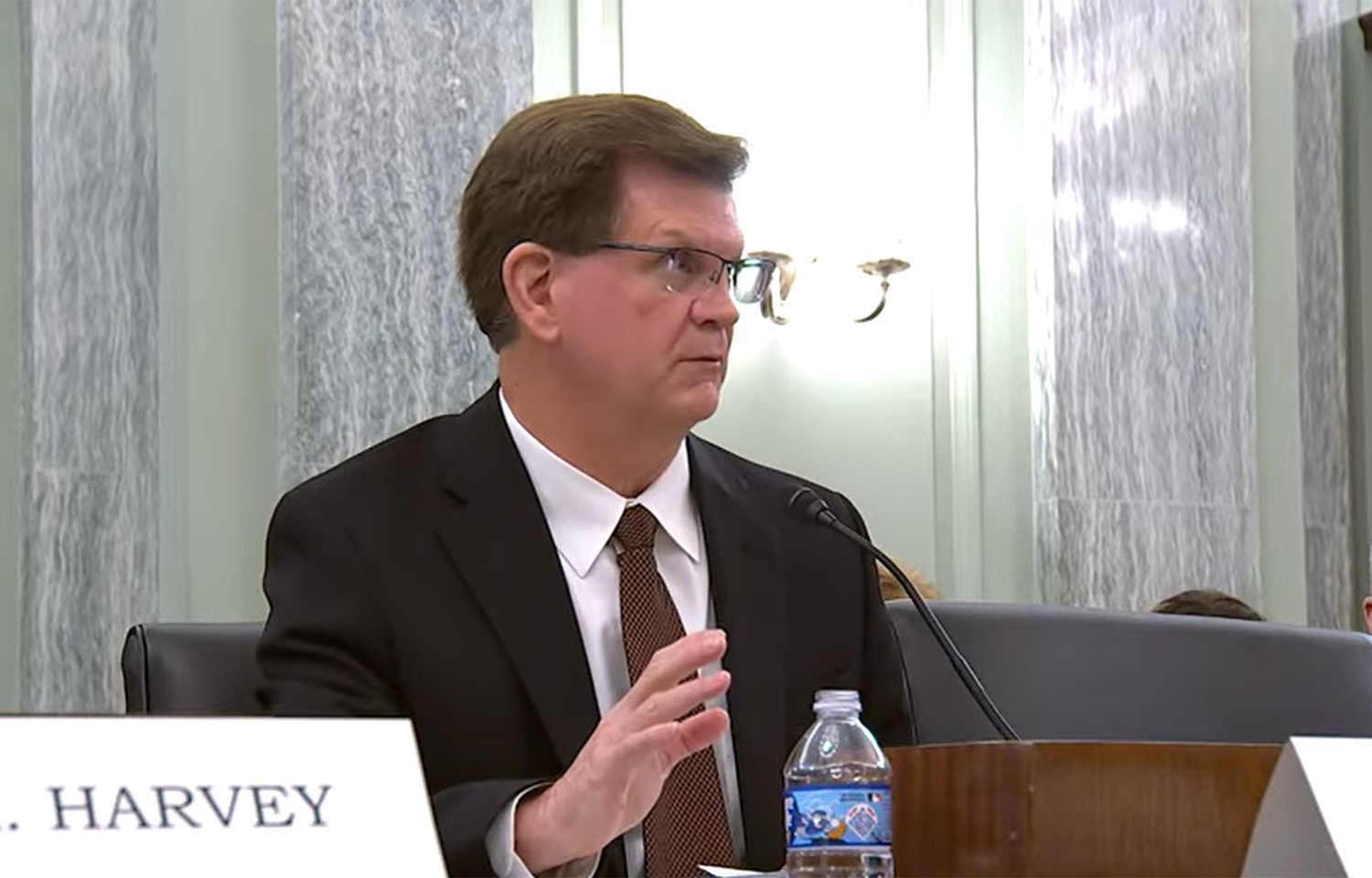
On 22 October, the Senate Committee on Commerce, Science, and Transportation held a hearing for Congressional staffer Timothy Petty, the president’s nominee to be assistant secretary of commerce for oceans and atmosphere, where he would oversee NOAA Fisheries. After former President Joe Biden’s pick to lead the agency, Janet Coit, stepped down at the end of his administration, NOAA Fisheries was initially led by longtime NOAA employee Emily Menashes. She was replaced in April when the White House named former commercial fisherman and officeholder Eugenio Piñeiro Soler acting assistant administrator.
Petty has served as a senior staffer for the House Committee on Transportation and Infrastructure’s Subcommittee on Water and Environment since 2022. A geologist by trade, Petty previously worked as the assistant secretary of water and science at the U.S. Department of the Interior from 2018 to 2021 and worked on the natural resources and water issues in the Office of U.S. Senator James Risch (R-Idaho) for several years.
“During my time in the Senate, I’ve had the privilege of working with many of you and your staff,” Petty said in written testimony to the committee. “Whether it was advancing hydropower legislation, supporting Tribal water rights settlements, or strengthening our water infrastructure and environment, I’ve seen firsthand the power of collaboration and the importance of science-based policymaking.”
At the recent hearing, senators took time to tell Petty where they’d like to see improvement.
U.S. Senator Dan Sullivan (R-Alaska) praised U.S. Secretary of Commerce Howard Lutnick’s management of fisheries so far, but he was quick to demand better fisheries surveys from the federal government.
“Our seafood industry needs two things from the federal government: surveys and timely promulgation of regulations to open fisheries. That's it, and that's under you. The surveys have not been going well. Can I get your commitment to get us back to the gold standard of serious surveys but doing it in a way in which it's prioritized and, again, in a way in which it is promoted in the president's executive order on seafood competitiveness in addition to his executive order on Alaska?”
In her opening remarks, U.S. Senator Maria Cantwell (D-Washington) also highlighted the importance of fishery surveys and stock assessments.
“I think this committee has been very, very loud and clear about the importance of stock assessments. You can't catch fish if you haven't done the stock assessment, and we need the fisheries to continue to work,” Cantwell said. “This requires providing NOAA with expertise and resources, and NOAA has lifted the hiring freeze for some weather personnel, but what about fisheries personnel? We need to get the stock assessments done; we need the personnel to do them.”
Cantwell also noted that the Trump administration’s efforts to shrink the federal workforce by laying off hundreds of NOAA employees and cutting funding were impacting NOAA Fisheries’ work.
“When it comes to protecting our coastal economies, scientists are not optional. Let's not forget, the president proposed a 27 percent cut to NOAA's budget, and the agency has lost at least 576 staffers, nearly one in five under this administration. So, I'm very, very concerned about that,” Cantwell said. “They're seeing real impacts from this. For instance, a number of stock assessments in New England have been canceled this year. A 60-day regulatory freeze led to the overfishing of the Atlantic bluefin tuna off North Carolina, and in my state, salmon are incredibly important economically and culturally, so we depend on NOAA for this long-term sustainability. I look forward to asking you questions about that and what you can do to help correct these issues at the department.”
Sullivan also took time at the hearing to demand that once in office, Petty approve fishery disaster declaration and financial relief for the 2022 Yukon River salmon fishery, the 2021 Upper Cook Inlet salmon fishery, and the 2022 Kuskaquim River salmon fishery.
“Can you assure me that your first order of business will be the approval of these disaster funds and the recovery resources necessary?” Sullivan asked.
“Senator, I look forward to getting into the building and doing just that,” Petty said, noting that NOAA Administrator Neil Jacobs was watching the hearing and would receive the message.
