


Scientists at the University of Miami's Rosenstiel School of Marine, Atmospheric, and Earth Science recently published a study showing that cultivating seaweed species among marine finfish in integrated multi-trophic aquaculture (IMTA) operations helps reduce or even eliminate key waste products.
The study, titled “Evaluation of native macroalgae species of the Southeast U.S. and Caribbean for use in integrated multi-trophic aquaculture (IMTA),” offers new insights for aquaculture producers on ways to promote sustainability by farming macroalgae species alongside finfish. Researchers found that with these two systems running simultaneously, the waste from one organism can be utilized by another organism across trophic levels, creating less waste overall and positively impacting the environment.
“Our findings support more sustainable aquaculture operations and help producers make smarter choices about macroalgae for IMTA,” Haley Lasco, a marine biology graduate student at the Rosenstiel School and a scientist at the South Carolina Department of Natural Resources, said. “With the significant interest in the development of marine aquaculture throughout the Southeast U.S. and Caribbean, these findings can be used to guide the selection of extractive macroalgae species in operations culturing marine finfish."
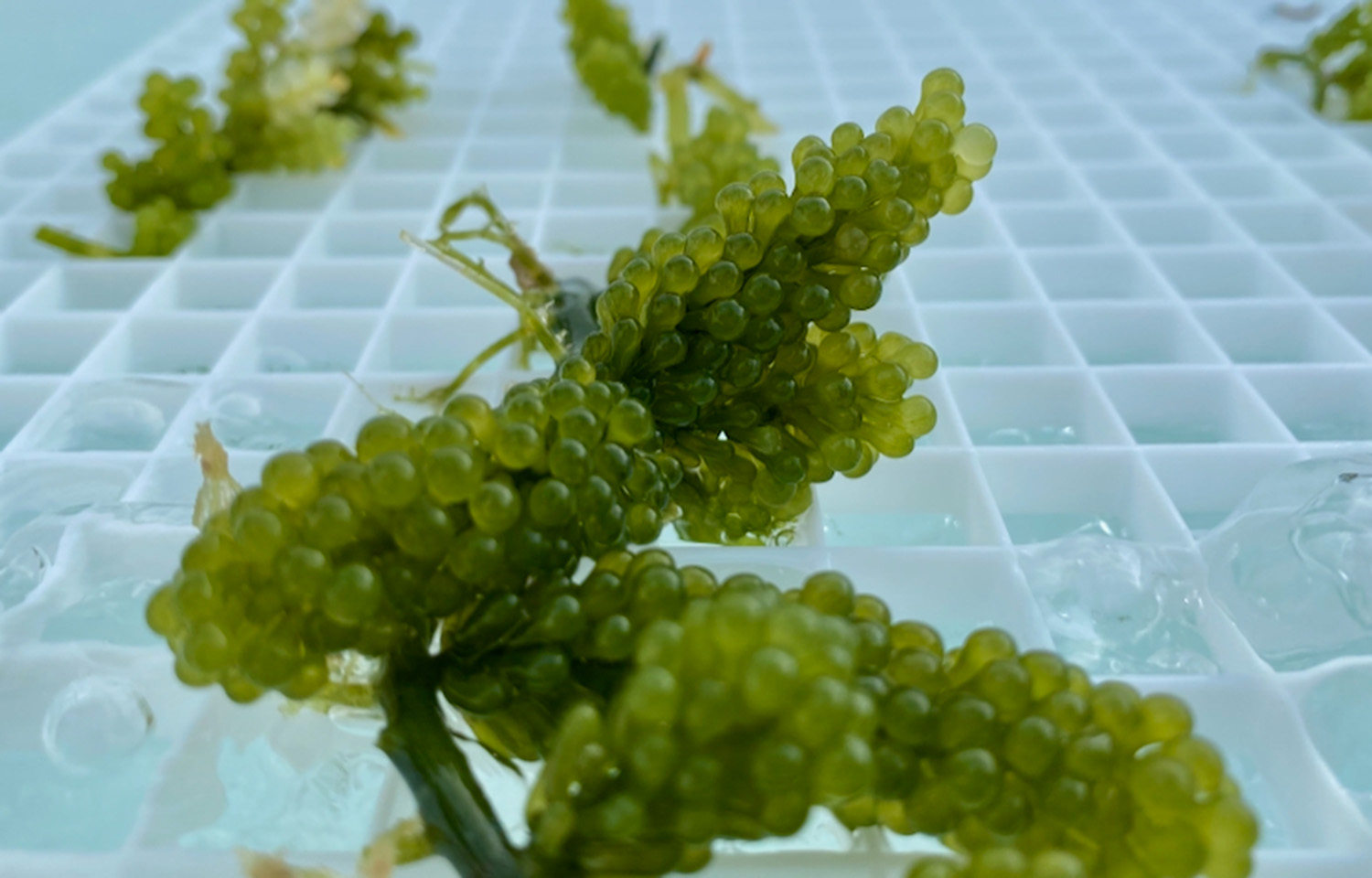
Researchers used a pilot-scale IMTA system at the school’s Virginia Key, Florida, U.S.A.-based experimental hatchery facility to test four different macroalgae species under consistent marine finfish effluent, or nutrient-rich liquid waste, conditions from yellowtail snapper in a grow-out tank with commercial-scale density and feeding rates. Macroalgae species from the Southeast U.S. and Caribbean were used, and the three tanks received the same controlled nutrient removal, composition, and market potential to mimic the conditions of commercial aquaculture.
After two weeks under these conditions, macroalgae were evaluated for growth and analyzed for protein, fat, fiber, ash, minerals, metals, carbon, and nitrogen content. Study leads found a potential to reduce total ammonia nitrogen (TAN) to below detectable levels
“This work shows how integrating macroalgae into marine finfish aquaculture systems can reduce waste while producing a valuable secondary crop,” John Stieglitz, a research associate professor in the University of Miami's Department of Marine Biology and Ecology and the principal investigator of the study, said. “It provides a practical framework for selecting species based on specific production goals, improving environmental performance while creating opportunities for better production economics and more diversified products using an IMTA approach.”
Funding for the study came from the Gulf States Marine Fisheries Commission (GSMFC) in cooperation with NOAA.
