
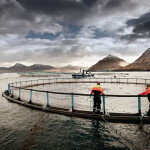

Chile’s Undersecretariat of Fisheries and Aquaculture (Subpesca) is working to modify a resolution dating from 2021 to allow the alternating or joint cultivation of macroalgae as a complementary activity at the nation’s salmon farms.
Multitrophic aquaculture is a farming practice that involves cultivating different aquatic species from different levels of the food chain in the same ecosystem by using byproducts and waste from one species as food and fertilizer for others. The mimicking of natural food webs is intended to boost farm output – which could benefit Chile’s salmon aquaculture industry.
According to Subpesca Technical Report No. 219 of 2026, the new provision is based on the fact that macroalgae crops can be extensive systems that require low productive intensity. The raising of macroalgae creates little to no waste since it does not require external food, taking advantage of the nutrients dissolved in the water.
The move by Subpesca aligns with the criteria of simplification and efficiency found in Chile’s law number 21,770, which was passed in 2025 to eliminate unnecessary regulatory burdens. That law, known as the Framework Law on Sectoral Authorizations, seeks to provide greater certainty to businesses and promote productivity, growth, and investment by modernizing authorization mechanisms while shooting for a gradual transition toward more standardized, simplified regulations.
Subpesca also pointed to scientific evidence supporting the broad environmental benefits of macroalgae, including the absorption of nitrogen and phosphorus, the capture of carbon dioxide, and the release of oxygen – thereby mitigating the effects of climate change. The governmental authority further noted that macroalgae generate structures that act as habitat, refuge, and breeding areas for other species, directly favoring biodiversity.
Chilean salmon industry association SalmonChile applauded the move, calling it a “great advance” for the sector. Up until now, salmon producers had faced complex administrative procedures over the issue of whether the inclusion of algae constituted a substantial modification of the authorized concession – a regulatory obstacle that limited the sustainable diversification of salmon farms.
Allowing salmonid concession holders to incorporate macroalgae cultures in their operations through a simplified process, which will no longer require the technical modification of a concession, is a significant step for the real implementation of integrated multitrophic aquaculture in Chile, SalmonChile said.
“Integrated multitrophic aquaculture opens spaces to strengthen environmental synergies in the environments where we operate,” Alexander Jaramillo, the Health and Safety Coordinator at SalmonChile's Salmon Technological Institute (Intesal), said.
“Facilitating the incorporation of macroalgae through agile processes optimizes management and enhances benefits of ecological value such as carbon capture and care for the seabed,” he said.
