






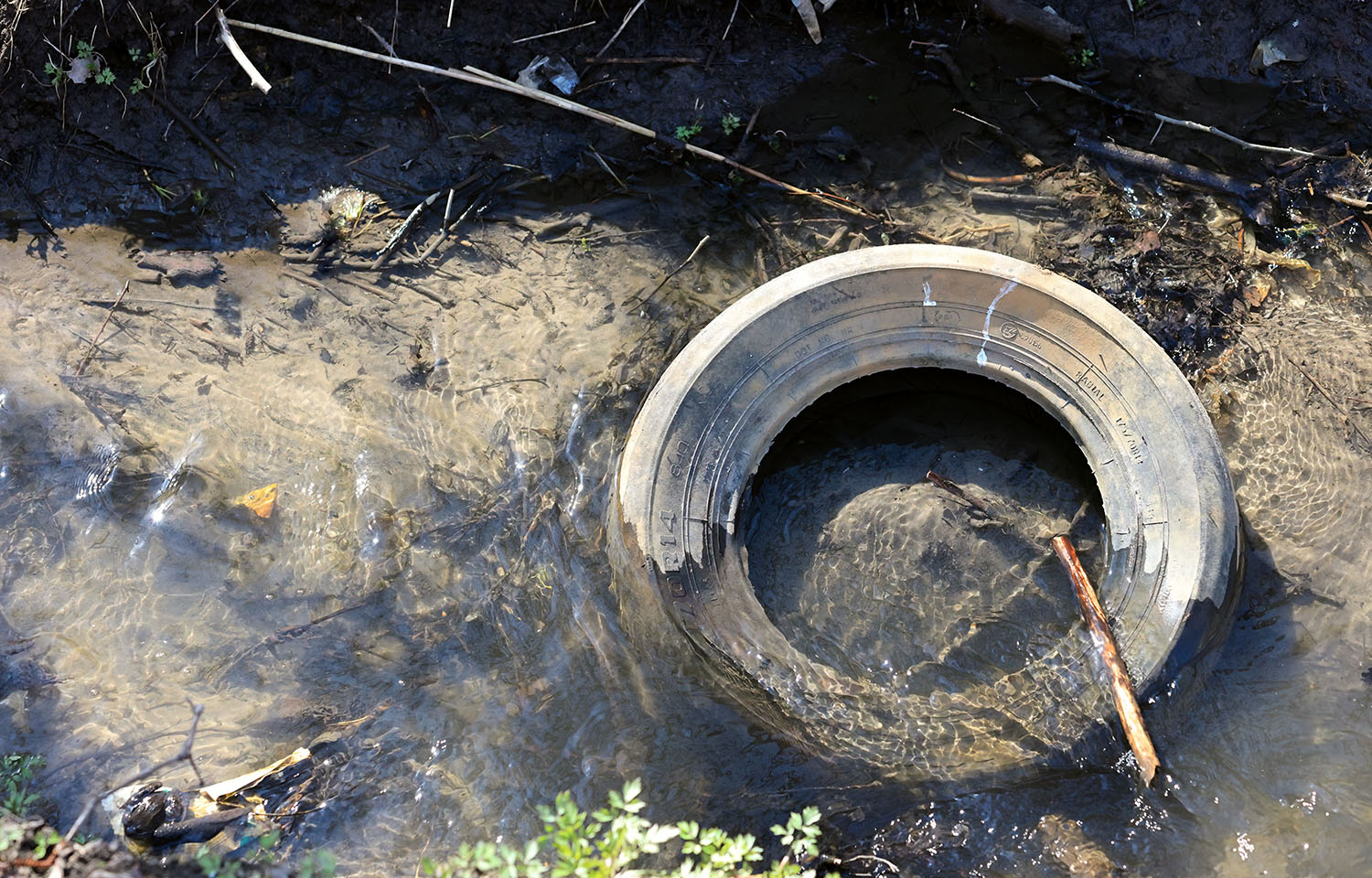
U.S. legislators have proposed several provisions addressing 6PPD-quinone – a chemical contaminant that has been linked to mass mortality in coho salmon – as part of the ongoing fiscal year 2026 budget process.
6PPD is a chemical commonly used in tire manufacturing to slow down degradation, but it is now known to transform into 6PPD-quinone when exposed to air. That transformant has been shown to be toxic to salmon, with research showing that stormwater runoff could be carrying 6PPD-quinone into salmon-bearing streams and harming fish populations.
In 2023, the U.S. Environmental Protection Agency (EPA) launched an investigation into 6PPD-quinone under the Toxic Substances Control Act in response to a petition brought by environmental group Earthjustice on behalf of the Yurok, Port Gamble S’Klallam, and Puyallup Tribes. Previously, the EPA had launched a cross-agency workgroup to look into the chemical.
Now, lawmakers have introduced multiple provisions addressing 6PPD-quinone into the fiscal year 2026 appropriations bills currently being considered by U.S. Congress.
In the report on the appropriations bill funding the Department of Transportation, U.S. senators designated USD 8 million (EUR 6.9 million) for the Federal Highway Administration (FHWA) to work with state governments in developing stormwater technologies and techniques to reduce 6PDD-quinone in salmon-bearing streams. The U.S. Senate Appropriations Committee directed the Department of the Interior to also work with NOAA Fisheries in its research on the chemical and to use that research to inform its stormwater policies and guidance.
The House report on the Transportation budget bill does not include that language.
The appropriations bills funding the U.S. Department of Interior also include language addressing 6PPD-quinone.
“Stormwater runoff containing 6PPD-q has already been linked to mass die-offs of endangered and threatened fish species across the Puget Sound and San Francisco Bay watersheds,” the Senate Appropriations Committee said in its report. “The Committee supports the [U.S. Fish and Wildlife Service’s] work to better understand the impacts of 6PPD and 6PPD-q on aquatic species in freshwater environments.”
The House Appropriations Committee also includes a 6PPD-quinone provision in its report on the Department of the Interior funding bill, directing the Environmental Protection Agency (EPA) to support private sector efforts to develop 6PPD alternatives.
Lawmakers have also inserted 6PPD-quinone language into the two agriculture appropriations bill. Both the Senate Appropriations Committee and the House Appropriations Committee reports directed the Agricultural Research Service to work with industry on identifying 6PPD replacements, with the House report providing USD 500,000 (EUR 433,005) for those efforts.
The House and Senate will need to reconcile and pass matching legislation before passing a draft on to the president to be signed into law.
