





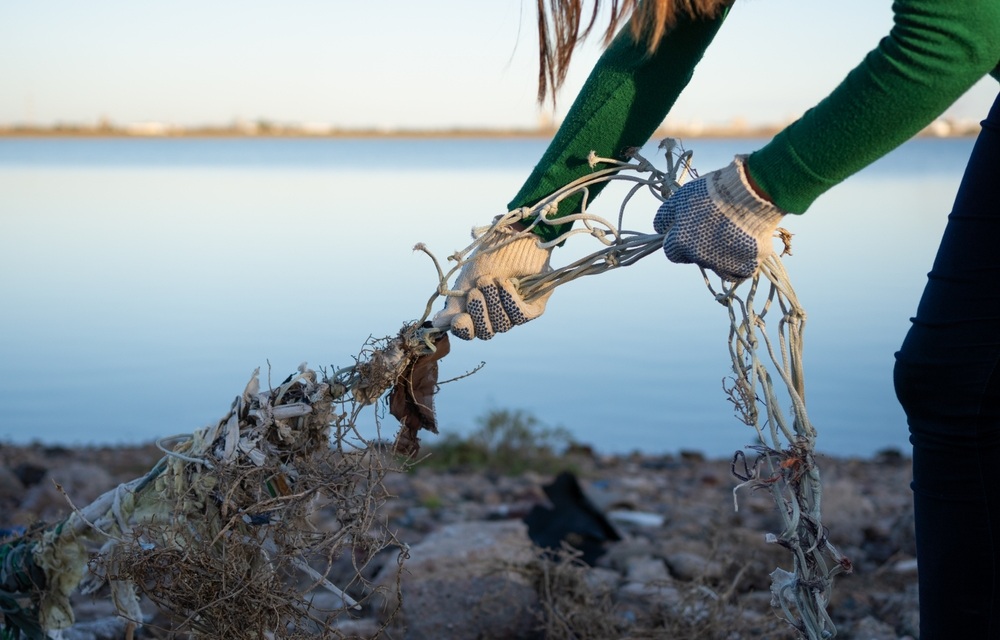
The U.S. Senate has passed legislation reauthorizing marine debris cleanup programs originally passed in the 2020 Save Our Seas 2.0 Act for another five years.
“Alaska has more coastline than the Lower 48 states combined, which means our state feels a disproportionate impact of the global marine debris crisis,” U.S. Senator Dan Sullivan said in a release. “These programs, last authorized by our Save Our Seas 2.0 Act, have helped our coastal communities clean up the debris that washes up onto our vast shoreline, provided access to clean drinking water, and supported the health and livelihoods of Alaskans, including our fishermen.
Along with U.S. Senator Sheldon Whitehouse (D-Rhode Island), Sullivan introduced the original Save Our Seas 2.0 Act in 2020. The law instructed the Environmental Protection Agency (EPA) to establish the Solid Waste Infrastructure for Recycling (SWIFR) initiative, a competitive grant program that provides funding to states, Tribes, and local governments to implement the National Recycling Strategy. Funding can be used to improve recycling infrastructure, reduce contamination in the recycled materials stream, establish or improve markets for recycled commodities, and similar efforts.
SWIFR has provided more than USD 100 million (EUR 87 million) in grants to date, although demand has already far outstripped available funding. According to the EPA, the agency received 452 applications during the first rounds of the grant process. If all of them had been approved, the program would have provided USD 950.3 million (EUR 817.4 million).
“In the first round of grants from one of our Save Our Seas 2.0 programs, every eligible state and territory requested funding,” Whitehouse said in a release. “It is a clear demonstration of the enormous demand from both red states and blue states to address dangerous plastic pollution, and I’m pleased that the Senate has come together to reauthorize these programs. Together, we can protect our clean water and tackle the scourge of plastic waste washing up on shores from coast to coast.”
The Save Our Seas 2.0 Act only authorized the programs for five years, however, necessitating the reauthorization bill.
In addition to SWIFR, the recently passed bill reauthorizes the Drinking Water and Wastewater Infrastructure Grant Programs and the Trash Free Waters programs, the latter of which provides funding to prevent, remove, and research marine debris.
“Clean water and a healthy ocean support every family in the country and every sector of the economy," said Representative Bonamici. "Extending these successful EPA programs will strengthen the recycling and water systems that stop plastic at its source and support projects that clear debris that damages our shores. These tools work. They deliver cleaner recycling operations, safer drinking water systems, stronger wastewater treatment, and faster trash removal. I'm glad that the Senate advanced our bipartisan bill and look forward to its swift passage in the House to keep families and the environment healthy.”
Though the legislation was passed by the full Senate with unanimous consent, it still needs to be passed by the House and forwarded to U.S. President Donald Trump to be signed into law.
“I want to thank all my Senate colleagues for working to protect our coastal communities, ecosystems and economies, and I urge my House colleagues to join us in renewing these critically important programs before the end of the year,” Sullivan said.
