






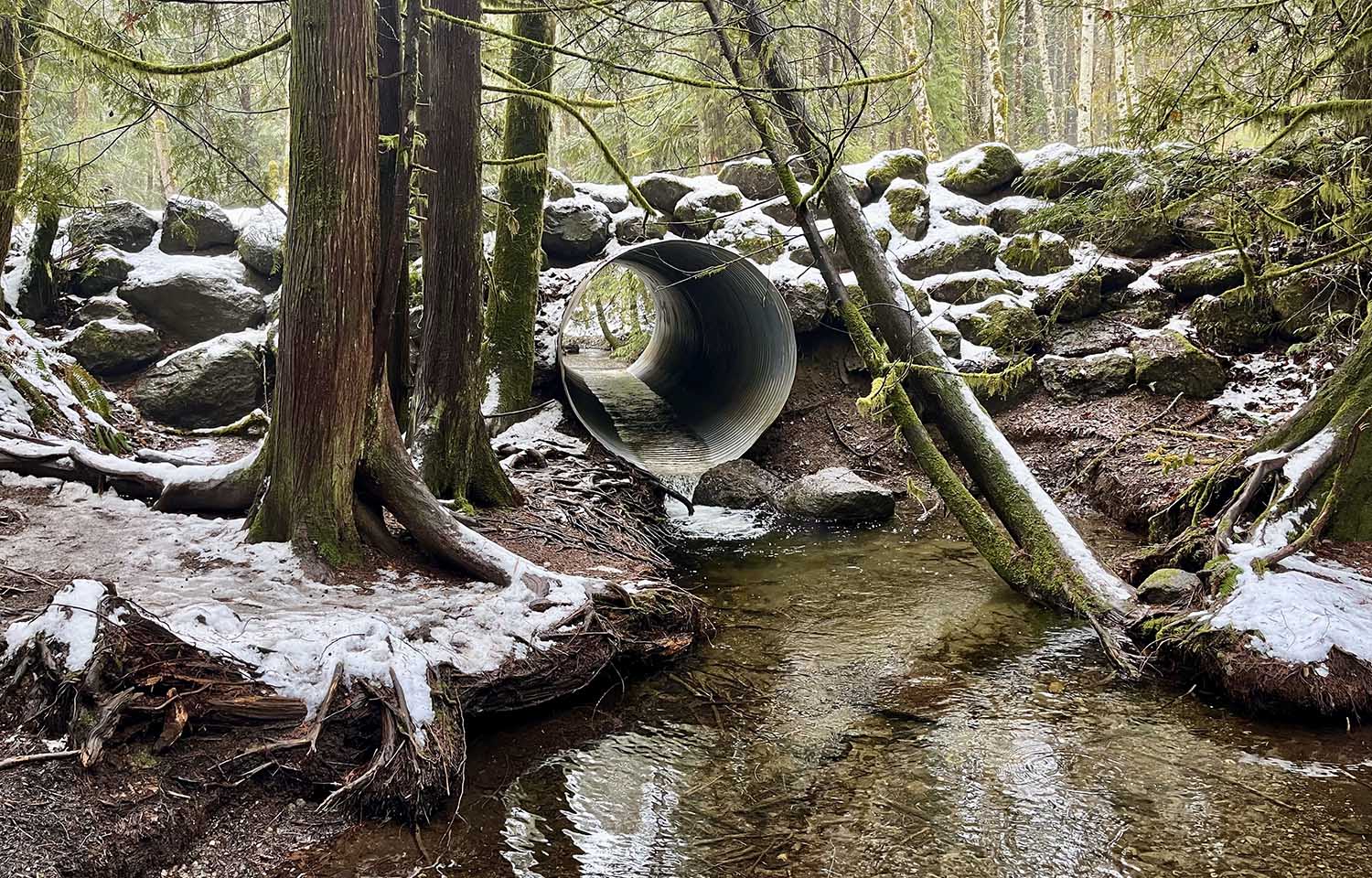
Lawmakers in the U.S. state of Washington have proposed a USD 5 billion (EUR 4.6 billion) plan for removing or replacing culverts in the state to open up historic salmon spawning habitat.
The plan is a response to the state’s decade-long efforts to comply with a 2013 federal court order that found the state’s culverts blocked salmon and steelhead trout migration, violating Tribal rights.
Washington has fixed or removed 146 culverts since then and plans to remove more, but the state is running out of funding for the effort. The state has already spent or allocated USD 4 billion (EUR 3.7 billion) on the effort, according to the Seattle Times. In March, the state government and Tribes agreed to enter mediation, with Washington admitting that it did not have the resources to meet court deadlines on culvert removals.
To address the funding gap, state lawmakers have unveiled a proposal that would raise USD 5 billion in special bonds to fund culvert removal and related salmon habitat recovery efforts.
“I think it’s really important that we prioritize any time that we’re in a legal situation where we are obligated to pay,” Washington Senator and Vice Chair of the Ways & Means Committee Yasmin Trudeau told the Seattle Times. “We respect the fact that we have created harm as a state government when it comes to fish passage, and we’re committed to figuring it out.”
The bonds would be repaid with revenue gathered from a tax on public utilities, but that part of the proposal drew criticism from local governments, who currently use that tax revenue for local public works projects. The proposal does provide some bond revenue to help fund public works, but several local government representatives testified against the bill in a 1 April hearing on the proposal.
“This is a proposal that tries to provide a balance. It's a creative balance,” Trudeau said during the 1 April hearing on the proposal. “No proposal is perfect. There's going to be a lot of conversations ahead. But, this is in no means a values judgment about the importance of the public works account.”
While most of the testimony was in opposition to the bill due to perceived cuts to public works funding, the proposal did receive some support.
“State law has always prohibited the barriers to salmon. Federal courts have ruled that treaty right to fish requires protection of habitat and that Washington state must repair barriers. The funding in [this proposal] provides that critical repair. Nooksack Tribe supports the dedicated fund for fish barrier correction,” Nooksack Tribe Chair RoseMary LaClair testified before the committee.
