


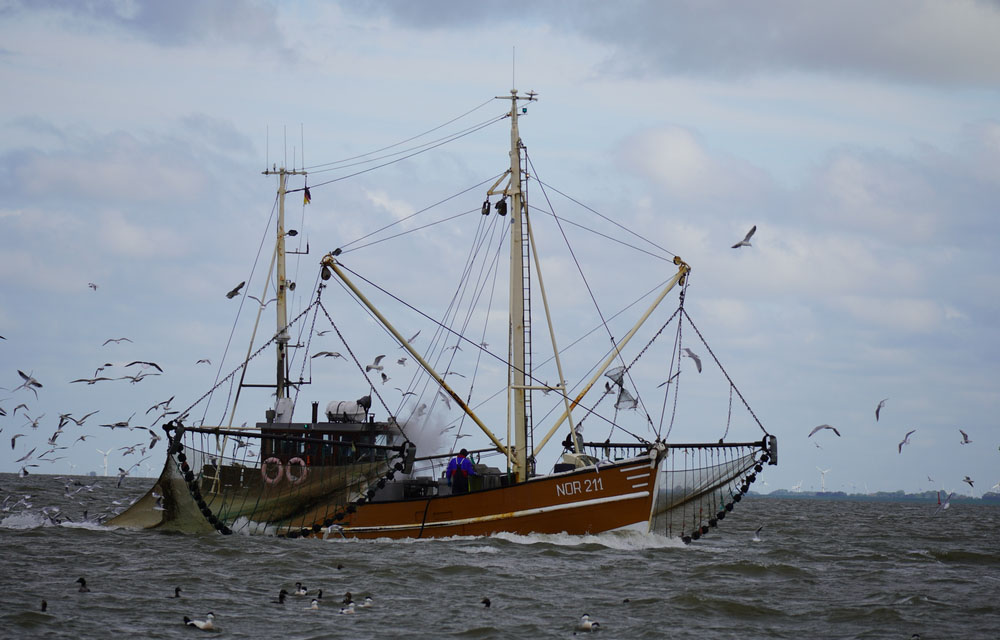
Germany is the latest European Union member state to be cleared to offer financial aid to its commercial fishing and aquaculture sector in response to higher fuel prices.
Fuel prices have been elevated for several months due to the U.S. war on Iran, which began in February and quickly led to the closure of the Strait of Hormuz. The strait is a major throughway for much of the world’s oil supply, and the war has kept that oil blockaded from leaving the Persian Gulf.
To alleviate financial pressure on commercial fishers and aquaculture businesses – both of which label fuel as one of their largest operating costs – the European Commission has authorized member states to utilize available funding to offset the increase in fuel prices. Under the Middle East Crisis Temporary State Aid Framework (METSAF), which was approved in April, member states can compensate commercial fishers, aquaculture companies, and other businesses for some of the difference in fuel prices since the conflict began.
The commission has already approved fuel aid schemes proposed by Spain, France, Croatia, Ireland, Sweden, Malta, and the autonomous region of Friuli Venezia Giulia in Italy.
Germany’s plan will provide EUR 4.5 million (USD 5.3 million) in funding via direct grants. The amount is intended to cover roughly 70 percent of the increase in fuel costs, with grants capped at EUR 50,000 (USD 58,333) per company.
“The commission concluded that the scheme is necessary, appropriate, and proportionate to facilitate the development of an economic activity and does not adversely affect trading conditions to an extent contrary to the common interest,” the European Commission explained in its 20 August announcement. “On this basis, the commission approved the German scheme under E.U. State aid rules.”
