




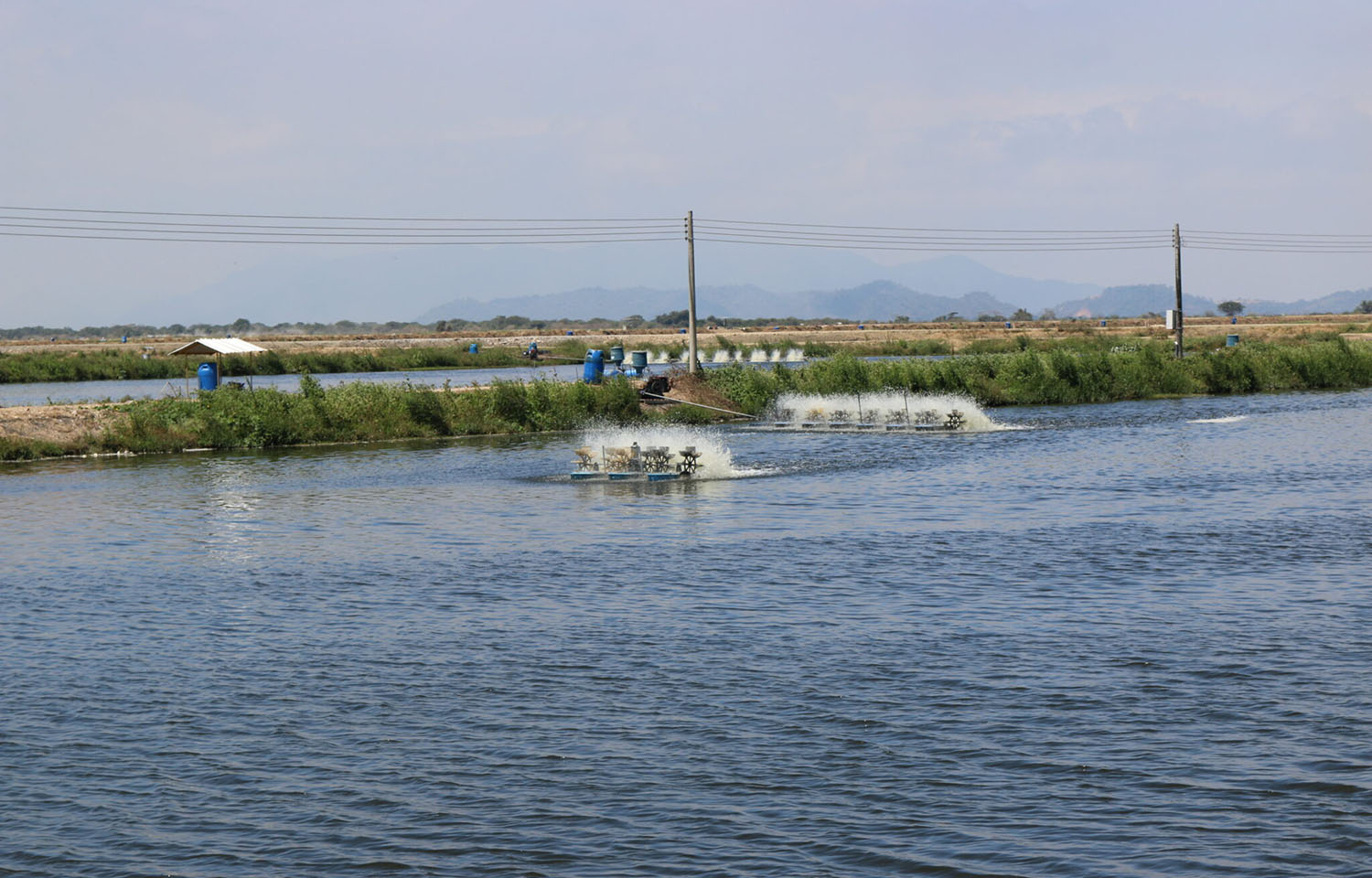
Ecuador’s shrimp industry has seen remarkable growth in the last decade, and is on pace to continue its greater than 10 percent compound annual growth rate (CAGR) in 2026.
While there are some obstacles to that growth, the industry is showing no signs of slowing down, and experts predict that the South American country’s shrimp sector could double its capacity in the coming years using only greater genetics and farming techniques.
As Ecuador continues to build its production, finding where to sell all that shrimp has become the next challenge. Juan Pablo Cuesta, the trade commissioner for New York City, New York, U.S.A.-based ProEcuador, is a part of the country’s effort to find that market, he told SeafoodSource.
“We have become the number one exporter of shrimp in the world; it’s the new gold rush in Ecuador,” Cuesta said. “As a trade commissioner in New York, my job is on the demand side of the equation.”
ProEcuador is a public institution in the country tasked with promoting Ecuadorian exports of all types and attracting foreign investment and buyers for products from the country. It has offices around the world, and ProEcuador has multiple offices in the U.S. covering different geographic regions.
“We have around 24 offices in 21 countries,” Cuesta said. “I work with around 100, 150 companies from all of the export sectors – not just seafood – in different activities.”
Ecuador’s exports to the U.S. have been growing in recent years as the country begins to diversify its markets. Historically, China has been a dominant market for Ecuador’s shrimp exports, often accounting for more than half of the country’s shrimp market by weight.
While having a solid customer has helped the industry grow, it can occasionally result in issues, like China’s recent suspension of health certificates for certain Ecuadorian producers. While those were eventually lifted after Ecuador’s National Chamber of Aquaculture (CAN) got involved, it highlighted how the loss of China as a market for certain companies could be a big blow economically.
The recent suspension was minor compared to when the market took a massive hit during the Covid-19 pandemic, when China placed bans on Ecuadorian products at a time when the market was even more dependent on China than it is now.
Cuesta said his job as trade commissioner is to help companies in Ecuador find that outside market by helping them navigate the U.S.’s rules and regulations and to find buyers. ProEcuador offers trade show guidance, FDA regulatory guidance, Seafood Import Monitoring Program guidance, and more.
“We have been at Seafood Expo North America without interruption since 2015, pandemic years aside,” Cuesta said.
Typically, ProEcuador targets small- or medium-size companies in the shrimp sector, as those are the ones with fewer resources to do the work needed to get a foothold in the U.S. market.
“The top 5 companies, the shrimp companies in the U.S., cover something like 75 percent of the market. Those big companies, they don’t really need ProEcuador to help them with their efforts,” Cuesta said.
The smaller companies, he said, are where ProEcuador can “move the needle” on things like participation in trade shows like SENA.
“My role as a trade commissioner is not only to go to trade shows and bring companies to the show, but also to make connections with importers here, and put them directly in touch with exporter companies,” he said.
ProEcuador has also helped with the reverse – taking buyers in the U.S. that are interested in Ecuadorian shrimp to the country to meet with producers and establish relationships. Cuesta said he’s help with organizing the scheduling and logistics of trips, to ensure the travel goes smoothly.
Cuesta said there has recently been a much more concerted effort by Ecuadorian companies to target the U.S. market, based on his work. The country is producing more specialized, value-added products, which was key in its mission to diversify from the Chinese market.
“For years Ecuador has grown so much, but they were exporting 70 to 80 percent of the product to China. When they were buying the shrimp, it was easy,” Cuesta said. China typically buys a product that requires relatively little in terms of processing – while in the U.S. “demand is much more sophisticated.”
“I think for some time, Ecuador has put aside the U.S. market a little bit, as it was more demanding,” Cuesta said. “Now, they are coming full force for the U.S. market, with a more specialized, more industrialized product.”
As he continues to make connections between U.S. buyers and Ecuadorian producers, Cuesta said he’s careful to not jeopardize existing customer-client relationships within the country – and he’s also making sure the shrimp’s Ecuadorian origins are prominent. Restaurants have begun to highlight the Ecuadorian shrimp, and the country’s government is acting as a cheerleader to push that association, he said.
“We as a government agency, as a country, as a government agency that promotes exports, the main goal is they notice the shrimp is Ecuadorian,” Cuesta said.
