



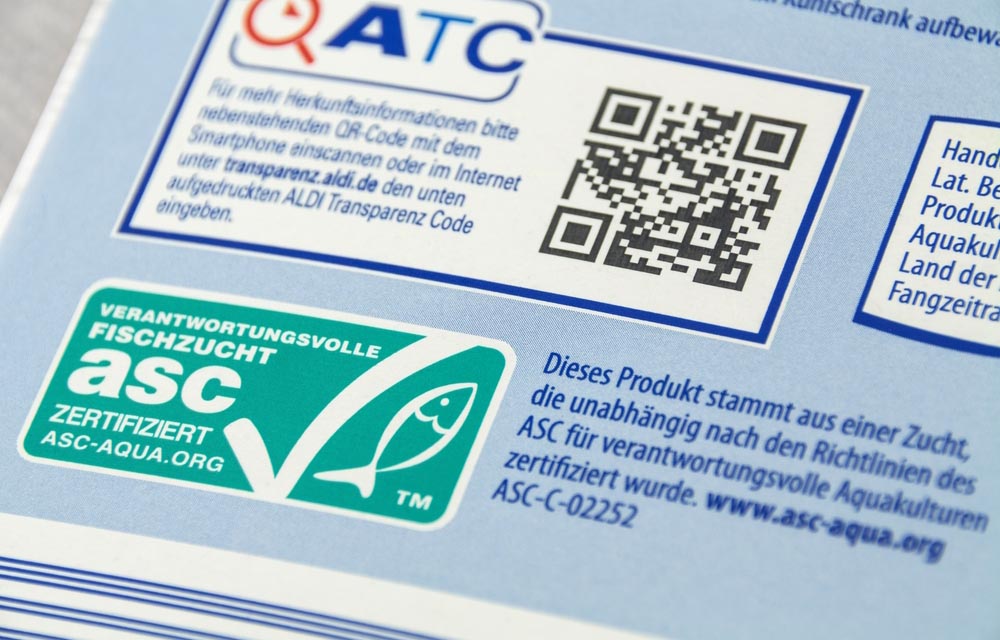
The Aquaculture Stewardship Council (ASC) has sent a response to U.S. senators’ inquiry into foreign shrimp, rejecting any effort to pin the blame on the ASC for tainted Indonesian shrimp that was stopped by U.S. Customs and Border Patrol last year.
In a detailed 12-page letter, the seafood certification and labeling body explained its process to the lawmakers, emphasizing that no products with its label were involved in recalls related to the affected shipments.
“ASC actively monitors publicly available regulatory data, including FDA import alerts, as well as other credible reports relating to ASC-certified entities and supply chains. When potential concerns are identified, ASC may initiate further review or investigation as appropriate. This includes the Cesium-137 contamination alerts issued by FDA between August and October 2025 regarding imported frozen shrimp from an Indonesian processor. No ASC-labeled products were implicated in that investigation,” ASC stated in its letter.
The inquiry was launched by senators on the Health, Education, Labor, and Pensions (HELP) Committee in November 2025 following recalls caused by the presence of radioactive isotope Cesium-137 (Cs-137) beginning in August 2025. Though the U.S. Food and Drug Administration (FDA) said the radiation was too low to cause any immediate harm, some lawmakers have highlighted the incident to call into question the quality and safety of imported shrimp products. In a speech on the Senate floor, U.S. Senator John Kennedy (R-Louisiana) suggested that eating the shrimp would transform a person into the proverbial alien from the movie “Alien,” despite zero evidence.
“Mr. President, this is a photograph of the alien from the movie ‘Alien.’ This is what you could end up looking like if you eat some of the raw frozen shrimp being sent to the U.S. by other countries,” Kennedy said on the U.S. House floor in September. “If you eat it, how could you end up looking like the alien in ‘Alien?’ – because the shrimp was radioactive. I kid you not. It had a radioactive isotope in it called Cs-137. It will kill you. Even if it doesn’t turn you into the alien if you eat this stuff, I guarantee you will grow an extra ear.”
Kennedy and other lawmakers started their inquiry with letters to three major retailers affected by the recalls – Walmart, Kroger, and Albertsons. In May of this year, U.S. Senator Bill Cassidy (R-Louisiana) and U.S. Senator Tommy Tuberville (R-Alabama) expanded that inquiry to three of the largest seafood certification bodies: the Global Seafood Alliance, the Marine Stewardship Council, and the Aquaculture Stewardship Council (ASC).
“As Congress examines ways to enable consumers to access high-quality food, it must also examine the role that aquaculture certification plays in supporting these efforts. Stakeholders in the food supply chain, including distributors, retailers, and restaurants, rely on third-party audits and certifications to determine whether the seafood they purchase is safe and responsibly caught,” the senators wrote. “However, questions have been raised around the independence of these processes. In order for these processes to work and to comply with the law, third-party audits and certifications must be based in legitimacy and take steps to prevent bad actors from abusing the system.”
Now, ASC has published its response letter to the senators' questions, emphasizing the “robustness of its certification system, which is built on stringent standards, independent third-party audits, full supply chain traceability, and public transparency to provide credible assurance for certified seafood products.”
The organization also pointed out that no shrimp with its label were part of the Cs-137 shrimp recalls that instigated the senate inquiry.
“ASC takes concerns relating to imported seafood seriously and actively monitors regulatory alerts and other credible reports relating to ASC-certified entities and supply chains,” ASC said in a release. “As noted in this response, no ASC-labeled shrimp products were implicated in the FDA's 2025 Cesium-137 contamination alerts relating to imported shrimp. While food safety oversight remains the responsibility of regulators and food safety certification systems, ASC requirements for traceability, supply chain integrity, veterinary medicine controls, transparency, and independent assurance provide additional safeguards and accountability mechanisms throughout the supply chain.”
In response to the senators’ questions, the council said that it had not received any safety complaints from the FDA while noting that it was not a food safety or regulatory body.
“While ASC is not a food safety certification scheme or regulatory authority, the program includes requirements related to legal compliance, supply chain integrity, antibiotic stewardship, social responsibility, and independent assurance that provide measurable oversight of certified operations and transparency throughout the seafood supply chain,” ASC said.
