






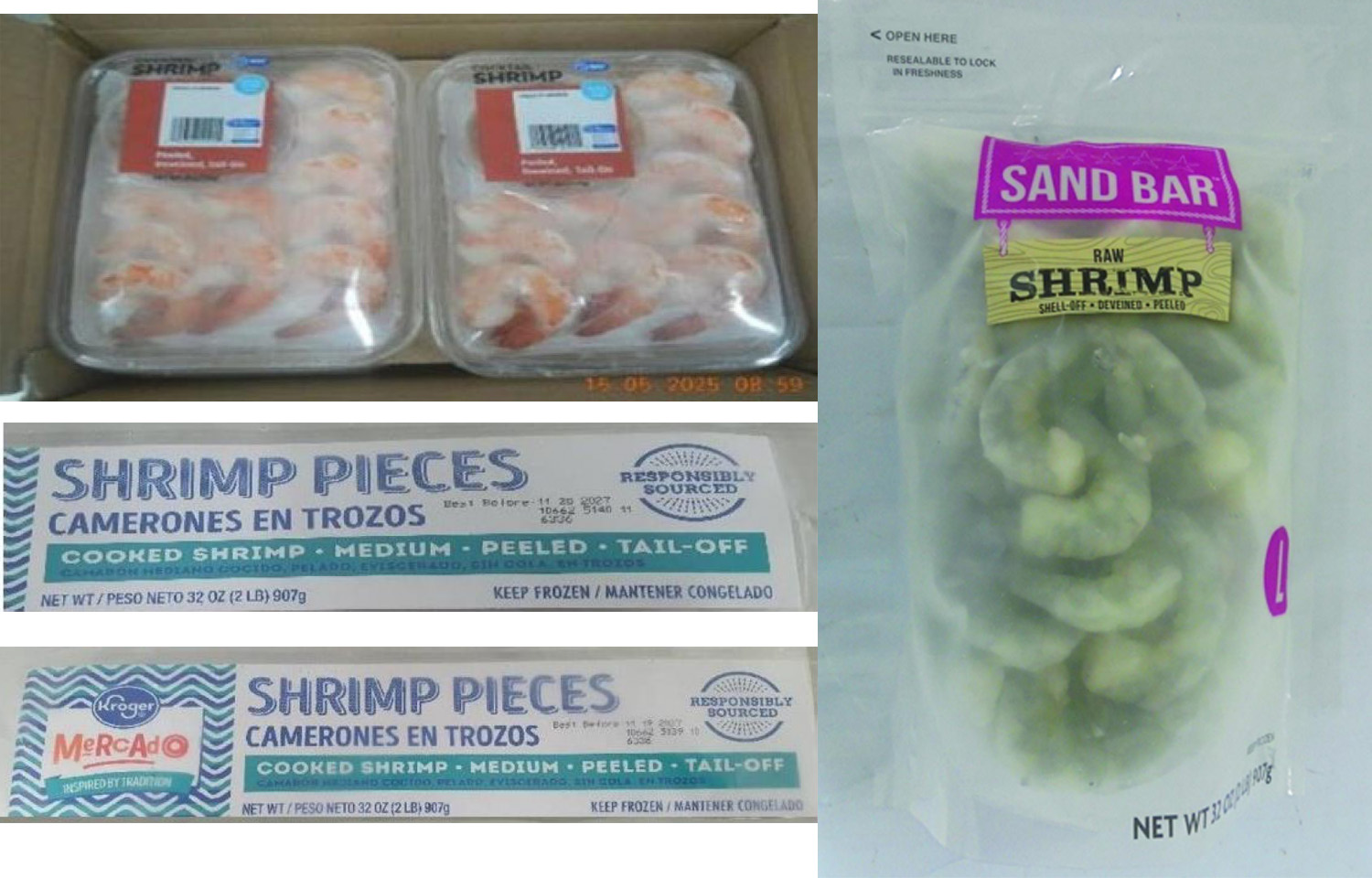
A string of frozen shrimp recalls related to the discovery of radioactive material may be connected to an industrial site in Indonesia, the Associated Press reported.
Multiple U.S. companies have issued recalls for frozen shrimp due to possible contamination with Cesium-137 (Cs-137), a man-made radioisotope. Companies began issuing recall advisories in late August, and the U.S. Food and Drug Administration (FDA) followed it up with a voluntary recall after U.S. Customs and Border Protection (CBP) detected Cs-137 in multiple shipping containers at the ports of Los Angeles, Houston, Savannah, and Miami.
A recall issued by U.S. retail giant Walmart for its Great Value branded frozen shrimp related to the discovery quickly resulted in dozens of high-profile media reports on “radioactive shrimp.” Soon after, U.S. Secretary of Health and Human Services Robert F. Kennedy Jr. made comments about the recall, claiming it as evidence that Southeast Asian nations are dumping shrimp in the U.S.
“We just stopped a shipment that was contaminated with Cesium-137, which is radioactive,” Kennedy said during a cabinet meeting. “They’re farming these shrimp, and they use bactericides and antibiotics and all kinds of chemicals, and the shrimp are so contaminated the European nations won’t take them. So, they’re dumping them all here.”
The issue got even more media attention after U.S. Senator John Kennedy (R-Louisiana) made a series of remarks on the U.S. Senate floor that claimed people who ate raw frozen shrimp sent to the U.S. by other countries could end up looking like the alien from the movie “Alien.”
“If you eat it, how could you end up looking like the alien in ‘Alien?’ Because the shrimp was radioactive. I kid you not,” Kennedy said. “It had a radioactive isotope in it called Cesium-137. It will kill you. Even if it doesn’t turn you into the alien if you eat this stuff, I guarantee you will grow an extra ear. That was bad enough. Obviously, the FDA issued a recall.”
Now, the International Atomic Energy Agency (IAEA) said its officials are working with Indonesian nuclear regulators on the contaminated shipments. The agency told the Associated Press the regulators detected Cs-137 at a processing plant that sent millions of pounds of shrimp to the U.S.
“Preliminary information suggests that it may have originated from activities at a metal melting facility at the same industrial site or from the disposal of scrap metal junk to other areas of the site,” IAEA Spokesperson Fredrik Dahl told the Associated Press.
Dahl said that the Indonesian company, PT Bahari Makmur Sejati – or BMS foods – has recalled more than 300 shipping containers that were on their way to the U.S. due to the discovery of Cs-137.
Regardless of the origin, the level of Cs-137 detected in the shrimp is relatively low and measures at 68 becquerels per kilogram. For comparison, a banana typically contains 15 becquerels per kilogram, and the FDA’s level of becquerels to trigger the need for health protections is 1,200 becquerels per kilogram.
