



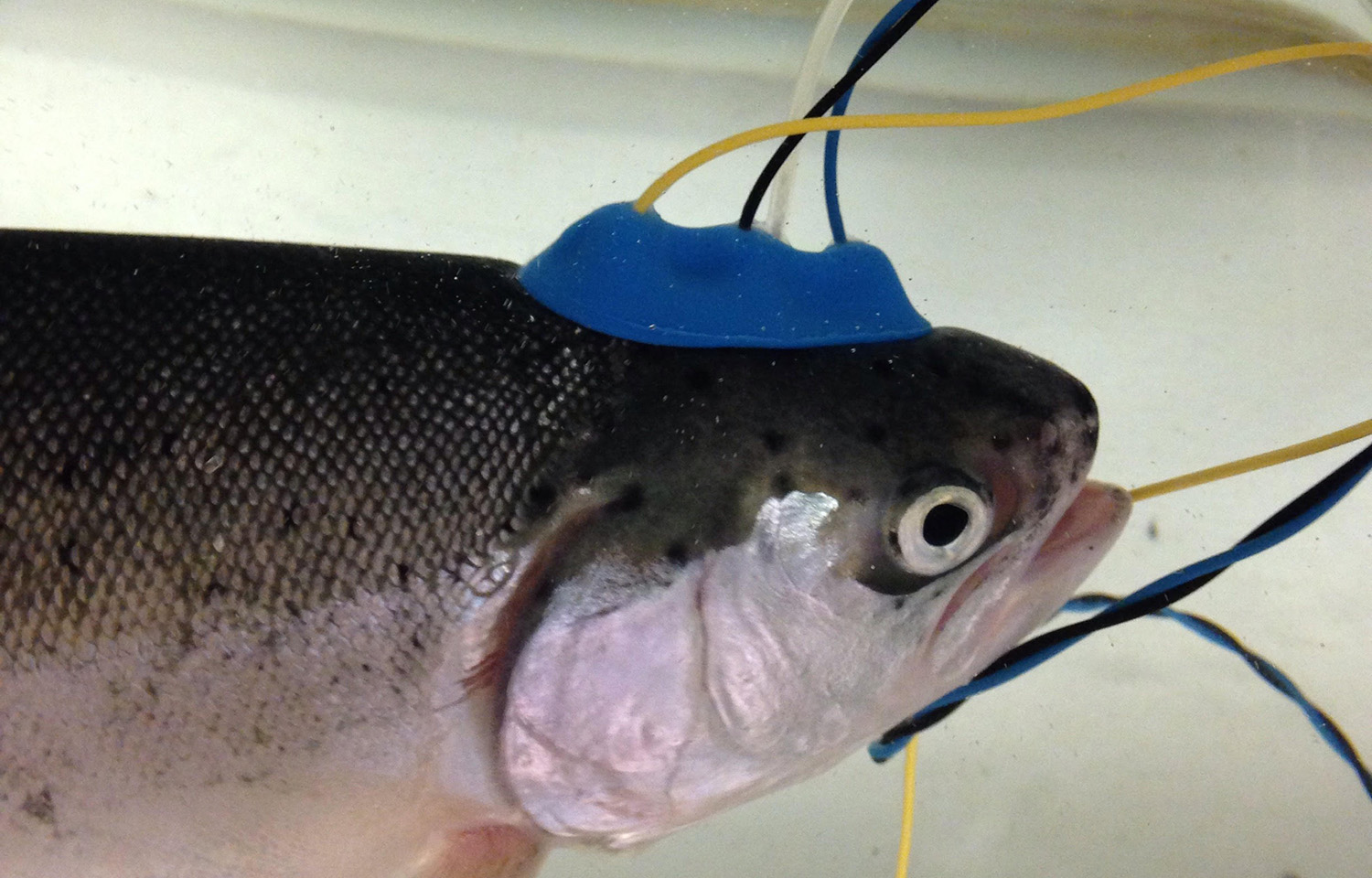
The Center for Responsible Seafood (TCRS), a Portsmouth, New Hampshire, U.S.A.-based nonprofit, has received a USD 1.1 million (EUR 947,000) grant to continue conducting research on the humane slaughter of fish.
“With continued funding, TCRS will evaluate novel technologies for humane stunning, including pressure-wave methods and machine-vision-guided laser targeting," the company said. "The project will also refine remote monitoring systems to help processing plant workers identify fish that may not be fully stunned.”
TCRS President George Chamberlin said the nonprofit’s research team has dug deeper into the ethical concerns of inhumane slaughter in aquaculture, with the nonprofit noting that inhumane methods have been found to affect the quality of food.
“Stress and poor welfare during slaughter generally reduce the shelf life, texture, and taste of fish,” TCRS said. “In other words, better welfare benefits both animals and consumers.”
TCRS’ prior research came thanks to three separately funded grant phases.
Phase 1 “surveyed literature and evaluated stunning systems for salmon, tilapia, and channel catfish based on behavioral indicators of fish insensibility,” TCRS said. This included measuring body movement, opercular movement, eye movement, and reactions to pin pricks, among other tests.
Results generated helped TCRS discover that “behavioral indicators can be ambiguous,” as reactions vary per species and type of stimulus.
“For example, in channel catfish, we found stunned fish did not react to a pin prick, but a significant percentage were still moving their eyes, gill covers, and bodies,” TCRS said. “We weren’t sure how to interpret this. Also, we discovered that each species of fish is different in terms of the behavioral indicators and the electrical dose required for stunning.”
The Phase 2 research looked at the usage of non-invasive electroencephalograph (EEG) measurements of brain waves as the “gold standard” of insensibility. EEG measurements are delivered to the fish via wires to stun and render processing painlessly. However, the results generated were insufficient to determine a humane set of standards.
This trial found that EEG might be the best process, but the necessary testing to determine that with more certainty is more complex than the Phase 2 trial allotted for.
Phase 3 research will look deeper into custom solutions with electrical stunning. This phase will analyze how different species of fish react to different welfare practices, “rather than a one-size-fits-all approach.”
“For example, a slaughter method that works well for tilapia in warm water may be completely ineffective for salmon in colder conditions,” TCRS said. “This research will also explore new technologies such as pressure/blast waves and machine-vision guided lasers that might overcome the limitations of electrical stunning.”
The final part of Phase 3 research, TCRS said, will be refining remote sensing systems developed by Nautilus Collaboration during Phase 2. This will improve the efficiency of slaughter methods through machine learning that detects improperly stunned fish.
The two-year grant was awarded by San Francisco, California, U.S.A.-based philanthropic foundation Coefficient Giving, formerly known as Open Philanthropy, which provided TCRS initial funding for the research several years ago.
“A much-appreciated aspect of funding from Coefficient Giving has been its continuity," Chamberlain said. “This has allowed TCRS researchers to seamlessly progress from ambiguous behavioral indicators of fish insensibility to definitive EEG measurements revealing shortcomings of current stunning and slaughter systems and the pursuit of novel technologies with potential for greatly improving fish welfare at slaughter.”
