



After retail chain Aldi Süd recently announced a global policy to end eyestalk ablation in its shrimp supply chain by 2030 and implement electrical stunning for all of the farmed shrimp it sources by 2035, all 11 of the U.K.’s major supermarkets have now set time-bound commitments on shrimp welfare.
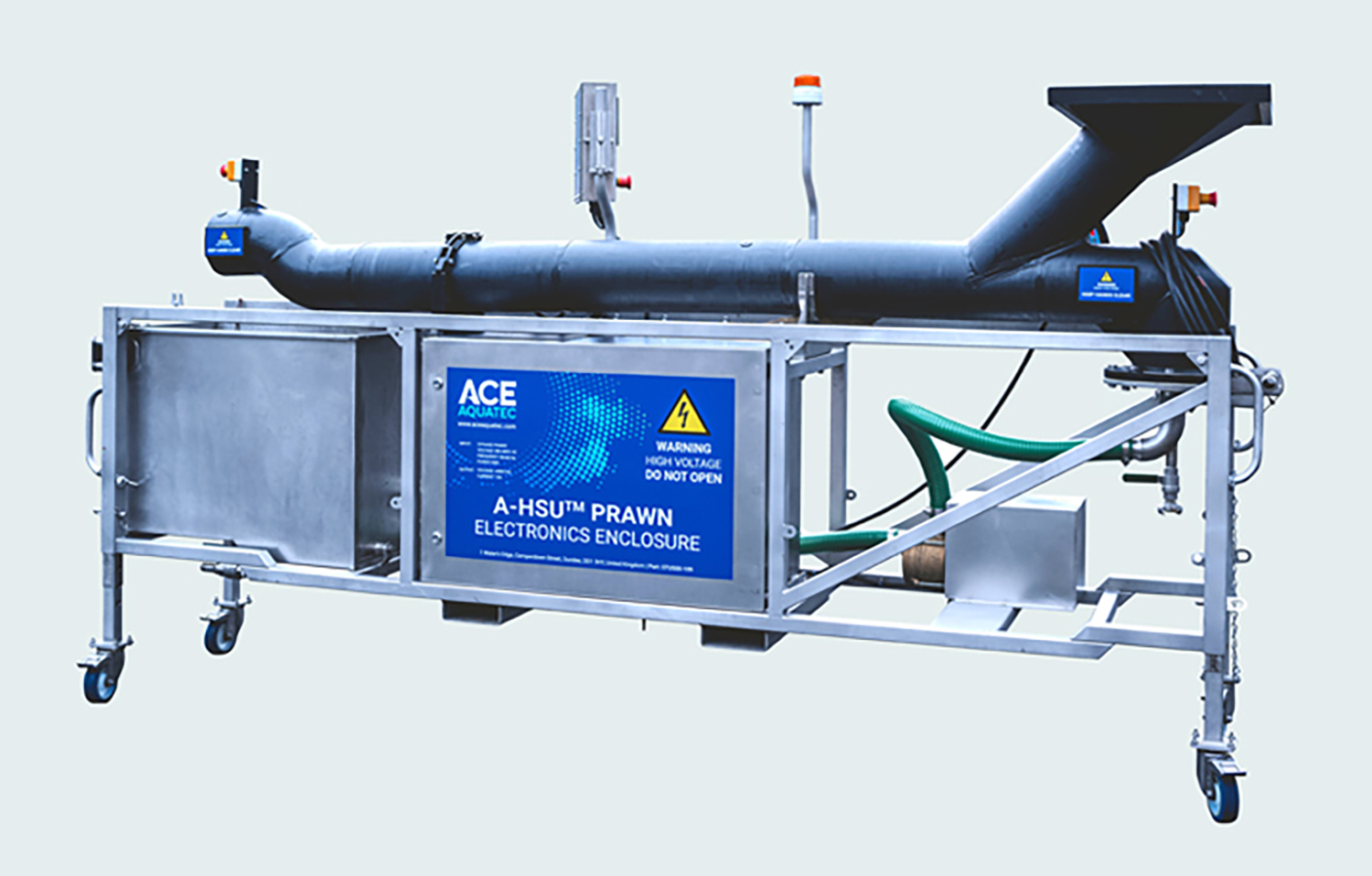
To ensure those commitments can become a reality, U.K. nonprofit Shrimp Welfare Project (SWP), via its Humane Slaughter Initiative, recently signed its 30th MoU with shrimp producers to provide free electrical stunners. The tools, as well as training and ongoing technical assistance, are available to support shrimp farmers with a capacity to produce at least 1,900 metric tons (MT) per year in India, Southeast Asia, and Latin America.
SWP Chief Programs Officer Krzysztof Wojtas told SeafoodSource that the nonprofit aims to offer practical assistance to shrimp producers in meeting welfare goals, rather than just preaching to producers to improve their practices.
Following research into the various options for humane slaughter methods available on the market, SWP began to work with two suppliers of electrical stunning machines – Ace Aquatec and Optimar – and has been impressed with the results that have come from the MoUs the nonprofit has signed with producers, Wojtas explained.
“We estimate that more than 440 billion shrimp are farmed each year, making them the most numerously farmed animals on the planet and five times more numerous than land animals, so they were an obvious choice for an intervention,” he said. “Working with producers and retailers, we identified that improvements could be made to the welfare of these sentient animals and to the quality of the end product by facilitating change to historical harvesting and slaughter methods. These methods have traditionally included immersion in ice slurry with no prior stunning and leaving them in the sun to suffocate in air, which can take many minutes and potentially hours depending on temperature.”
Ismael Wong, who is the CEO of the Seajoy Group, one of the largest shrimp-farming companies in Central America with operations across 3,800 hectares in Honduras and Nicaragua, is awaiting the arrival of the company’s third electrical stunner supplied by SWP. The machine is destined for use on the company’s certified organic shrimp farm, and the other two are already in operation at some of the firm’s conventional farms.
“We are committed to continuous improvement in welfare practices and technical efficiency on our farms as a leading producer of responsible shrimp. Animal welfare has always been our priority, and we actively work to prevent disease through appropriate veterinary care and provide a stimulating and safe environment, careful management, and top-quality nutrition. However, humane slaughter at harvest is one of the most critical stages and one where we can make a big difference to quality,” Wong said.
Seajoy deployed its first electrical stunner in 2023 and saw an immediate reduction in stress to the shrimp at harvest, Wong said, resulting in improved texture, fewer defects, and improved shelf life.
“Our customers also noticed a difference and now differentiate our product from others, declaring to consumers that a responsible slaughter method is used,” he said.
Seajoy produces more than 13,000 MT of shrimp per year, the majority of which is currently destined for export markets in Europe and the U.K., where people are more conscious of the issues around responsible production, according to Wong.
