






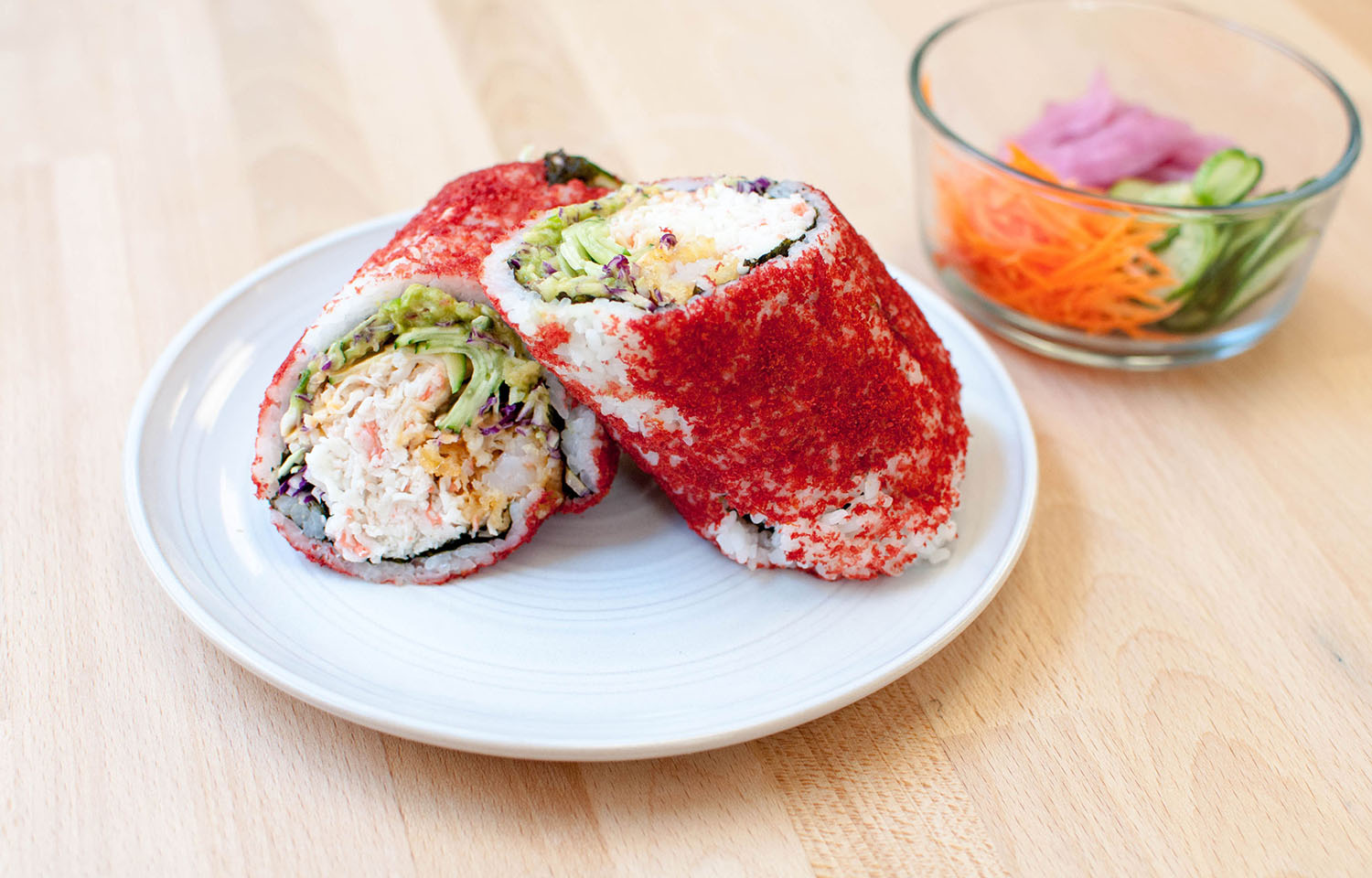
Despite the high and growing demand for sushi in America, sushi burrito restaurant brand Sushirrito is closing its doors.
“After an incredible journey building and scaling Sushirrito over the last 15 years (and through COVID in the SF Bay Area, of all places), we’ve made the difficult decision to wind down operations,” Peter Yen, previously founder and chief executive roller of San Francisco, California, U.S.A.-based Sushiritto wrote on LinkedIn. “Building this brand has been one of the most demanding, all-consuming, and rewarding experiences of my life.”
Yen trademarked the Sushirrito name in 2008 and claims to be the inventor of the sushi burrito, which is a fusion dish of burrito-sized sushi with Japanese and Latin flavors, per SFGate. Yen got the idea for Sushirrito when he noticed that sushi restaurants had not been “fast-casualized.”
The first Sushiritto opened in San Francisco in 2011, with other locations opened across the Bay Area and in New York City later on. At one point, Sushirrito also had 10 locations as part of a licensing agreement with ghost kitchen Local Kitchens, SFGate said, though only one location remains in operation.
The demise of the sushi restaurant chain comes despite growing demand for sushi in the U.S.
The U.S. sushi industry has rapidly grown to become a USD 22 billion (EUR 18.8 billion) industry, according to a recent report from the National Fisheries Institute’s (NFI) Sushi Council.
The report said that sushi has experienced “explosive demand” among U.S. consumers, particularly among Gen Z and millennials who are attracted to sushi’s perceived health benefits, convenience, and global flavor profile. Notably, lower-income Gen Z consumers report higher sushi consumption frequency than higher-income baby boomers, “signaling a broadening and democratization of the category,” NFI said.
NFI found that USD 16 billion (EUR 13.6 billion) in sushi sales are generated through restaurants alone, “underscoring sushi’s emergence as a major driver of seafood consumption.” The U.S. is home to more than 16,000 dedicated sushi restaurants, and sushi has infiltrated the menus of numerous non-sushi restaurants, the report found.
“Sushi’s growth in the U.S. is one of the most compelling stories in seafood today, with strong momentum across both retail and foodservice channels,” NFI Sushi Council Executive Director Dick Jones said in a release. “From inland markets to non-traditional venues like hospitals and corporate dining, the opportunity for continued expansion is substantial.”
