






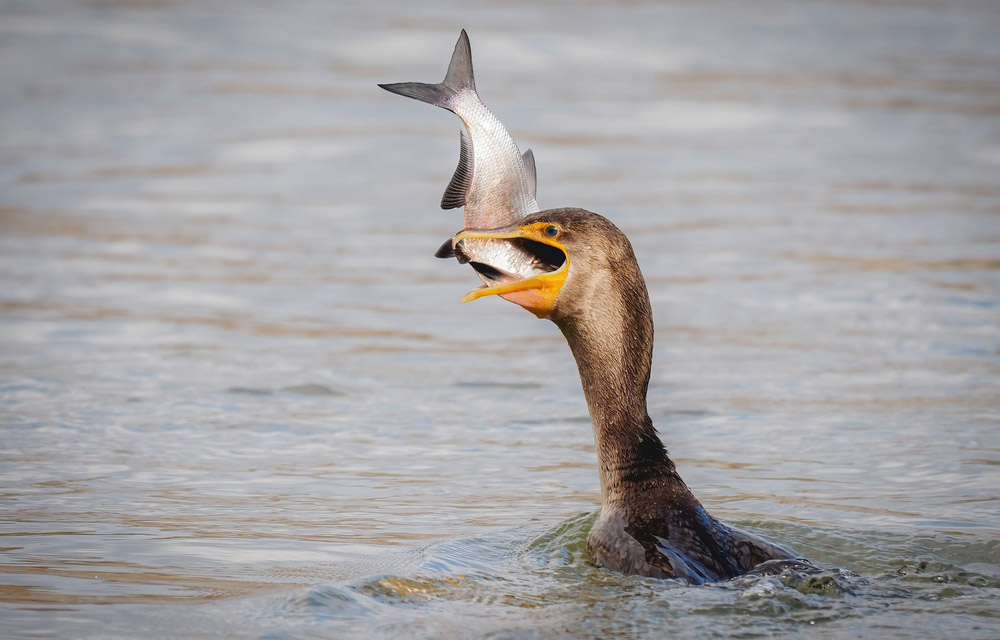
The U.S. House of Representatives Natural Resources Committee advanced legislation establishing new regional frameworks for killing cormorants, voracious birds that consume vast quantities of fish.
According to bill sponsor U.S. Representative Tim Walberg, out of control cormorant populations have had a devastating impact on Great Lakes fisheries, and a new approach is needed to reduce their numbers.
"The Great Lakes fisheries are vital to Michigan’s economy and environment, offering recreational opportunities for families and supporting local jobs and tourism," Walberg said in a release. "However, overabundant cormorant populations have damaged Great Lakes fish stocks. To protect our fisheries, we need a flexible, science‑driven framework to manage cormorants responsibly. The Responsible Cormorant Management and Control Act will give our fisheries the tools they need to thrive and support Michigan’s economy for years to come."
A cormorant can eat a pound of fish daily. According to the U.S. Fish and Wildlife Service, there are roughly 871,000 to 1,031,757 cormorants across the U.S. and Canada.
Under The Responsible Cormorant Management and Control Act, the secretary of the interior would be directed to coordinate with the Regional Flyway Councils to establish regional management frameworks for culling cormorants.
On 15 September, the Natural Resources Committee advanced the bill in a voice vote, clearing the legislation for consideration by the full House.
Last year, U.S. lawmakers passed legislation address cormorant predation at aquaculture facilities, which inflicts USD 64.7 million (EUR 55 million) in annual damages to the industry according to a 2021 study. The Cormorant relief Act directed the federal government to authorize aquaculture producers to cull cormorants without having to apply for individual permits.
