






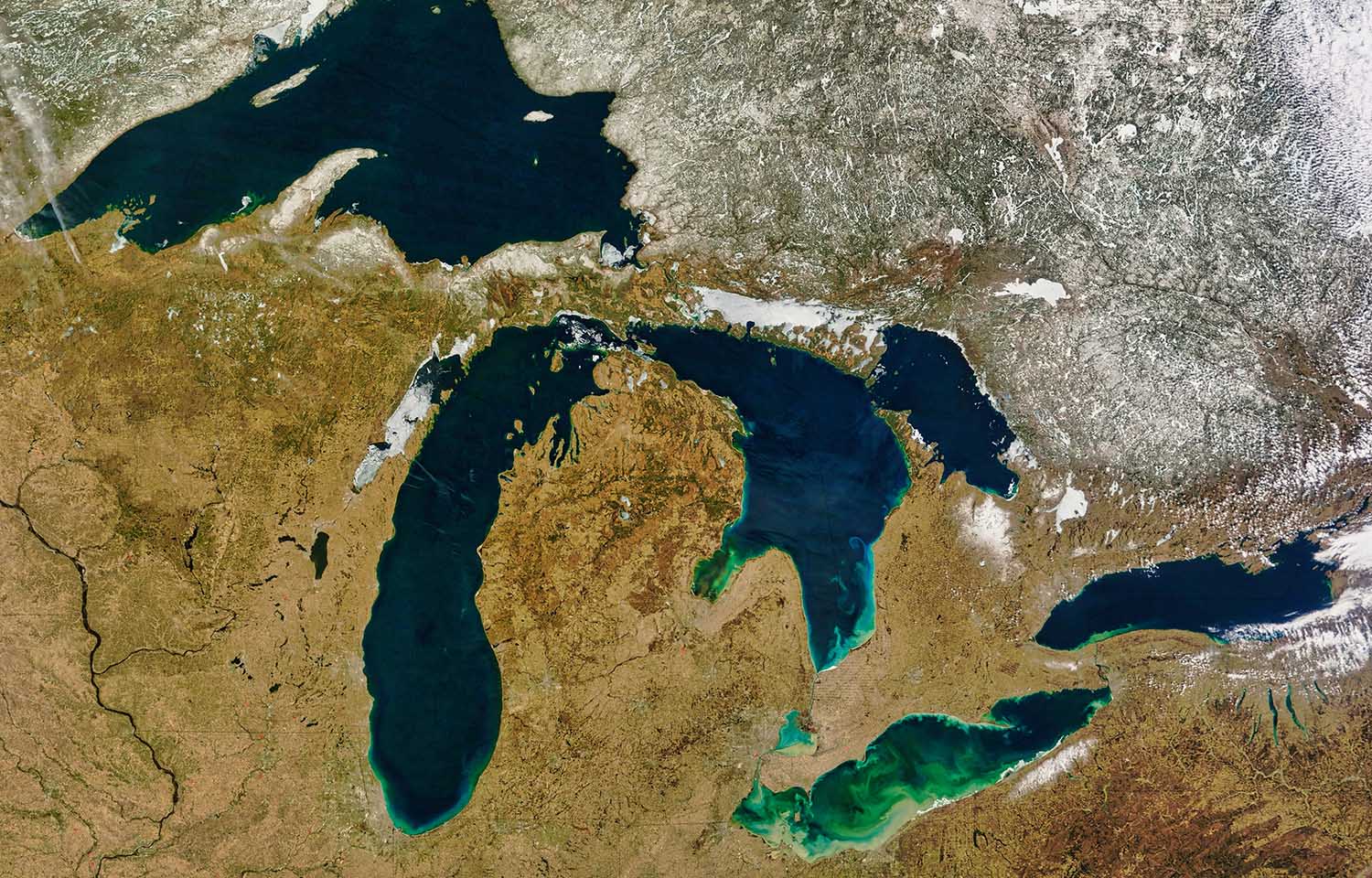
The U.S. House of Representatives has passed a bill to implement a mass marking program for the Great Lakes, improving the federal government’s tracking of hatchery-origin fish in the bodies of water.
“Establishing a Great Lakes Mass Marking Program will improve the effectiveness of our fisheries while enhancing the environmental, scientific, and recreational benefits that healthy fish populations provide,” U.S. Representative Bill Huizenga (R-Michigan) said in a statement. “This bipartisan initiative is a win for both the economy and the ecology of the Great Lakes.”
The U.S. government utilizes 10 national hatcheries to supply fish to the Great Lakes, where commercial, Tribal, and recreational fisheries produce USD 7 billion (EUR 6.5 billion) in economic value to the region. In 2024, national hatchery programs stocked 4.8 million fish in the lakes.
The U.S. Fish and Wildlife Service (USFWS) marks hatchery fish to better understand how they are interacting with the regional ecosystem, however, the government only has enough resources to mark roughly 41 percent of the fish raised. Since 2010, U.S. Fish and Wildlife Service (USFWS) has marked many of the fish raised in hatcheries, allowing the government to better understand how they are interacting with the Great Lakes ecosystem.
“Mass marking is the practice of tagging large numbers of hatchery-raised fish so we can easily distinguish them from the wild fish population," U.S. Representative Debbie Dingell (D-Michigan) said in a statement.
The Great Lakes Mass Marking Program Act would bolster those efforts, establishing a federal mass marking program with USD 5 million (EUR 4.6 million) in annual funding.
“The implementation of mass marking will help us better understand the fish populations of our Great Lakes and the cultural, economic, recreational, and food benefits they provide,” Dingell said. “This bill provides the tools needed to the U.S. Fish and Wildlife Service to implement a mass marking program for every hatchery fish in the Great Lakes region, which will allow fishery managers to collect valuable, timely information, ultimately improving the effectiveness and efficiency of hatchery operations and fishery management. I’m proud it passed the House, and will continue to work across the aisle with my colleagues to get it signed into law.”
The legislation has been sent to the Senate, which will also have to approve of the legislation before it becomes law.
