



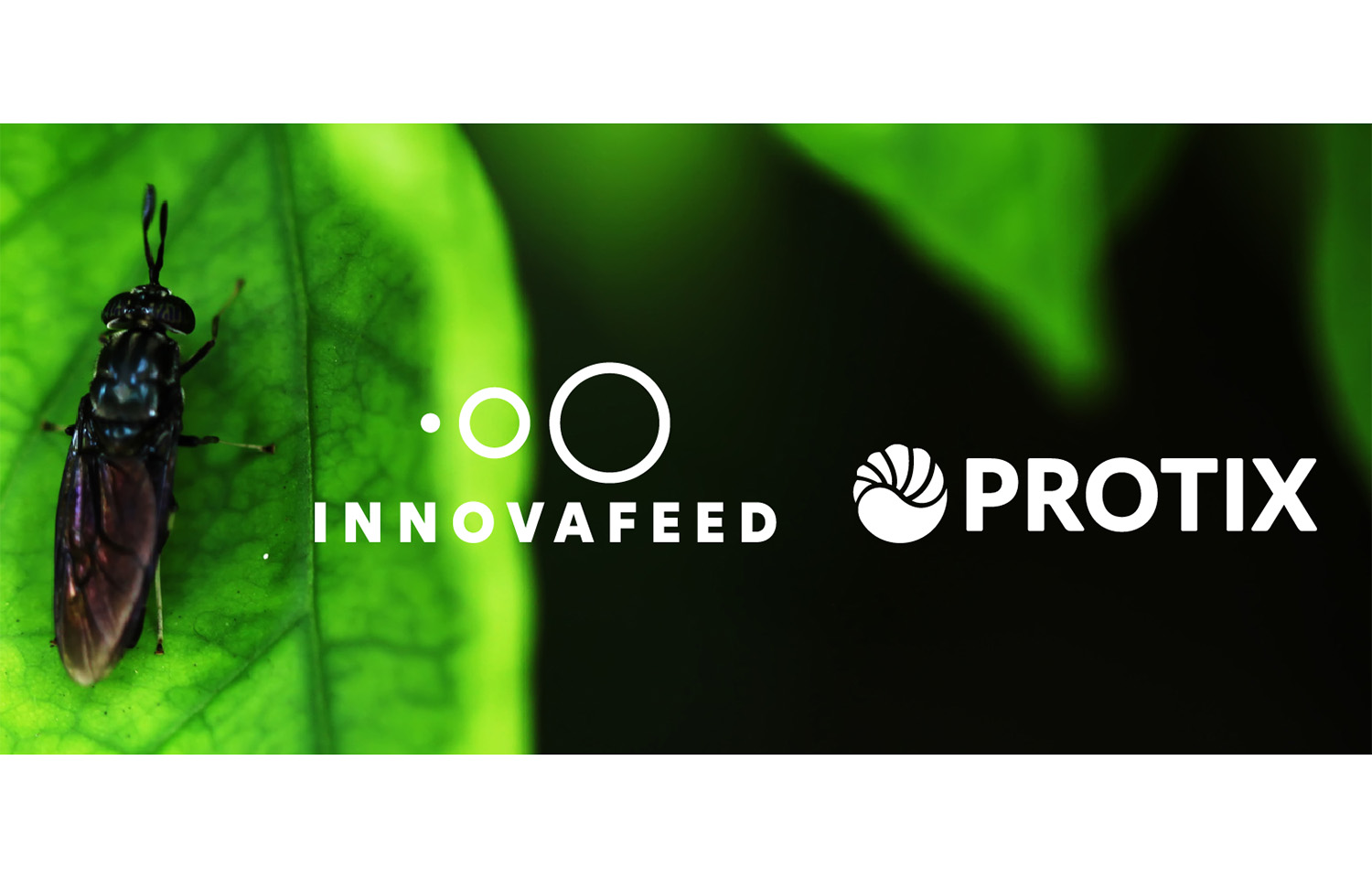
France-based insect feed producer Innovafeed and Dongen, Netherlands-based insect feed producer Protix recently co-published a whitepaper researching insect proteins from pilot to industrial scale, as well as looking into different barriers to sustainable ingredients.
Titled “When Scale Lowers Carbon: A Perspective on Industrial-Scale Insect Protein,” the whitepaper uses peer-reviewed life cycle assessment data and figures published by the Global Feed LCA Institute (GFLI) database, showing how insect feed can be deployed at the commercial scale. The two companies are competitors in producing black soldier fly larvae-based feed and compiled research and knowledge in the whitepaper to explore how insect feed could have a broader reach industry-wide.
In the whitepaper's abstract, three researchers weighed in on how most insect feed data focuses on research taken from early-stage pilot phases but lack later-stage analyses looking into emissions output, sources, production systems, and methods for development.
They also commented on how insect ingredient research is often benchmarked against alternatives like soybean meal and marine-resource meal "at their mature, fully optimized state," while "insects are at the start of their scaling curve," which can take up to 10 years before full development.
“Soy will run out of land. Fishmeal will run out of fish. You can pay more for them, but you can’t pay the planet to catch up," Innovafeed Head of Product Development for Aquaculture Marine Bézagu said in a release. "Insects add protein without drawing on either and will get better with scale.”
The two companies build on the assertion that global protein demands are only increasing, and relying on ingredients such as soy is not enough to maintain feed needs. Alternatives such as insect-feed generation offer the chance to lessen already worsening global impacts through greenhouse gas emissions, as insect-generated feed offers a more sustainable approach.
“Industrial-scale insect production already shows that environmental performance can improve substantially as processes mature and scale," Protix Chief Technology Officer Stijn Harms said. "What excites me most is the potential for further gains through continued innovation, efficiency, and better integration within the food and feed system.”
