





More than a year after U.S. President Donald Trump issued his executive order “Restoring American Seafood Competitiveness,” the administration is sending wish lists of deregulatory actions to the nation’s eight regional fishery management councils.
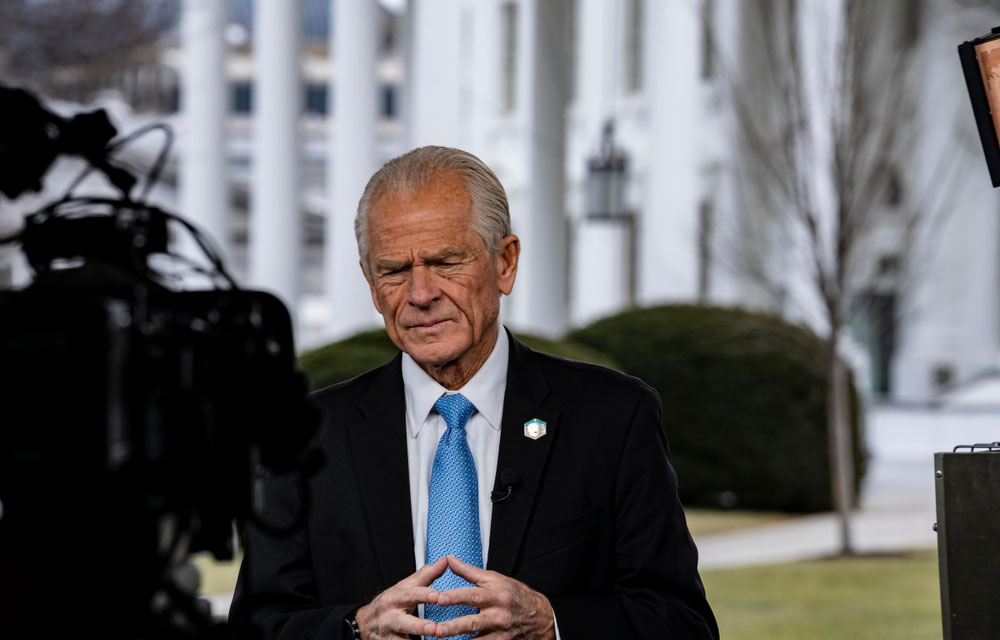
“We just announced that President Trump and Commerce Secretary Howard Lutnick are taking one more big step towards unlocking the fertile fisheries of America,” White House Senior Counselor for Trade and Manufacturing Peter Navarro in a 2 July call with reporters said.
Trump’s April 2025 executive order directed his government to work with the regional fishery management councils to “identify the most heavily overregulated fisheries requiring action and take appropriate action to reduce the regulatory burden on them.” The administration solicited feedback throughout last year, with the councils proposing a plethora of actions they would like to take – or were already taking – that aligned with the president’s order.
Now, the administration has sifted through those recommendations and public comments and has sent letters to each of the councils outlining the deregulatory actions they should prioritize.
“Today, the Department of Commerce and NOAA rolled out a bold set of regional priorities designed to revitalize the U.S. seafood sector,” NOAA said in a statement shared by Navarro. “By partnering directly with regional fishery councils, we are streamlining fisheries management to ensure our domestic fleets and coastal communities can thrive. These targeted actions – from rolling back costly, industry-funded monitoring requirements and expanding rotational access and permit flexibility for our vital scallop fisheries to defending our Gulf shrimp fleets – will reduce regulatory burdens, stabilize markets, and increase domestic production. This is a critical step towards making the United States the world’s dominant seafood leader.”
A senior administration official told reporters that the government received nearly 800 responses to the executive order.
“These regional priorities are a critical step in our efforts to fulfill the President's vision of making the United States the world's dominant seafood leader,” NOAA Administrator Neil Jacobs said in a release. “We look forward to partnering with the councils to advance seafood competitiveness and support our American fishermen.”
For the New England Fishery Management Council, the administration wants to see the Northern Edge of the Georges Bank opened to rotational scallop fishing, and see permit stacking implemented to reduce red tape on commercial scallop fishers. Other priorities include the elimination of industry-funded monitoring requirements – something the administration has already asked the council to address – modernization of fleet capacity, and the reevaluation of static area closures. The government has also asked the council to deprioritize advancing any ropeless gear requirements for the lobster industry.
For the Mid Atlantic Fishery Management Council, the administration wants it to modernize fleet capacity, improve quota utilization, and work with the New England council on evaluating vessel baseline restrictions. The White House has also recommended joint council management with the New England council or overseeing squid, mackerel, and butterfish stocks.
For the South Atlantic Fishery Management Council, the administration wants to see management of the federal recreational red snapper fishery taken over by the states. While the Trump administration approved exempted fishing permits (EFPs) authorizing the states of North Carolina, South Carolina, Georgia, and Florida to do just that, expanded recreational seasons were put on hold or cancelled after a lawsuit was filed by commercial fishers. The administration also directed the council to address shark and dolphin depredation.
For the Caribbean Fishery Management Council, the administration is looking to reduce loss of yield, unburden local fishers, and “significantly increase economic returns to the island,” according to the senior administration official. Specific actions include moving to territorial management of spiny lobster queen conch and looking at the effectiveness of marine protected areas in that region.
For the Gulf Fishery Management Council, the administration wants to see individuals fishing quota participation requirements refined and the extension of provisions of the DESCEND Act, which authorizes fishers to use descending devices to release reef fish in the Gulf of Mexico.
For the Pacific Fishery Management Council, the administration wants a review of trawl observer redundancies and a review of the science used to understand interactions between humpback whales and Dungeness crab gear. Other priorities listed include reconsidering redundant shoreline catch monitors and revising specific sardine stock definitions.
For the North Pacific Fishery Management Council, the administration is planning to launch a public relations campaign to improve “public confidence in the science-based council system.” The administration also wants to streamline and reduce the financial burden of observer and cost recovery programs. The government is also interested in reviewing stellar sea lion closure boundaries, eliminating the 2 percent individual fishing quota deduction for bled sablefish, and rulemaking for small sablefish voluntary release.
For the Wester Pacific Fishery Management Council, the administration wants to remove “punitive monument closures,” the shallow-set longline leatherback hard cap, swordfish retention limits in the deep-set longline fishery, and American Samoa longline turtle mitigation measures.
The White House has also asked the NOAA Fisheries’ Highly Migratory Species Office to review weak hook requirements in the Gulf, reconsider restrictions for the swordfish handgear limited access permit, and allow retention of dead bluefin tuna under 73 inches.
“President Trump is really establishing himself as America’s fishermens' best friend,” Navarro said. “We’re opening the Atlantic and the Pacific and the American consumers are going to benefit from what we’re doing now.”
