
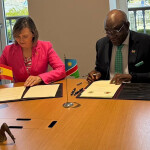


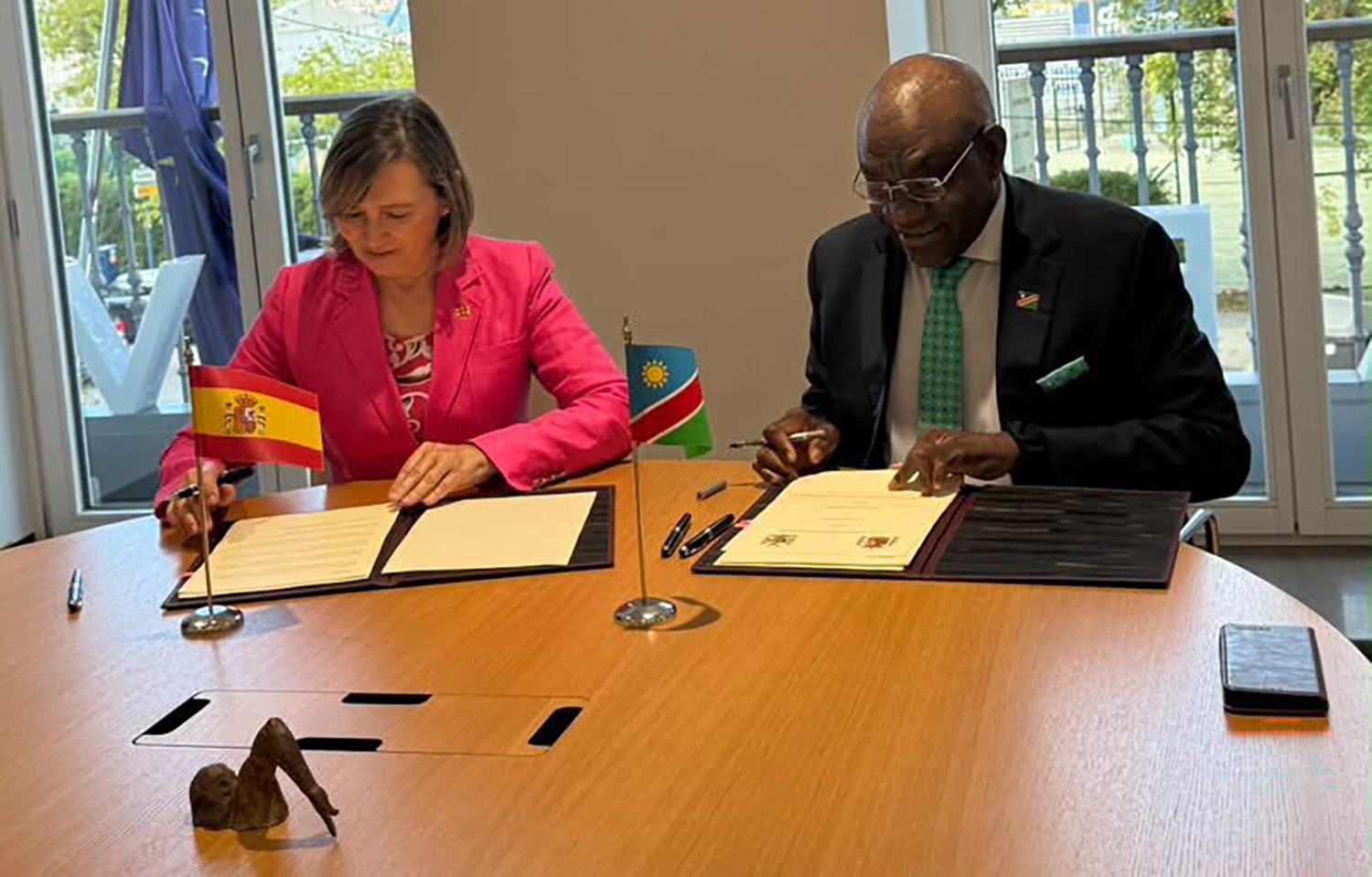
The Southwest African nation of Namibia has signed a memorandum of understanding (MoU) with Spain, deepening the fisheries and aquaculture relationship between the two nations.
According to Namibia’s Ministry of Agriculture, Fisheries, Water, and Land Reform, the agreement “provides a framework for enhanced collaboration in fisheries research and management, international fish trade, and compliance with international fisheries standards, conventions, and agreements.”
Areas identified for cooperation include marine research and stock assessment, economic modeling and data management, traceability, aquaculture and mariculture development, fish feed production, value addition, and strengthened monitoring, control, and surveillance measures to combat illegal, unreported, and unregulated (IUU) fishing activities.
“The signing of the MoU goes beyond a formal commitment, reflecting the shared resolve of Namibia and Spain to translate their strong bilateral relationship into tangible cooperation that contributes to sustainable fisheries, capacity development, and the long-term prosperity of [our] respective fisheries sectors,” the Ministry of Agriculture, Fisheries, Water, and Land Reform said in a statement, adding that for Namibia in particular, “the partnership presents an opportunity to draw on Spain’s extensive experience and technical expertise in fisheries and aquaculture while promoting mutual learning and knowledge exchange.”
Spain is already one of the biggest buyers of Namibian seafood, with data from the Namibia Statistics Agency (NSA) indicating the country accounted for 27.8 percent of Namibia’s total export earnings for fish, crustaceans, mollusks, and other aquatic invertebrates for Q2 2026, totaling NAD 4.6 billion (USD 278.6 million, EUR 249 million).
The European nation has also conducted seafood business in Namibia for decades, with Spanish companies such as Nueva Pescanova and others operating in the country.
